Iran’s Maritime Export Statistics: Leading Commodities and Their Respective Shares
Maritime exports constitute one of the principal pillars of Iran’s foreign trade. With extensive coastlines along the Persian Gulf and the Sea of Oman, Iran possesses substantial capacity for maritime cargo transportation. Due to its ability to handle large volumes, lower transportation costs, and access to global markets, maritime exports have assumed strategic importance. Accordingly, analyzing Iran’s maritime export statistics and identifying the commodities with the largest shares is crucial for policymakers, traders, and economic stakeholders.
In this article, we first examine the significance of Iran’s maritime exports and their role in the national economy. Subsequently, we review recent maritime export statistics, including major export commodities, their respective shares, as well as associated challenges and opportunities.
In this article, we first examine the significance of Iran’s maritime exports and their role in the national economy. Subsequently, we review recent maritime export statistics, including major export commodities, their respective shares, as well as associated challenges and opportunities.
Maritime exports serve as a key mechanism for delivering Iranian goods to global markets. Access to open waters and multiple port facilities has positioned Iran as an important player in this domain. The importance of maritime exports is particularly evident in the following aspects:
- Generation of Foreign Exchange Revenues: A substantial portion of the country’s foreign currency earnings is derived from maritime exports, especially crude oil and petroleum products, which account for a significant share of seaborne exports.
- Strengthening Transportation Infrastructure: The development of ports and shipping services contributes to improved export efficiency and job creation.
- Enhancing International Connectivity: Maritime exports facilitate closer economic ties with neighboring countries and distant markets, thereby supporting both political and economic relations.
Primary Destinations of Iran’s Maritime Exports
The principal destinations of Iran’s maritime exports are predominantly located in Asia. Countries such as China, Iraq, the United Arab Emirates, Turkey, and Afghanistan rank among Iran’s key trading partners. A substantial portion of exports to these markets is transported via maritime routes through various ports, accounting for a significant share of Iran’s total seaborne exports. For instance, a considerable volume of Iran’s petrochemical and petroleum products is exported to China, whereas agricultural goods and food products are primarily shipped to neighboring countries such as Iraq and the United Arab Emirates.
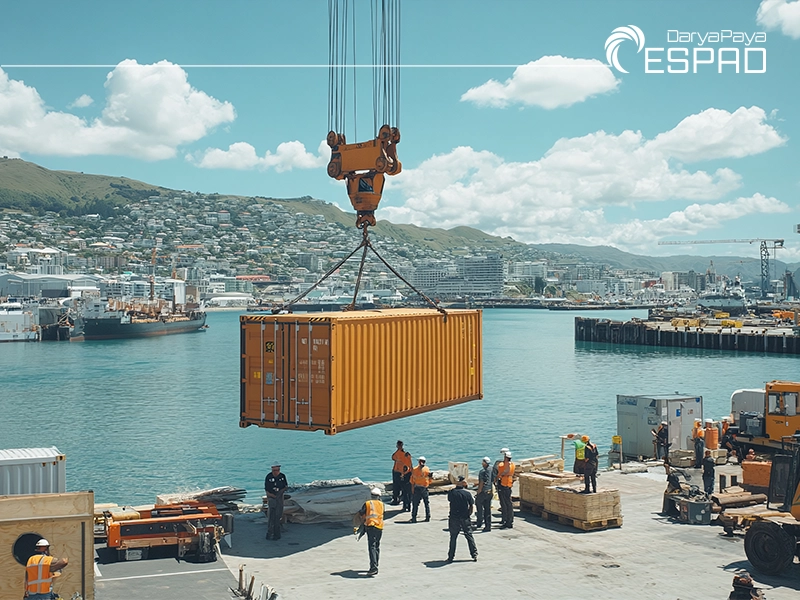
Iran’s Maritime Exports
- Shahid Rajaee Port: This port is the largest commercial port in Iran and serves as the country’s primary maritime trade gateway. Approximately 90% of Iran’s total containerized imports and exports are handled through this port.
- Imam Khomeini Port: Recognized as the second-largest port in the country, it plays a crucial role in the export of both petroleum and non-petroleum commodities to regional markets.
- Chabahar Port: As Iran’s only oceanic port, Chabahar holds strategic importance. Given its geographic location and certain exemptions from specific sanctions, it possesses significant potential to evolve into a regional trade hub.
Volume of Iran’s Maritime Exports
According to official data and updated information published on platforms such as Espad, the volume of Iran’s maritime exports has experienced considerable fluctuations in recent years. These variations have been influenced by factors including international sanctions, volatility in global oil prices, domestic economic conditions, and broader global developments.
Iran’s Maritime Exports in Recent Years
Statistics indicate that in the Iranian year 1398 (2019/2020), approximately 60 million tons of goods were exported from Iran’s maritime ports to various destinations. In 1399 (2020/2021), exports experienced a relative decline due to the COVID-19 pandemic and the intensification of sanctions. However, from 1400 (2021/2022) onward, maritime exports resumed an upward trajectory, and projections suggest that in 1402 (2023/2024), seaborne exports increased by approximately 5% compared to previous years.
A detailed analysis of these figures demonstrates that petroleum and petrochemical products accounted for the largest share of exports. Espad, as a reliable statistical reference platform, publishes disaggregated export data by commodity category, providing a valuable tool for economic planning and market analysis.
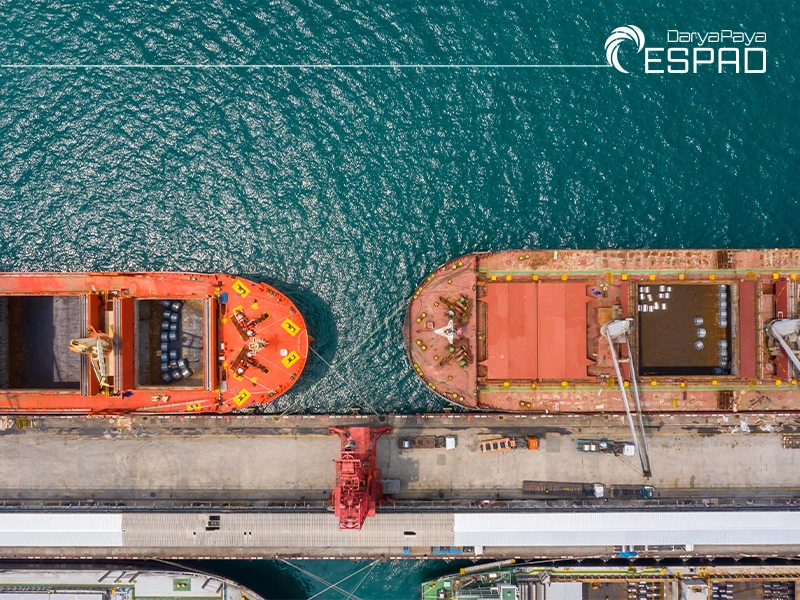
Trend of Non-Oil Exports
According to official reports from the Islamic Republic of Iran Customs Administration, in 1402 (2023/2024), total non-oil exports—including technical and engineering services and electricity—reached approximately USD 49.3 billion. A significant portion of these exports was transported by sea, primarily through key ports such as Shahid Rajaee Port, Imam Khomeini Port, and Chabahar Port, all of which play a vital role in facilitating Iran’s maritime trade.
Furthermore, non-oil export categories such as petrochemical products, mineral materials, and agricultural goods have exhibited a steady growth trend, reflecting the country’s strategic efforts to reduce dependence on crude oil revenues.
Major Commodities in Iran’s Maritime Exports
- Crude Oil and Petroleum Products: Crude oil and refined petroleum products continue to represent the largest share of Iran’s maritime exports. Despite stringent sanctions, these commodities are primarily shipped to Asian markets and certain neighboring countries. Approximately 55% of Iran’s total maritime exports fall within this category.
- Petrochemical Products: Petrochemical commodities—including polymers (such as polyethylene and polypropylene), methanol, urea, and various industrial chemicals—constitute a substantial portion of maritime exports. Accounting for roughly 20%, they represent the second-largest export category.
- Mineral and Metal Products: Owing to its abundant mineral resources, Iran allocates a significant portion of its maritime exports to mineral commodities. This category includes iron ore, copper, lead, steel products, and aluminum and zinc ingots, collectively accounting for approximately 15% of total maritime exports.
- Agricultural and Food Products: Iran exports products such as dates, pistachios, dried fruits, raisins, various fresh fruits, as well as saffron and shrimp. This group represents roughly 10% of maritime exports. These goods are primarily shipped to neighboring countries and play an important role in generating non-oil revenues.
Challenges in Maritime Exports:
- Economic Sanctions: International sanctions have imposed trade restrictions and reduced access to export markets, negatively affecting the trajectory of maritime exports.
- Insufficient Infrastructure: Many Iranian ports require modernization and expansion to effectively handle growing export volumes.
- Global Price Volatility: Fluctuations in global prices—particularly for oil and other export commodities—directly impact Iran’s export revenues.
- Regional Competition: Neighboring countries such as the United Arab Emirates and Saudi Arabia have enhanced their port infrastructure and logistics capabilities, creating intense competition in the regional maritime export market.
Opportunities in Maritime Exports:
- Geostrategic Location: Iran is situated along major international maritime routes and possesses the potential to function as a regional trade and logistics hub.
- Diversification of Export Commodities: Emphasizing the expansion of non-oil exports provides a valuable opportunity to strengthen and diversify maritime export growth.
- Port Development: Expansion programs for ports and their integration with rail and road networks contribute significantly to the enhancement of transportation infrastructure.
- Growth of Asian Markets: Emerging Asian markets represent attractive destinations for Iranian export commodities.
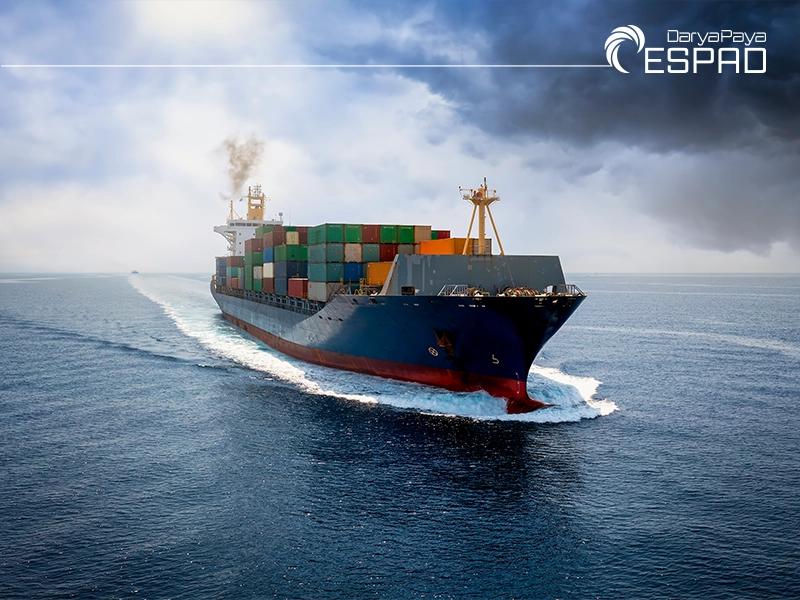
Enhancing Iran’s Maritime Exports
Access to accurate and up-to-date statistical data is a critical factor in improving export planning and policymaking. Espad, as one of the key domestic sources for export and import statistics, provides comprehensive and detailed information on export commodities. Economic stakeholders can leverage this data for market analysis and informed decision-making. The availability of such resources increases market transparency and supports improved export performance.
From Sanctions to Development: The Growth of Iran’s Maritime Exports Through Espad’s Data
Iran’s maritime exports constitute one of the principal pillars of the national economy, with petroleum products, petrochemicals, mineral commodities, and agricultural goods accounting for the largest shares. Despite existing challenges such as sanctions and infrastructural limitations, significant potential remains for further growth and expansion in this sector. The utilization of precise data and statistical analysis—particularly the datasets published by Espad—can facilitate more effective decision-making and strategic planning.
Diversifying export commodities, developing maritime transportation infrastructure, and expanding trade relations with regional and international markets are among the key pathways to increasing Iran’s share in global maritime trade.