What Is a Container?
A container is essentially a standardized metal box engineered for cargo transportation and constructed in a way that allows seamless handling by different modes of transport. These durable and secure structures facilitate consolidated and protected cargo movement while minimizing the risk of damage and contamination. Thanks to standardized dimensions and structural design, loading and unloading operations at ports and transit hubs can be carried out quickly and efficiently.
Global Container Standards
Containers are manufactured according to international ISO standards. These regulations define dimensions, maximum permissible weight, structural strength, and technical specifications, ensuring compatibility and smooth integration within global transportation systems. Compliance with these standards guarantees that a purchased or leased container can be utilized anywhere in the world.
Types of Containers and Their Applications
Containers are produced in various types, each tailored to specific cargo categories, transport conditions, and shipping modes (maritime, land, or air). Below, we introduce the primary container types and their most common applications.
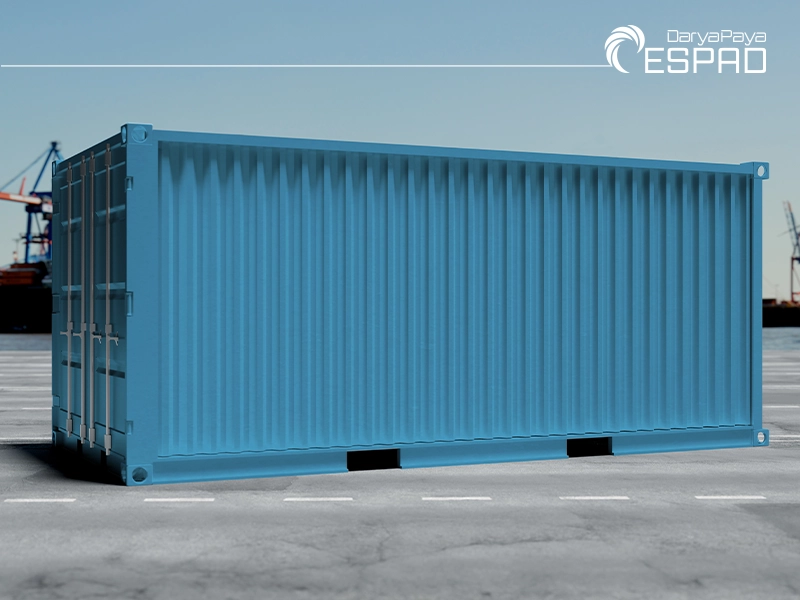
20-Foot Container
The 20-foot container is one of the most widely used container types in global transportation. Measuring approximately 20 feet (about 6 meters) in length, it offers a cargo capacity of roughly 33 cubic meters. Owing to its compact dimensions, it is particularly suitable for medium-volume goods, industrial cargo, and even specialized shipments such as chemicals or technical equipment.
Applications of the 20-Foot Container:
- Transport of industrial goods and machinery components
- Storage of construction materials on project sites
- Storage of construction materials on project sites
- Shipment of small to medium export consignments
40-Foot Container
The 40-foot container is the largest standard container commonly used in maritime and land transport. With a length of approximately 40 feet (12 meters) and a capacity of up to 67 cubic meters—nearly double that of a 20-foot container—it is ideal for transporting large volumes of cargo, including bulk goods, consumer products, and commercial shipments.
Applications of the 40-Foot Container:
- Transport of heavy and voluminous cargo
- Export of consumer goods and apparel
- Export of consumer goods and apparel
- Utilization in large-scale logistics and warehousing projects
Specialized Containers
In addition to standard 20-foot and 40-foot units, several specialized containers are designed for specific cargo requirements:
- Reefer Container: Used for temperature-sensitive goods such as fresh food, pharmaceuticals, and chemical products.
- Tank Container: Designed for transporting liquids and liquid chemicals.
- Flat Rack Container: Suitable for heavy or oversized cargo requiring side or top loading.
- Open Top Container: Ideal for cargo that must be loaded from above, such as large machinery.
Smart Containers
With advancements in modern technology, smart containers have emerged as one of the most significant innovations in the transportation industry. These containers are equipped with advanced sensors, GPS systems, and Internet of Things (IoT) technology that continuously monitor internal conditions such as temperature, humidity, and geographic location in real time.
Through these technologies, logistics managers can track cargo status at any moment and respond immediately to potential issues. Moreover, the data collected by smart containers contributes to route optimization, cost reduction, and enhanced cargo security. Leading companies such as Espad are integrating these technologies to elevate service quality and make container shipping more intelligent and efficient.
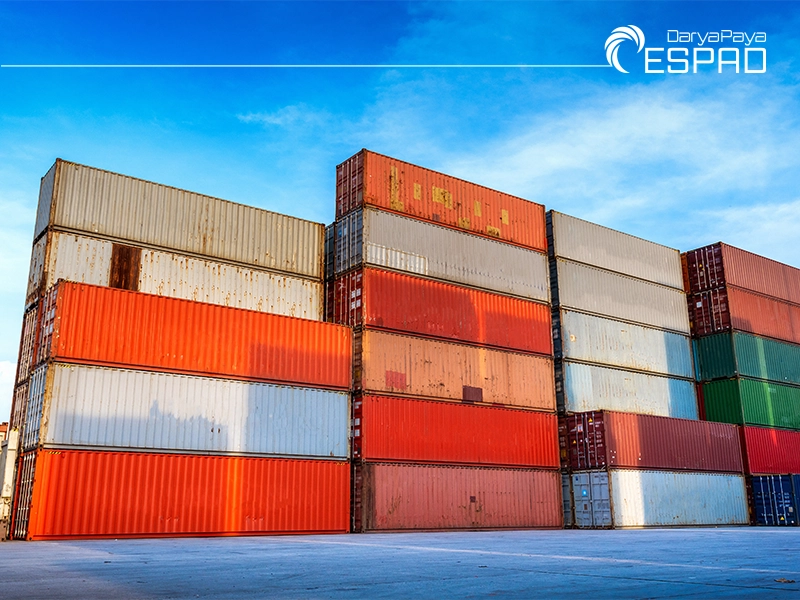
Diverse Applications of Containers Across Industries
Due to their standardized design and structural durability, containers are widely used across various industries. In transportation and logistics, they facilitate rapid and secure cargo movement while minimizing loading and unloading time. In manufacturing and export sectors, the diversity of container types enables exporters to deliver goods to global markets while preserving quality and safety.
In the construction industry, containers are not only used for transporting materials and equipment but can also serve as temporary storage units or even mobile offices. Owing to their adaptability and versatility, containers play a pivotal role across these sectors.
Transportation and Logistics Industry
In this sector, containers play a vital role in facilitating the transportation of goods between different countries. The use of standardized containers accelerates loading and unloading operations while significantly reducing the risk of cargo damage. Companies such as Espad, by utilizing various types of containers, provide reliable and efficient transportation services.
Manufacturing and Export Industry
For exporters and manufacturers, containers make it possible to deliver products to international markets with a high level of security. Depending on the nature and volume of the cargo, different container types are selected. For instance, 20-foot containers are commonly used for specific or moderate shipments, while 40-foot containers are preferred for larger volumes of goods.
Construction Industry
In the construction sector, containers are not only used for transporting materials but can also serve as temporary storage units or on-site offices. Their durability and ease of relocation make them a cost-effective solution for construction projects.
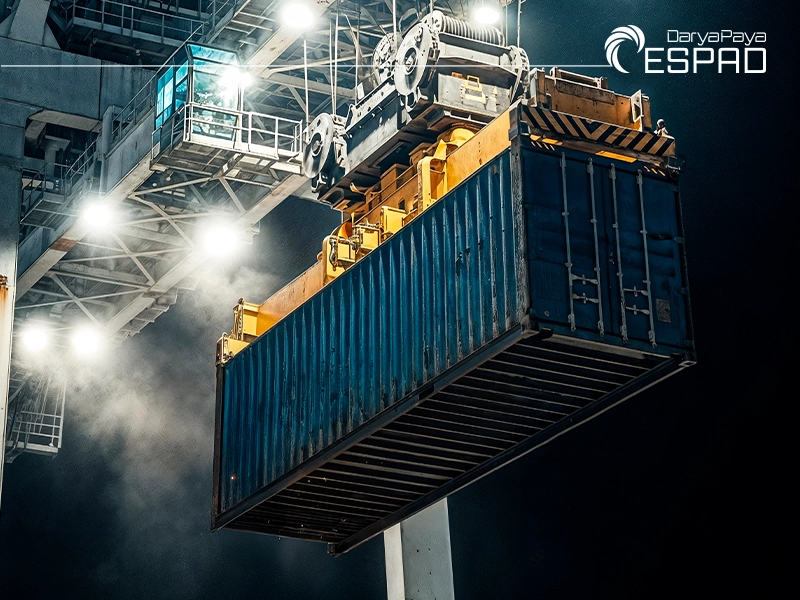
Advantages of Using Containers in Transportation
- Cargo Protection: Containers safeguard goods against environmental factors such as rain, wind, dust, and physical impact.
- Standardization: This approach streamlines loading, unloading, and transfer processes, making them faster and more efficient.
- Cost Efficiency: The use of containers reduces transportation expenses and minimizes the risk of cargo damage.
- Flexibility: The availability of various container types enables the transportation of a wide range of goods.
The Role of Logistics Companies in Container Management
Professional logistics companies, such as Espad, play a crucial role in optimizing supply chains through their expertise in container types and utilization methods. Selecting the appropriate container, managing transportation processes, and ensuring cargo integrity are among the core services these companies provide, ultimately contributing to cost reduction and enhanced customer satisfaction.
For professional consultation on container selection, contact us.
Containers, as the backbone of global transportation, play an indispensable role in facilitating international trade. Familiarity with different container types—including 20-foot and 40-foot units—and their diverse applications is essential for anyone involved in logistics and commerce. Reputable shipping companies such as Espad, leveraging up-to-date knowledge and industry expertise, can recommend the most suitable container solutions to ensure that transportation processes remain efficient, secure, and cost-effective. With continuous technological advancement and innovation, the future of container utilization in global logistics remains highly promising.
Espad