Iran ports and the Critical Role in Trade and Maritime Transportation
With direct access to the Persian Gulf, the Gulf of Oman, and the Caspian Sea (Khazar Sea), Iran is regarded as one of the region’s most strategically positioned nations for maritime trade. Iranian ports serve not only as gateways for cargo inflow and outflow, but also as key enablers of economic growth, job creation, and the development of national transport infrastructure. This article outlines the strategic significance of Iran’s seaports and the key services they provide.
The Importance of Ports in the Global Supply Chain
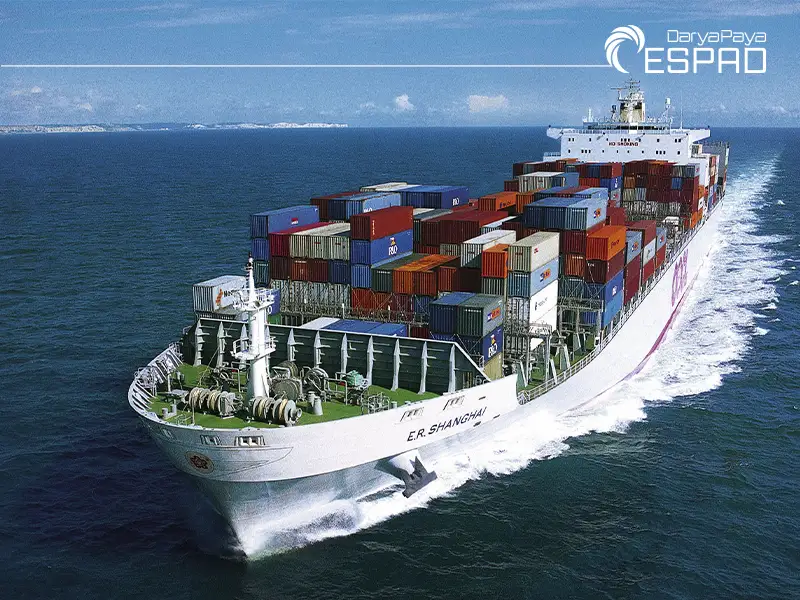
More than 80% of global trade is carried out by sea. Maritime ports, functioning as critical nodes in the global supply chain, play a decisive role in the movement of international cargo. Most goods exchanged between countries are transported via maritime routes, and without well‑functioning ports, global trade would be significantly slower and more complex. For this reason, ports are indispensable to the economic development of any nation.
Iran and Its Strategic Maritime Geography
Iran enjoys direct access to three major bodies of water—the Persian Gulf, the Gulf of Oman, and the Caspian Sea—a strategic geographic advantage that provides the country with seamless connectivity to key global maritime corridors.
In southern Iran, ports such as Shahid Rajaee and Chabahar, located along the Persian Gulf and the Gulf of Oman, connect the nation to open seas and long‑haul shipping routes. The northern ports, situated along the Caspian Sea, link Iran to Central Asian markets. This unique position makes Iran a vital transit bridge within the region.
List of Iran’s Major Ports
Iran has more than 20 active seaports, distributed across its southern and northern maritime zones. Below is an overview of these ports along with their geographic locations.
Southern Ports of Iran (Persian Gulf and Gulf of Oman)
- Mahshahr Port – Khuzestan Province
- Bandar Abbas – Hormozgan Province
- Chabahar Port – Sistan and Baluchestan Province
- Shahid Rajaee Port – Hormozgan Province
- Imam Khomeini Port – Khuzestan Province
- Khorramshahr Port – Khuzestan Province
- Assaluyeh Port – Bushehr Province
- Shahid Bahonar Port – Hormozgan Province
- Lengeh Port – Hormozgan Province
- Kangan Port – Bushehr Province
- Jask Port – Hormozgan Province
- Kaveh Port – Qeshm Island
Northern Ports of Iran (Caspian Sea)
- Anzali Port – Gilan Province
- Amirabad Port – Mazandaran Province
- Nowshahr Port – Mazandaran Province
- Fereydunkenar Port – Mazandaran Province
- Turkmen Port – Golestan Province
- Gaz Port – Golestan Province
- Astara Port – Gilan Province
- Caspian Port – Gilan Province (Anzali Free Trade Zone)
Iran’s Most Important Commercial Ports
Several major ports in Iran play a pivotal role in the country’s import–export operations. These ports handle significant cargo volumes and host frequent calls from commercial vessels. Below are Iran’s most prominent commercial seaports.
Shahid Rajaee Port
Location: Southern Iran, Hormozgan Province
Key Characteristics:
- Iran’s largest container port
- Primary hub for containerized import/export operations
- Direct access to the Strait of Hormuz and open seas
- Under development as a fourth‑generation port
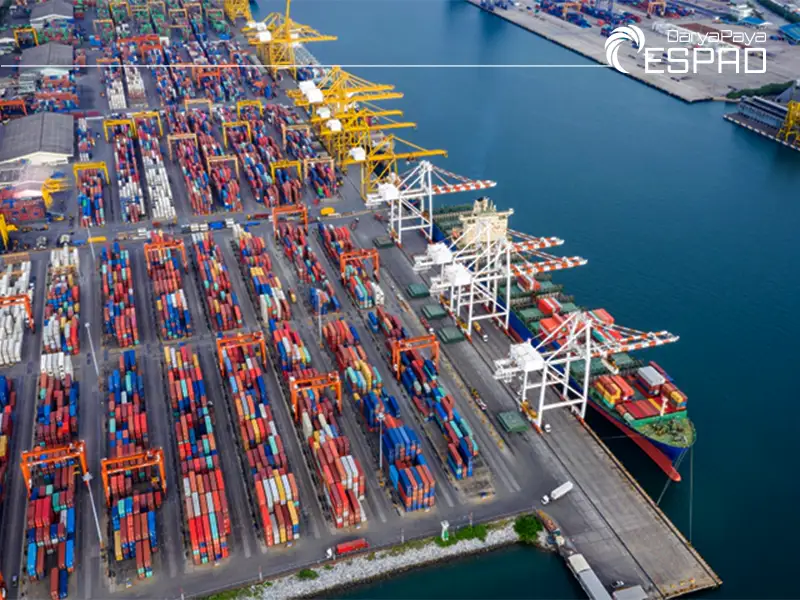
Shahid Rajaee Port is Iran’s largest and most significant commercial hub, handling the majority of the nation’s containerized cargo flows. Its proximity to the Strait of Hormuz ensures strategic access to international waters. Rail connectivity to Iran’s national railway network is currently undergoing expansion.
Core Services at Shahid Rajaee Port:
- Container handling (loading/unloading)
- Import/export of general and industrial cargo
- Warehousing and customs clearance
- Logistics and transit services
- Shipping services, bunkering, and vessel repair
Imam Khomeini Port
Location: Southwestern Iran, Khuzestan Province
Key Characteristics:
- Specialized in essential commodities import
- Direct connection to the national railway network
Imam Khomeini Port is one of Iran’s primary gateways for essential goods such as wheat, edible oils, and animal feed. Its direct rail link to the national railway system facilitates efficient transit and inland distribution.
Core Services at Imam Khomeini Port:
- Import of essential commodities (wheat, oil, animal feed)
- Bulk cargo warehousing
- Direct rail connectivity
- Dry and liquid bulk handling
- Packaging and distribution services
Chabahar Port
Location: Southeastern Iran, Sistan and Baluchestan Province
Key Characteristic:
- Iran’s only port with direct access to the Indian Ocean
Chabahar is Iran’s only port located directly on the Gulf of Oman, granting it strategic significance. The port serves as Iran’s gateway to the Indian Ocean and provides access to Central Asia without transiting the Strait of Hormuz. Currently, Chabahar does not have direct rail access to the national railway network.
Core Services at Chabahar Port:
- Export of minerals, agricultural products, and industrial goods
- Container and bulk cargo handling
- Warehousing and storage facilities
- Transit of cargo to Afghanistan, India, and Central Asia
- Logistics services within the Free Trade Zone
Anzali Port
Location: Northern Iran, Gilan Province
Key Characteristic:
- A major port for trade with CIS countries
Anzali Port is one of Iran’s most important northern ports on the Caspian Sea. The port plays a critical role in trade with coastal Caspian countries such as Russia, Kazakhstan, and Turkmenistan. It has direct access to Iran’s national railway network, enabling efficient inland transit.
Core Services at Anzali Port:
- Direct trade with Russia and Kazakhstan
- Handling of general cargo
- Warehousing, customs services, and Free Zone operations
- Multimodal transport (road–sea)
- Vehicle and light‑equipment loading
Amirabad Port
Location: Northern Iran, Mazandaran Province
Key Characteristic:
- The largest northern port of Iran
Amirabad Port is Iran’s largest port on the Caspian coastline. Its integration with the national railway network makes it a key hub for combined rail‑sea transport.
Core Services:
- Direct railway access
- Handling of containers, bulk cargo, and project cargo
- Export operations to Russia and Central Asia
- Logistics and transit services
- Ship repair and technical services
The Hidden Strengths of Iran Ports:
Where the Economy Pulses—and Espad Darya Drives Its Flow
With privileged access to three major maritime basins, Iran hosts a network of strategically positioned ports, each playing a vital role in trade, transit, and cargo movement. From southern container hubs to northern transit gateways, Iran ports form the backbone of the nation’s maritime economy.
Within this dynamic ecosystem, Espad Darya Paya delivers specialized maritime transport, logistics, transit, and port‑operation services—injecting speed, precision, and security into your supply chain.
If you aim to capitalize intelligently on the unmatched potential of Iran’s port infrastructure, Espad Darya is your strategic partner.