Understanding Types of Commercial Vessels and Their Roles in International Trade
Maritime transportation remains one of the safest and most cost‑efficient modes of cargo movement for businesses worldwide. However, this level of safety is ensured only when the vessel type is compatible with the cargo being transported. Selecting the appropriate ship plays a critical role in preserving cargo quality, safety, and integrity throughout the voyage. Therefore, it is essential to understand the various types of commercial vessels and the options available.
In this article, we introduce the main categories of commercial vessels and their operational applications so that more informed decisions can be made when planning international logistics and maritime transport operations.
Types of Commercial Vessels and Their Applications
Commercial ships are built in different sizes and configurations, each designed to transport a specific category of cargo. Some vessels are not intended for freight transport but rather for carrying passengers. Below are the most important types.
Dry Bulk Carrier
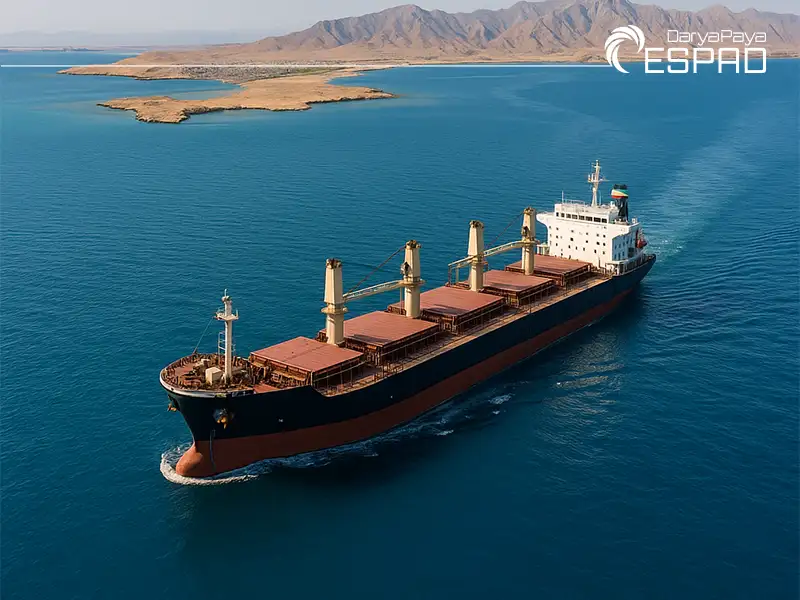
Dry bulk carriers are designed to transport unpackaged bulk commodities such as grain, cement, and coal. These vessels typically feature a flat deck and large cargo holds with watertight bulkheads. They are built in various size categories:
Handysize: Smaller vessels typically carrying up to 40,000 metric tons of cargo. Due to their compact dimensions, they can call at smaller ports with limited draft and infrastructure.
Panamax: Vessels with capacities of approximately 60,000 to 80,000 tons, with dimensions specifically designed to comply with the navigational constraints of the Panama Canal.
Capesize: The largest category of bulk carriers, with cargo capacities exceeding 100,000 tons. Because of their large size, they cannot transit the Panama or Suez Canals and instead operate on deep‑sea routes such as those around the Cape of Good Hope.
This classification not only determines cargo‑carrying capacity but also strongly influences route planning and port accessibility. In bulk carriers, cargo is loaded loose into large cargo holds without packaging, allowing the transport of high‑volume and heavy commodities. Many bulk carriers are equipped with conveyor systems, grab cranes, and pumping systems that facilitate efficient loading and discharge operations.
Container Vessel
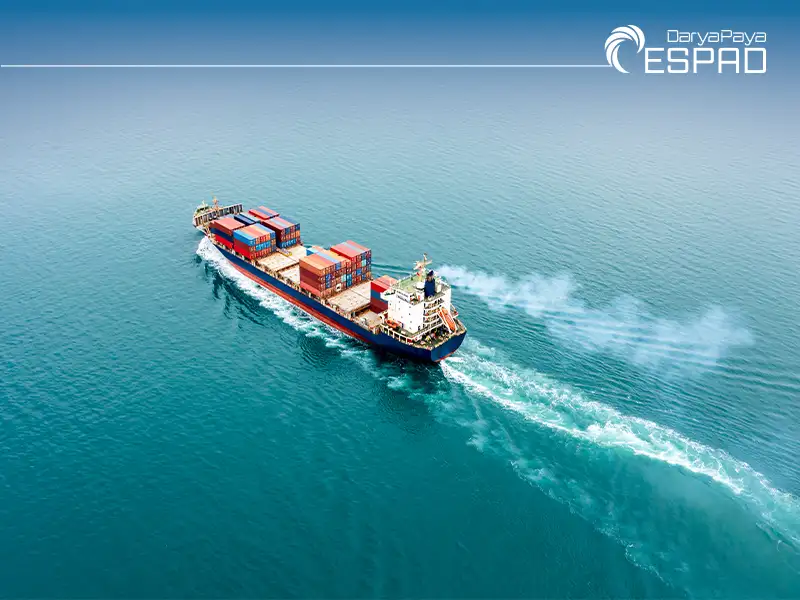
Container vessels, as their name suggests, are specifically designed to transport standardized shipping containers. Cargo is loaded into containers, which are then systematically stowed inside the vessel’s holds and stacked on deck. The capacity of container ships is measured in TEU (Twenty‑Foot Equivalent Unit), representing the volume equivalent of a standard 20‑foot container.
Container ships are generally classified based on size and capacity:
- Feeder: Small container ships with capacities of up to around 3,000 TEU, typically operating on regional routes and connecting smaller ports to major hub ports.
- Panamax: Container vessels with capacities of approximately 3,000 to 5,000 TEU, designed to meet the former dimensional limitations of the Panama Canal.
- Post‑Panamax: Ships with capacities ranging from about 5,000 to 10,000 TEU. Because their dimensions exceed the original Panama Canal limits, they primarily operate between large deep‑water ports.
- Ultra Large Container Ship (ULCS): Container vessels with capacities exceeding 14,000 TEU. These are among the largest ships in operation and can only berth at highly equipped deep‑water container terminals.
Container ships are among the most widely used vessels in international trade. Containers are available in many specialized forms—such as refrigerated containers and open‑top containers—allowing a wide range of cargo types to be transported. Businesses can ship cargo either as shared container loads or dedicated full containers depending on budget and cargo volume. Since containers are sealed, cargo security and integrity during transit are significantly enhanced.
Reefer Vessel
With the widespread use of refrigerated containers, the role of dedicated reefer vessels has diminished compared to the past. However, companies transporting perishable or temperature‑sensitive goods may still rely on reefer vessels for dedicated shipments.
These vessels allow the ambient temperature to be adjusted according to the cargo type, including pharmaceuticals, fruit, fish, or dairy products. Their refrigeration systems maintain stable temperature conditions throughout the voyage, ensuring that cargo arrives fresh and intact.
Ro‑Ro Vessel (Roll‑on/Roll‑off)
Ro‑Ro vessels are used to transport wheeled cargo such as trucks, passenger vehicles, rail wagons, and any self‑propelled equipment. These ships consist of multiple flat decks arranged like parking levels. At port terminals, they connect to loading ramps that allow vehicles to drive directly on and off the vessel, enabling highly efficient loading and discharge operations.
Ro‑Ro vessels are categorized into several types based on cargo and operational function:
PCC (Pure Car Carrier): Ships designed exclusively for transporting passenger vehicles, without facilities for cargo or passengers.
PCTC (Pure Car and Truck Carrier): These vessels can carry passenger cars as well as trucks, buses, and other heavy vehicles. They are equipped with adjustable decks to accommodate taller cargo.
RoPax (Roll‑on/Roll‑off + Passenger): Ships designed with both passenger accommodation and vehicle loading ramps, commonly used on short‑sea routes for transporting both passengers and vehicles between ports.
ConRo (Container + Ro‑Ro): Hybrid vessels with dedicated sections for both containerized cargo and wheeled vehicles.
Tanker Vessel
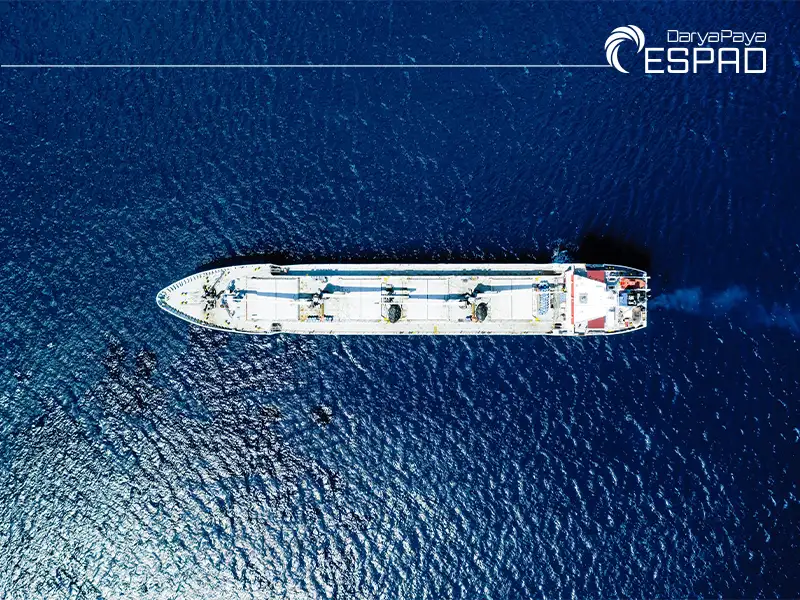
Tanker ships are designed to transport liquids and gases, and their tank configurations vary depending on the cargo type. They can generally be classified into three main categories.
- Oil Tankers
These tankers are used to transport crude oil and refined petroleum products and typically have very large volumetric capacities. To reduce the risk of fire or explosion, many oil tankers are equipped with inert gas systems. These systems inject inert gases such as nitrogen into empty tank spaces, reducing oxygen concentration and preventing ignition of flammable vapors.
-
Gas Carriers
Gas tankers are designed to transport liquefied natural gas (LNG) and liquefied petroleum gas (LPG). They feature spherical or cylindrical tanks with double‑wall structures designed to prevent leakage and structural failure. These tanks maintain the required pressure and temperature conditions necessary to keep the gas in liquid form.
-
Chemical Tankers
Chemical tankers are specifically built to carry liquid chemicals and vegetable oils. They contain multiple tanks constructed from stainless steel to prevent contamination and corrosion. Each chemical cargo is stored in a separate tank to avoid mixing. Chemical tankers are classified according to IMO ship types. Type 1 provides the highest safety standards and is used for highly hazardous chemicals, while Type 3 is designed for lower‑risk substances.
Breakbulk Vessel
Breakbulk vessels represent another category of cargo ships that function similarly to bulk carriers but transport individually packaged cargo rather than loose commodities. Cargo is loaded in units such as bags, boxes, pallets, rolls, or drums without the use of containers.
These vessels are suitable for cargo that is neither uniform enough for bulk transport nor standardized enough for containerization. As a result, they are commonly used for transporting specialized or irregular cargo such as industrial machinery components, timber, bagged cement, flour, sugar, paints, and chemicals.
Multi‑purpose Vessel (MPV)
Multi‑purpose vessels are highly flexible ships designed with cargo spaces capable of accommodating different cargo types. They can simultaneously carry combinations of containerized cargo, bulk cargo, and wheeled cargo. Some MPVs are equipped with onboard cranes, enabling cargo operations in ports with limited infrastructure. These vessels are commonly deployed on trade routes with diverse cargo requirements.
Livestock Carriers
Livestock carriers are specially designed to transport live animals such as cattle, sheep, and horses. Their internal configuration includes separated and tiered compartments to ensure safe handling and transport of animals. Key features include advanced ventilation systems, automatic feeding and watering systems, and non‑slip flooring. These design elements help minimize stress and injury during transit.
Barge
Barges are non‑self‑propelled vessels used to transport bulky or heavy cargo over short maritime or inland waterway routes. They typically have flat bottoms and low sides and are moved by tugboats. Barges are widely used in ports, islands, and terminals where high‑capacity cargo transfer is required.
Fishing Vessels
Fishing vessels play a crucial role in harvesting marine resources. They are designed in various sizes and configurations depending on the fishing method used. Some are small coastal vessels used for near‑shore fishing, while others are large industrial ships equipped with mechanized systems capable of deploying and retrieving heavy fishing nets from deep waters. These vessels often include onboard cold storage systems to preserve the catch.
Passenger Ship
In addition to cargo vessels, many ships are designed specifically for passenger transport. Cruise ships, inter‑island passenger vessels, and ferry boats all fall into this category.
Lenj (Traditional Coastal Vessel)
The Lenj is a traditional vessel commonly used along the southern coasts of Iran and is generally classified between a boat and a small ship. These vessels are primarily used for transporting cargo or passengers along coastal routes. Lenj vessels are typically powered by diesel engines and built with wooden or metal hulls, providing good resistance against varying maritime weather conditions. Their simple design and high maneuverability have allowed them to remain widely used in local and cross‑border trade.
Dhow
Dhow is a traditional wooden vessel historically used across the Persian Gulf, the Arabian Sea, and the western Indian Ocean. These vessels have been widely employed for centuries in regional maritime trade, fishing, and coastal transportation. Dhows are typically constructed with a wooden hull and powered today by diesel engines, although earlier versions relied on lateen sails. Due to their shallow draft and strong maneuverability, they are well suited for coastal navigation and operations in smaller ports with limited infrastructure. In many parts of the Persian Gulf—particularly along the southern coasts of Iran—dhows (locally known as Lenj) continue to play an active role in short‑distance cargo transport and traditional maritime commerce.
Choosing the Right Vessel: The Beginning of a Secure Transport Chain
The first step in planning maritime cargo transportation is understanding the different types of commercial vessels. Selecting the appropriate vessel can significantly reduce operational costs, improve cargo safety, and enhance the efficiency of logistics operations.
As the largest private shipping company in Iran, Espad Darya Paya leverages its operational capabilities and industry experience to provide the most suitable logistics solutions. Consulting with the company’s specialized team can help ensure reliable and efficient maritime transport decisions.
Throughout its operations, Espad Darya Paya actively supports a wide range of maritime transportation services across international and regional trade routes. By leveraging extensive industry experience, strong port networks, and access to various vessel types—including bulk carriers, container ships, tankers, and regional cargo vessels—the company provides flexible and reliable logistics solutions tailored to different cargo requirements. Espad Darya Paya works closely with global shipping partners and port operators to ensure efficient cargo handling, regulatory compliance, and safe maritime transport, helping businesses move goods smoothly across international markets.