Bitumen Packaging and Transport in Containers for International Export
Bitumen remains in a liquid state at temperatures above 160°C and solidifies at lower temperatures. Due to the physical characteristics of this product and the sensitivities associated with its transportation, proper bitumen packaging is essential. Bitumen is widely used across several industries, most notably in construction, road paving, and surface waterproofing.
Given the extensive applications of this product, the volume of bitumen exports and imports has increased significantly. For this reason, this article from the Spad Blog reviews the various methods of bitumen packaging, as the selected packaging method has a direct impact on product quality preservation, loss reduction, and improved efficiency in loading, discharge, and transportation operations.
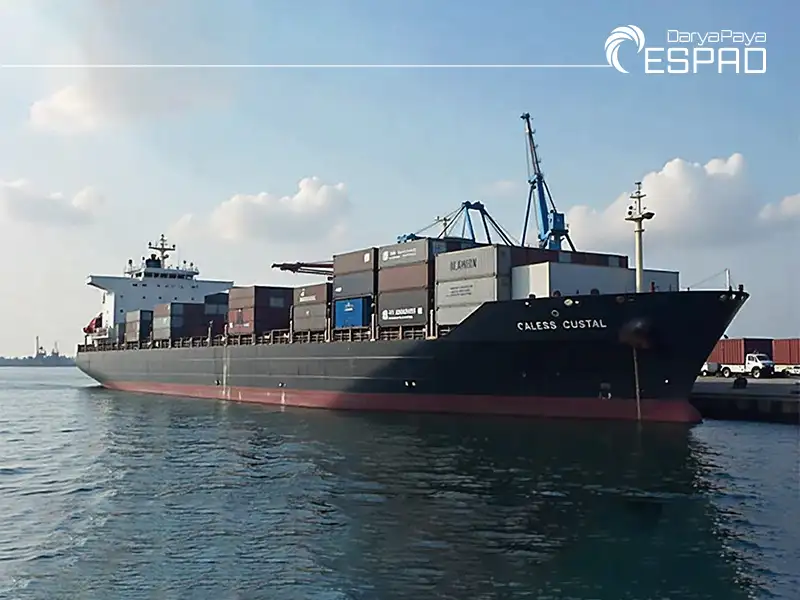
Bitumen Transport and Packaging in Containers
There are several methods for transporting bitumen, which are discussed below.
Bitumen Transport Container
A bitumen container (commonly referred to as a Bitutainer) is a specialized container designed and manufactured specifically for bitumen transportation. In addition to thermal insulation, these containers are equipped with a heating system to maintain the bitumen at the appropriate temperature during transit.
The operating temperature typically ranges between 160°C and 200°C. Bitumen containers are generally 20‑foot units, but their capacity is approximately 30% higher than standard containers. The carrying capacity of a bitumen container ranges from 27 to 29 tons.
Bitumen Packaging in Steel Drums
One of the most common methods of bitumen transportation is packaging it in steel drums. This method remains popular due to its reliability, safety, and ability to preserve product quality.
The drums typically have a thickness of around 6 mm and are generally manufactured from steel, making them suitable for packaging liquid and viscous materials such as bitumen.
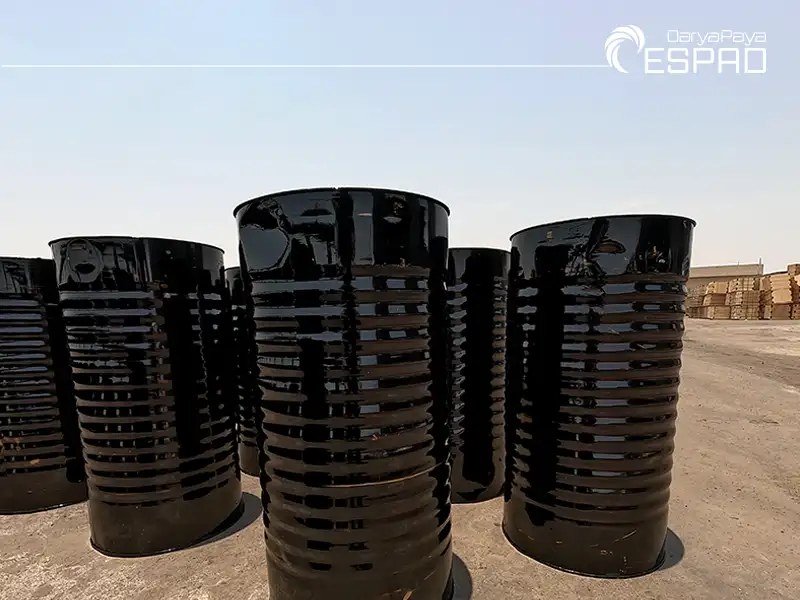
In drum transportation, bitumen can also be stored for extended periods. The net weight of each drum is typically between 180 and 185 kilograms. Based on drum dimensions and weight, approximately 110 drums can be loaded into a 20‑foot container, resulting in a total cargo weight of 20 to 21 tons.
It should be noted that although drum transport is very common, its cost is higher than Jumbo Bag packaging because steel is significantly more expensive than the plastic materials used in Jumbo Bags.
One of the challenges companies face when transporting bitumen in drums is the discharge process. In this method, the bitumen must be reheated before unloading, which can increase product loss during discharge operations.
The table below outlines bitumen container capacity based on container type.
|
Container Type |
Bitumen Drums with Pallets | Bitumen Drums without Pallets |
| Flatbed Container | 90 Drums | 115 Drums |
| 20‑Foot Container | 80 Drums | 110 Drums |
| 40‑Foot Container | 137 Drums | 150 Drums |
Types of Export Steel Drums for Bitumen Transport
- 83 cm drum with a loading capacity of 150 kg
- 98 cm drum with a loading capacity of 180 kg
- 98 cm drum with a loading capacity of 220 kg
Advantages of Transporting Bitumen in Steel Drums
- High structural strength and improved protection against impact and pressure
- Resistance to various environmental conditions, including high temperatures and humidity
- Preservation of bitumen’s original properties and quality
- Recyclability of steel drums, minimizing environmental contamination
Bitumen Packaging in Jumbo Bags
Jumbo Bags are large multi‑layer flexible bags whose inner lining is coated with a nano‑polyethylene layer. These bags have a thermal tolerance of approximately 109°C, but they melt at temperatures around 160°C.
Using this method, the product can also be stored in warehouses. Each Jumbo Bag usually carries more than 1 ton of bitumen.
With this loading capacity, a 20‑foot container can accommodate 20 Jumbo Bags, allowing the container to transport 20 to 21 tons of bitumen. A 40‑foot container can typically accommodate 24 to 26 Jumbo Bags, resulting in a total capacity of 24 to 26 tons of bitumen.
The following table provides an overview of container capacity for bitumen transport using Jumbo Bags.
|
Container Type |
Number of Jumbo Bags | Total Loaded Bitumen Weight |
| 20‑Foot Container | 20 Jumbo Bags | 20–21 tons of bitumen |
| 40‑Foot Container | 24–26 Jumbo Bags | 24–26 tons of bitumen |
It should be noted that using Jumbo Bags for bitumen packaging and transport can reduce product loss by approximately 3–4%. For this reason, many logistics companies now prefer Jumbo Bags over steel drums.
Another important point is that bitumen discharge from Jumbo Bags is significantly easier and more cost‑efficient than drum unloading. In this process, the outer layer of the bag is simply cut open and the inner nano‑polyethylene liner containing the bitumen is placed directly into the melting furnace, significantly reducing product loss.
Bitumen Jumbo Bags are typically manufactured with a capacity of 1 ton (1000 kg). Because of their higher payload and flexible structure compared to drums, transporting them in 40‑foot containers is often more economical and space‑efficient.
Advantages of Transporting Bitumen in Jumbo Bags
- Faster loading and unloading operations
- No contamination of origin or destination ports
- Reduced energy consumption during discharge
- Lower packaging and transportation costs
- Improved bitumen quality due to lower temperature exposure
- Reduced product loss during unloading
- Increased loading and transport capacity
- Long‑term storage capability up to 12 months without energy consumption
- Reduced environmental impact
Bulk Bitumen Packaging and Transport in Tankers
In large‑scale bitumen trading or bulk transactions, tankers are commonly used. Tankers are therefore considered a bulk transportation method for bitumen.
This loading and transport method generally has lower operational costs compared to other methods. However, the total cost depends on factors such as capacity, currency fluctuations, and loading time.
Bitumen Packaging and Transport in Poly Bags
The polymeric materials used in Poly Bag production are fully compatible with bitumen. Therefore, unlike Jumbo Bags, the outer layer does not need to be removed before melting.
Interestingly, when the Poly Bag melts together with the bitumen, it helps achieve more uniform distribution and can even enhance certain bitumen properties.
Poly Bags are flexible and durable. Their outer layer is made from polypropylene polymer, while the inner layer consists of nylon capable of withstanding temperatures up to 109°C. These bags typically melt at temperatures above 180°C.
Types of Poly Bags
- Cubic or pouch‑type Poly Bag with a capacity of 250 kg
- Cubic or pouch‑type Poly Bag with a capacity of 1 ton
- Strapped Poly Bag (equipped with a surrounding metal frame for improved stability and easier handling, particularly in high‑temperature regions)
- Trapezoidal Poly Bag
One of the most significant advantages of Poly Bag transportation is the reduction in storage and logistics costs.
Additionally, this packaging method is particularly suitable for destinations that lack specialized bitumen melting equipment. Using Poly Bags, a 20‑foot container can carry approximately 24 to 25 tons of bitumen.
Advantages of Using Poly Bags for Bitumen Packaging and Transport
- Recyclable packaging material
- Easier storage and transportation
- Higher quality compared to Jumbo Bags
- Improved bitumen quality due to lower operating temperatures
- More cost‑effective compared to other packaging methods
- Faster loading and discharge operations
- Reduced energy consumption during discharge
- No port contamination at origin or destination
- Increased transport capacity
- Reduced bitumen loss
Bitumen Packaging and Transport in Flexitanks
Another method of bitumen packaging and transportation involves the use of large Flexitank bags. These bags are manufactured from durable polymer materials such as polypropylene and polyethylene, consisting of multiple layers with high flexibility.
These packaging units are designed to fit completely inside a standard 20‑foot container. Flexitanks must be transported in containers with insulated walls. Each bag is equipped with one or two valves for loading and discharge operations.
This type of bitumen packaging is widely used in the Chinese market and typically has a transport capacity of around 20 tons.
Bitumen Packaging and Transport in Containers
Bitumen is a widely used industrial product applied across multiple sectors. However, due to its specific physical properties, transporting and packaging bitumen requires specialized equipment and logistics planning.
This article reviewed several bitumen packaging methods, including steel drums, Jumbo Bags, Poly Bags, tankers, and bitumen containers.
Since each method has distinct operational advantages and equipment requirements, selecting the appropriate option can significantly affect product loss, transportation efficiency, and overall logistics costs.
It should also be noted that bitumen transportation requires specialized vessels. Therefore, it is recommended to utilize the equipment and operational capabilities of Spad Shipping Company to improve loading and unloading efficiency, accelerate transport operations, and minimize loss of this valuable product.