How Is Bulk Bitumen Transported? A Technical Review of Bitutainers vs. Hot Bitumen Tankers
Bitumen is a critical and strategic commodity in the construction industry, with extensive applications, particularly in road construction and roofing systems. The method of transporting bitumen plays a decisive role in ensuring its operational efficiency and minimizing product loss.
Bulk bitumen transportation may be executed through various methods, each requiring dedicated equipment and infrastructure, and each presenting distinct operational advantages and constraints. Given that bitumen constitutes a significant portion of exports from oil-producing countries such as Iran, this article from the Espad blog examines bulk bitumen storage and transportation methods, outlining the advantages and disadvantages of each approach to enable informed decision-making.
Bulk Bitumen Transportation Methods
Bulk storage and transportation of bitumen differ substantially from other commodities due to its semi-solid physical state and thermoplastic characteristics. As a result, its handling and logistics can be operationally complex. The principal bulk transport methods are reviewed below.
Bitumen Tanker Trucks
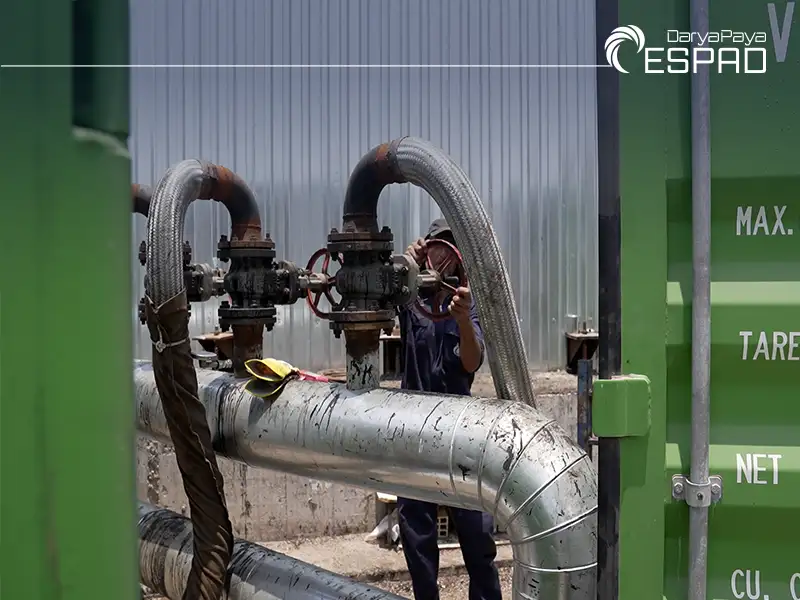
One of the most common methods of bitumen transport is the use of dedicated bitumen tanker trucks engineered specifically for this purpose. These tankers, typically fabricated from steel, function as thermally insulated storage tanks capable of transporting substantial volumes of product. They are designed to withstand the high viscosity of bitumen.
Prior to loading, bitumen stored in tanks is heated until it transitions from a semi-solid to a fully liquid state. Once liquefied, it is pumped into the tanker using specialized pumping systems. Importantly, bitumen tanker trucks are both insulated and heated to ensure that the cargo remains in liquid form throughout transit and does not revert to a semi-solid state.
Bulk Bitumen Carrier or Hot Bitumen Tanker Vessel
A bulk carrier for bitumen, also referred to as a hot bitumen tanker, is a specialized vessel engineered for the maritime transport of bulk bitumen. These vessels are optimized for the carriage of large volumes of heated bitumen and are capable of receiving substantial quantities from terminals and storage facilities for onward delivery to international destinations.
During transportation, bitumen must be maintained at elevated temperatures to remain in liquid form. As previously noted, bitumen is inherently semi-solid; it becomes liquid when heated and solidifies as temperature decreases. Since loading and discharging semi-solid bitumen is operationally difficult, bulk bitumen tankers are equipped with onboard heating systems that maintain the cargo in liquid condition throughout the voyage.
Accordingly, bitumen is loaded in a hot state and maintained within an operational temperature range until discharge. This ensures that upon arrival at the discharge port, the cargo is immediately pumpable and ready for handling and application.
Loading bitumen in heated condition and maintaining temperature control throughout the voyage guarantees discharge readiness at destination and typically provides a more streamlined and cost-efficient logistics solution.
Advantages of Bulk Bitumen Tanker Vessels
Transporting bulk bitumen via dedicated hot bitumen tankers offers several operational benefits:
- The product is delivered in bulk form, which is particularly cost-effective for large-scale infrastructure projects requiring high volumes. This method is operationally simpler than transport in drums or jumbo bags.
- Terminals handling bulk bitumen tankers are generally pre-configured for such operations, reducing the need for additional infrastructure investments.
- Where appropriate infrastructure exists, total logistics costs are typically lower than those associated with drum-based shipments.
- Bulk discharge eliminates the need for extensive manual handling and packaging disposal.
Disadvantages of Bulk Bitumen Tanker Vessels
Despite their advantages, bulk hot bitumen vessels present several constraints:
- Limited global availability of dedicated hot bitumen tankers may significantly restrict transport options.
- Specialized discharge berths and pipeline systems are required for transferring heated bitumen ashore. Installing and maintaining such infrastructure involves substantial capital expenditure.
- Bitumen is exported in various grades. Each grade requires separate storage tanks at loading and discharge terminals. Limited tank capacity may restrict the range of exportable grades. Constructing additional storage tanks requires significant investment and extended lead time.
- Continuous onboard heating increases operational costs, particularly where multiple discharge operations are required.
Bulk Bitumen Containers (Bitutainers)
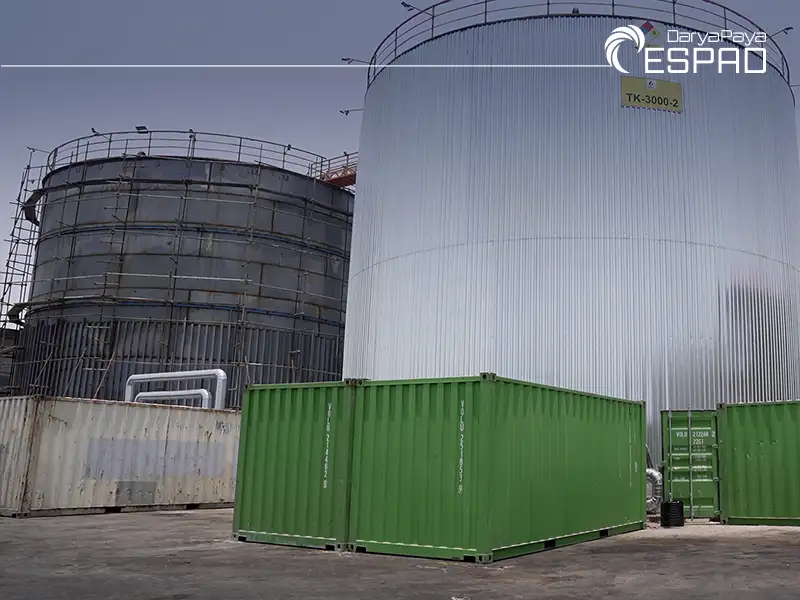
Bitumen containers, particularly Bitutainers, provide an alternative method for transporting bulk bitumen. While hot bitumen tankers are suitable for very large volumes, bitumen containers offer greater flexibility for variable shipment sizes.
One of the primary advantages of bitumen containers is the ability to transport multiple grades simultaneously within separate container units.
Bitumen is loaded into containers in liquid form. Unlike hot bitumen tankers, however, these containers are not actively heated during transit. The cargo is allowed to cool gradually during the voyage, reducing unnecessary heating costs. For short-haul shipments, bitumen may be transported at elevated temperatures, minimizing the need for additional reheating prior to discharge.
Advantages of Transporting Bitumen via Specialized Containers
Using bulk bitumen containers instead of hot tanker vessels offers the following operational benefits:
- No heating is required during transit, resulting in reduced energy costs.
- Greater flexibility compared to tanker vessels. Each container typically has a capacity of approximately 27 metric tonnes, enabling shipment of smaller parcel sizes.
- The lower unit capacity allows exporters to ship multiple bitumen grades without dependency on extensive tank storage infrastructure.
- Bulk bitumen containers offer higher payload capacity than containerized jumbo bag or drum shipments, which typically accommodate up to 18 metric tonnes, whereas bulk containers accommodate at least 27 metric tonnes.
- Containerized bulk shipments enable distribution to multiple projects, whereas a single tanker vessel may serve only one discharge program.
- Containers can be transported by truck or trailer after discharge from the vessel, eliminating the need for permanent pipeline systems and specialized terminal infrastructure.
Disadvantages of Bulk Bitumen Container Transport
Despite their advantages, bulk bitumen containers also have operational limitations:
- Some countries lack access to specialized bitumen containers, limiting export potential.
- Because the cargo is not heated during transit, it will gradually revert to semi-solid form, requiring heating equipment at the discharge terminal.
- Discharge operations require reheating systems to minimize product loss and ensure efficient pumping.
- Not all terminals are equipped with appropriate heating facilities for containerized bitumen discharge.
Bulk Bitumen Transport and Cooperation with Espad
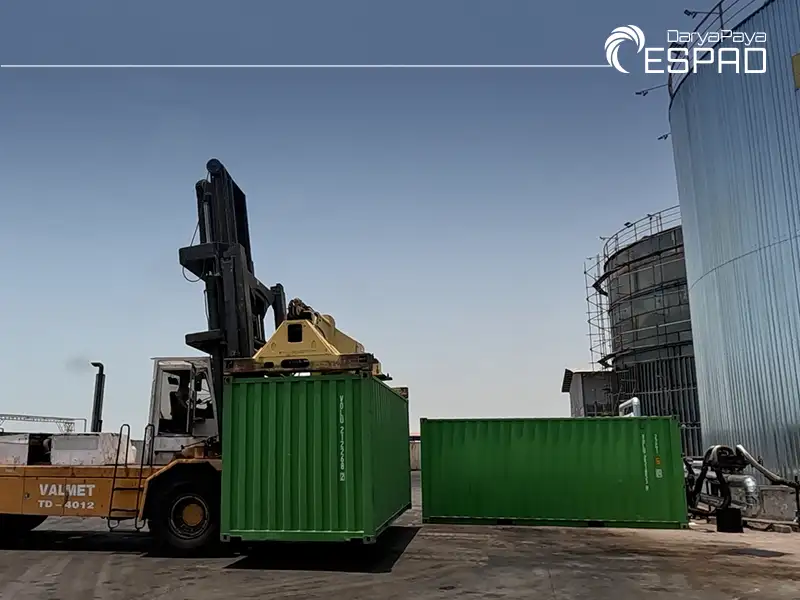
Bulk storage and transportation methods—whether via bitumen containers (Bitutainers) or hot bitumen tanker vessels—can significantly reduce export logistics costs when properly implemented.
When bitumen is transported in bulk and in high volumes, overall costs for exporters and importers decrease substantially. Instead of utilizing thousands of drums or jumbo bags—each involving procurement and handling costs—the product can be loaded directly into containers or tanker vessels. Furthermore, in the case of tanker transport, bitumen arrives at destination in heated condition, eliminating reheating costs prior to discharge.
Accordingly, if you intend to export or import bitumen, you may rely on the professional maritime logistics services of Espad Darya Paya Shipping Company for safe, efficient, and cost-competitive transportation solutions.