Is Direct Shipping Better or Transshipment?
A Practical Guide for Exporters
In international trade, route selection is one of the decisions that can directly affect delivery time, total landed cost, cargo damage risk, foreign buyer satisfaction, and even the exporter’s commercial credibility. When planning an international shipment, many exporters face a key question: Is direct shipping better, or is transshipment the better option? The answer is not always the same. In some cases, direct shipping is the superior choice because it offers greater speed, clearer visibility, and lower operational risk. In other trade lanes, however, transshipment or indirect shipping may be more rational in terms of cost, destination access, and operational flexibility.
For exporters operating in global markets, this issue is especially important. Because of geographic realities, port diversity, carrier limitations, service variations, freight market conditions, and cargo-specific requirements, the choice between direct shipping and transshipment should be made on the basis of careful analysis, not merely the lowest quoted freight rate. A route that appears cheaper at first may ultimately prove more expensive due to delays, repeated container handling, documentary risk, or hidden charges. On the other hand, insisting on direct shipping is not always the right decision either; direct services may be limited, waiting times may be long, or freight rates may be commercially uncompetitive.
What Is Direct Shipping?
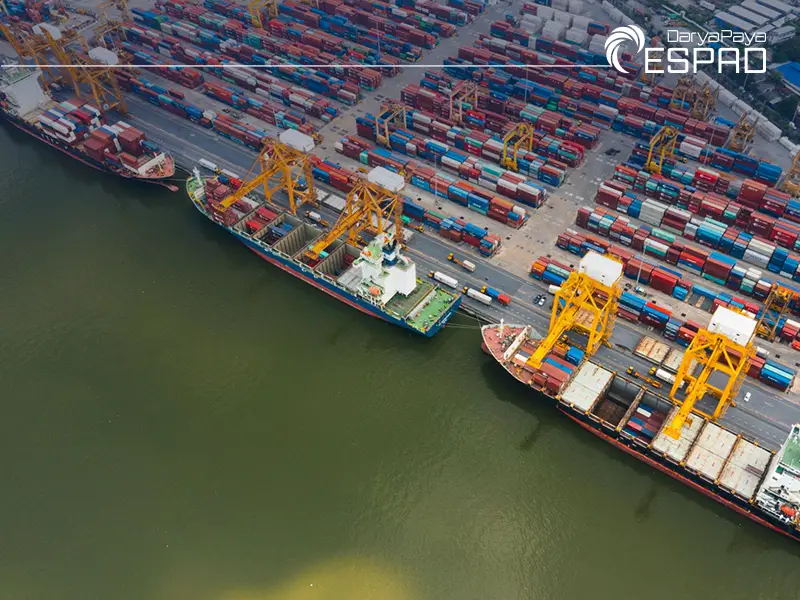
Direct shipping refers to a shipment structure in which the goods or container are transported from the port of origin to the port of destination without being discharged and transferred onto another vessel. In containerized ocean freight, this usually means that the container is loaded onto a vessel at the port of origin and carried by that same vessel to the destination port. In such a case, the container is not removed from the vessel during the voyage and does not undergo an operational stop for onward transfer at an intermediate port.
It should be noted, however, that “direct shipping” does not always mean a non-stop vessel movement. A vessel may call at several ports along its route, but if the exporter’s container is not discharged at those ports and is not loaded onto a different vessel, the shipment is still operationally classified as direct. Therefore, the decisive criterion in direct shipping is the absence of vessel-to-vessel container transfer, not necessarily the absence of intermediate vessel calls.
For exporters, direct shipping is generally most attractive when the export destination lies on the regular service route of a shipping line. For example, certain regional corridors or destinations with higher trade volumes may offer direct or near-direct services. Under such conditions, the exporter can ship with lower risk and more predictable transit time.
What Is Transshipment?
Transshipment is the process by which a container or cargo unit is discharged from the first vessel at an intermediate port and then loaded onto another vessel for onward carriage to the final destination. The port where this transfer takes place is commonly referred to as a transshipment port or hub port. In international container shipping, transshipment is extremely common because not all ports in the world are directly connected, and shipping lines rely on hub ports to manage and optimize their service networks.
In practice, a container may move from the port of origin to an intermediate port and then be forwarded from there on another vessel to the final destination. On some routes, more than one transshipment may even occur. The greater the number of transshipment points, the greater the transport complexity.
For exporters, transshipment is sometimes not an optional choice but the only practical way to reach certain destinations. Many smaller or more remote ports do not have direct service from every origin, and cargo must reach them via one or more intermediate hubs. Transshipment should therefore not be viewed merely as an inferior or high-risk method; it should be understood as a structural feature of modern maritime logistics and managed with precision.
The Main Difference Between Direct Shipping and Transshipment
The principal difference between direct shipping and transshipment lies in the number of times the container is transferred between vessels. In direct shipping, the container remains on the same vessel from origin to destination. In transshipment, the container is discharged at an intermediate port and loaded onto another vessel for the next leg of the journey. This apparently simple distinction has major implications for transit time, cost, damage risk, delay probability, tracking visibility, and document management.
With direct shipping, operational control is generally simpler. Transit times are more predictable, and there is no delay risk linked to waiting for a second vessel. By contrast, transshipment may provide greater flexibility in reaching a wider range of destinations and may, in some cases, offer more competitive freight rates. However, this flexibility comes with risks such as delays at the intermediate port, port congestion, vessel schedule changes, service connection failures, and increased potential for cargo damage.
For the exporter, the correct choice between these two methods should be based on cargo type, contractual delivery deadlines, buyer sensitivity, freight rate, destination, shipping season, carrier performance, and the operating conditions of the transshipment port.
Advantages of Direct Shipping for Exporters
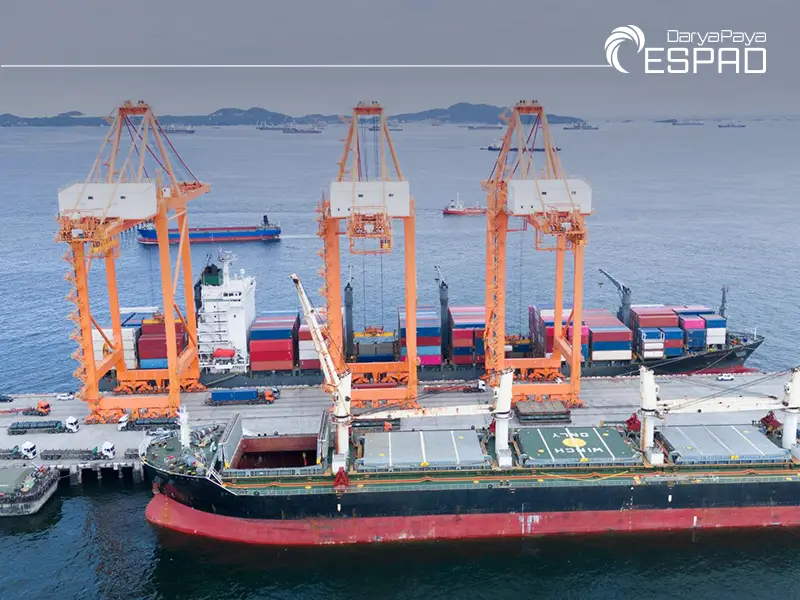
Direct shipping is generally the more secure and transparent operational option. Its first major advantage is the reduced risk associated with container handling. Every time a container is discharged at an intermediate port and reloaded, the probability of container damage, cargo impact, operational delay, or human error increases. Direct shipping eliminates that stage, which is particularly important for sensitive or high-value goods.
The second advantage is better predictability of delivery time. When the container is not expected to wait at an intermediate port for an onward vessel, the transport plan becomes simpler and more controllable. This is highly significant for exporters who have firm delivery commitments to foreign buyers. Delivery delays may result in contract deductions, buyer dissatisfaction, loss of seasonal sales opportunities, or documentary disputes.
The third advantage is relative simplicity in cargo tracking and follow-up. On a direct route, the exporter and the buyer usually deal with one defined ocean voyage, one movement schedule, and one estimated arrival date. In a transshipment movement, by contrast, they must also monitor discharge at the intermediate port, connection to the next vessel, and the second sailing schedule.
Direct shipping is also better suited to cargoes that are sensitive to time, temperature, humidity, or shock. Goods such as perishable food products, refrigerated cargo, certain sensitive chemicals, high-value machinery, project equipment, and cargo with fixed delivery deadlines are generally better moved by direct service whenever feasible.
Disadvantages of Direct Shipping
Despite its major advantages, direct shipping is not always the best choice. Its first limitation is restricted destination coverage. Not all destination ports are served directly from every origin. Even where a direct service exists, sailings may be infrequent, requiring the exporter to wait for the next available vessel. In some cases, this waiting time may make the total timeline of direct shipping longer than a faster transshipment option.
The second limitation is freight cost. On some routes, direct service may be more expensive, particularly where cargo volume is low or the shipping line offers limited capacity. In such cases, the exporter must assess whether the reduction in risk and transit time justifies the higher freight spend.
The third limitation is reduced flexibility. Transshipment networks typically create more routing options to a greater number of destinations, whereas direct shipping depends on the limited schedule of a specific line or service. If the direct vessel schedule changes or is cancelled, the exporter may have no immediate alternative.
Advantages of Transshipment in Export Operations
Despite its operational complexity, transshipment is one of the most important instruments of export market access. Its foremost advantage is the expansion of reachable destinations. Many ports worldwide do not have direct service from a given origin but are accessible through one or more intermediate hubs. Without transshipment, shipping to many remote or low-volume destinations would be commercially difficult or operationally impossible.
Another advantage of transshipment is access to a broader shipping network. Hub ports are typically connected to numerous trade lanes, which gives exporters more options in terms of sailing frequency, freight rate, and destination port coverage. In some cases, a transshipment route may even be faster than a direct one because it offers more regular departures or uses larger and faster vessels on the main legs.
From a cost perspective, transshipment can also be more economical on certain routes. By consolidating cargo through hub ports, shipping lines optimize vessel capacity and can sometimes offer more competitive rates. For cargoes with lower time sensitivity and greater operational tolerance, this can be a substantial advantage.
Transshipment also gives exporters serving diverse export markets greater flexibility. If the final destination changes, or if the buyer requests delivery to a different port, transshipment routes may in some situations allow better management of such changes, provided that the documentary implications and carrier approvals are thoroughly reviewed.
Disadvantages and Risks of Transshipment
Transshipment carries specific risks and should not be selected solely because it is cheaper. The most important risk is delay at the intermediate port. If the container misses the onward vessel for any reason after discharge at the transshipment hub, it may remain there for several days or even several weeks. This delay may be caused by port congestion, vessel schedule changes, adverse weather, operational disruptions, capacity shortages on the next vessel, or documentary issues.
The second risk is an increased likelihood of damage or loss. Every time a container is discharged, moved, stored, and reloaded, the chance of impact, dropping, seal damage, internal cargo movement, or operational error increases. In standard container shipping, this risk is usually controlled, but for sensitive or high-value cargo it must be taken seriously.
The third risk is reduced tracking transparency. On transshipment routes, tracking data may be updated with delay, or the exporter may not know precisely which stage the container has reached. This becomes particularly problematic when the foreign buyer regularly requests status updates or when cargo delivery is tied to a specific time frame.
The fourth risk is hidden cost exposure. Although the cost of transshipment is often built into the quoted freight rate, special situations may generate additional charges arising from delays, schedule changes, storage, document amendments, or destination-related discrepancies. Before selecting a route, the exporter must know exactly what the quoted rate includes and what items may be charged separately.
Direct Shipping vs. Transshipment at a Glance
The table below sets out the principal differences between direct shipping and transshipment from the exporter’s perspective:
| Comparison Criterion | Direct Shipping | Transshipment |
|---|---|---|
| Transit time | Usually more predictable | Dependent on second-vessel connection and intermediate port conditions |
| Damage risk | Lower due to less handling | Higher due to discharge and reloading |
| Freight cost | May be higher | More economical on some routes |
| Destination access | More limited | Broader |
| Shipment tracking | Simpler | More complex and multi-stage |
| Best suited for | Sensitive, urgent, high-value cargo | General cargo, remote destinations, routes without direct service |
| Delay risk | Lower | Higher, especially at congested ports |
| Route flexibility | Lower | Higher |
This table shows that neither option is inherently superior in all circumstances. Direct shipping is more valuable when risk reduction and time reliability matter more than freight cost. Transshipment is more rational when the destination lacks direct service, freight spend is a higher priority, or the cargo is less sensitive to time and handling.
Which Cargo Types Are Better Suited to Direct Shipping?
For certain cargoes, direct service is generally recommended whenever available. Time-sensitive goods fall into this category. For example, if cargo is being shipped for a seasonal sales window, project launch, exhibition, production line requirement, or time-bound contract, delay during transshipment can lead to substantial commercial loss. In such cases, direct shipping — even if somewhat more expensive — may be the more economical decision overall.
Perishable and refrigerated cargoes are also typically better candidates for direct shipping. Although reefer containers can be used on transshipment routes, prolonged dwell time at the intermediate port, dependence on uninterrupted power supply, temperature control requirements, and terminal handling quality all create additional risk. For exports such as fruit, vegetables, dairy products, meat, seafood, and certain pharmaceutical products, a direct route or at least a short and highly reliable transshipment route is generally preferable.
High-value or damage-sensitive goods should likewise be shipped via direct service wherever possible. Industrial machinery, electronic equipment, sensitive components, project cargo, and goods requiring specialized packaging are safer when exposed to fewer handling events. In such cases, the exporter should not focus only on freight rate, but also on cargo value and the potential cost of damage.
When Is Transshipment the Better Choice?
Transshipment is the better option when the final destination does not have a suitable direct service from the origin. This is extremely common in international trade, and exporters should not reject a route merely because it is indirect. A large proportion of the world’s cargo moves via hub ports, and where the shipping line is reliable and the intermediate hub is efficient, transshipment can be entirely acceptable.
Transshipment is also well suited to general, non-sensitive cargo. Goods such as packaged industrial products, dry raw materials, consumer goods, non-sensitive spare parts, durable mineral products, and cargoes with flexible delivery windows can often move effectively through transshipment routes. If the rate is commercially attractive and the routing plan appears reliable, transshipment can reduce total export logistics cost.
In some cases, transshipment may even offer a time advantage. If a direct vessel to the destination sails only once per month, but a transshipment route offers weekly departures, the total shipment timeline may actually be shorter via transshipment. Exporters should therefore not calculate transit time solely on the basis of ocean voyage duration; they must also consider pre-sailing waiting time, discharge time, connection time, and final delivery timing.
The Role of the Transshipment Port in Route Quality
Not all transshipment routes are equal in quality. The intermediate port plays a decisive role in shipment success. A hub with strong equipment, regular schedules, sufficient capacity, and robust onward connectivity reduces transshipment risk. By contrast, congested, under-capacity, or delay-prone ports can make the shipment route substantially more risky.
For exporters, it is important not to focus solely on destination name and freight rate when reviewing a shipping quotation. They should also determine which transshipment port the container will pass through, what the usual dwell time is there, how the connection to the onward vessel is scheduled, and whether the carrier assumes responsibility for the full route to final destination under one bill of lading.
In professional ocean freight planning, the transshipment route should be reviewed in detail. Sometimes two quotations have similar pricing, but one passes through a better-performing intermediate hub while the other goes through a port with a history of congestion. In such cases, selecting the more reliable route — even at a slightly higher rate — is the more rational decision.
The Impact of Direct Shipping and Transshipment on Shipping Documents
Shipping documents are critically important in export trade, especially when the transaction is conducted under a letter of credit, bank payment structure, or tightly drafted contractual terms. In direct shipping, documentary status is usually simpler because the port of loading, port of discharge, and transport route are more transparent. In transshipment, greater care must be given to the wording of the bill of lading, the contractual permissibility of transshipment, and the buyer’s or bank’s documentary requirements.
If the letter of credit or sales contract states that transshipment is not permitted, selecting a transshipment route may lead to a documentary discrepancy. Even if the goods arrive at destination without issue, the bank or buyer may suspend payment or delay settlement because of the discrepancy in the documents. For this reason, the exporter must review the documentary terms of the contract carefully before booking shipment.
In many ocean bills of lading, even if the operational route includes transshipment, the shipping line may issue a single bill of lading from origin to final destination. Even so, this must still align with the wording of the contract and any applicable banking requirements. A professional exporter reviews the draft bill of lading before loading to ensure there is no discrepancy in port names, cargo description, container count, weight, carriage terms, or transshipment authorization.
The Relationship Between Route Choice and Incoterms
The choice between direct shipping and transshipment is also linked to the applicable Incoterm. If the sale is made under terms such as FOB, the buyer is usually responsible for vessel booking and route selection; however, the exporter should still understand how route choice affects loading timing, documentation, and its own obligations. Under terms such as CFR or CIF, the seller is responsible for arranging carriage to the destination port, and the choice between direct shipping and transshipment directly affects both responsibility and cost.
For exporters operating under CFR or CIF, route selection must be handled with even greater care, because if the goods arrive late or encounter problems during transshipment, the buyer will usually look first to the exporter for explanation and follow-up, even if the carrier caused the problem. Under such circumstances, choosing a cheap but high-risk route can damage the seller’s credibility.
In FCA transactions as well, particularly in container shipping, route selection may be made by the buyer or its forwarder. Even so, if the exporter is responsible at origin for delivering the goods to the terminal or carrier, it must align timing and documentation with the selected route.
The Effect of Cargo Type on Route Selection
Cargo type is one of the most important criteria in deciding between direct shipping and transshipment. General cargo with low sensitivity to time, temperature, and handling can usually tolerate transshipment routes more easily. By contrast, goods with high value, physical sensitivity, expiry limitations, temperature requirements, or urgent delivery obligations should, wherever possible, move via direct service or an exceptionally reliable transshipment route.
For example, exports such as stone, ceramics, certain metal products, or mineral cargo may be less sensitive to spoilage or timing, but weight distribution, securing, and the risk of physical damage during handling must still be managed. By contrast, products such as dates, nuts, food products, pharmaceuticals, sensitive chemicals, exhibition cargo, or project equipment require much more precise analysis.
In professional decision-making, the exporter must evaluate cargo value, cargo sensitivity, delivery commitment, and freight cost simultaneously. None of these factors is sufficient on its own.
The Real Cost of Shipping: Beyond the Quoted Rate
Many poor international shipping decisions begin when the exporter compares only the quoted freight rate. In reality, the total cost of shipping consists of a range of direct and indirect cost elements. A transshipment route may have a lower base rate, but if it results in delay, demurrage, detention, storage charges, document amendment fees, or cargo damage, it may ultimately become more expensive.
Conversely, direct shipping may carry a higher headline rate, but by reducing transit time, minimizing stoppage risk, and simplifying cargo follow-up, it may reduce hidden costs. Proper comparison should therefore be based on total shipment cost, not merely the freight amount.
The table below illustrates some of the factors affecting the real cost of shipping:
| Cost Factor | Effect in Direct Shipping | Effect in Transshipment |
|---|---|---|
| Base freight rate | May be higher | May be lower |
| Delay risk | Lower | Higher |
| Destination dwell-related cost | Usually more controllable | Greater increase potential if route delay occurs |
| Damage risk | Lower | Higher due to rehandling |
| Tracking and management cost | Lower | Higher |
| Documentary discrepancy risk | Lower | Higher if contract terms are not aligned |
Decision Criteria for Exporters
To choose effectively between direct shipping and transshipment, the exporter should assess several key criteria simultaneously. First is the final destination and the level of carrier access to that destination. If a reliable direct service exists, its rate, timing, and capacity should be compared against transshipment alternatives. If no direct service exists, or if direct service is highly limited, transshipment becomes the primary option.
The second criterion is cargo type and cargo value. Sensitive, perishable, high-value, or time-bound cargo requires a more reliable route. The third criterion is contractual and documentary obligation. If the contract or letter of credit prohibits transshipment, then a transshipment route may create serious problems. The fourth criterion is the performance history of the shipping line and the transshipment port. A carrier’s name or low rate alone is not sufficient; delay history, tracking quality, and forwarder responsiveness should also be reviewed.
Finally, the exporter must focus on the actual delivery timeline, not just the sailing duration. Cargo preparation time, inland haulage to port, terminal acceptance, waiting time for vessel departure, ocean transit, transshipment dwell time, and destination clearance all shape the buyer’s final delivery experience.
Short Checklist Before Choosing Direct Shipping or Transshipment
Before finalizing a booking, the exporter may review the following questions:
| Key Question | Why It Matters |
|---|---|
| Is there a regular direct service to the destination? | Determines whether direct shipping is a feasible option |
| Is the cargo sensitive to time or temperature? | Assesses transshipment risk |
| Does the contract permit transshipment? | Prevents documentary discrepancy |
| Which transshipment port is involved, and what is its performance history? | Helps predict delay probability |
| What is the total transit time from origin door to destination? | Enables realistic delivery planning |
| What costs are included in the quoted rate? | Helps avoid hidden charges |
| Does the shipping line assume responsibility for the full route? | Supports risk management in multimodal or combined routing |
Operational Recommendations for Reducing Transshipment Risk
If the exporter must use, or prefers to use, a transshipment route, several practical steps can reduce the associated risk. First, selecting a reputable shipping line or forwarder is critical. The service provider should be able to explain the route transparently, confirm the connection plan, and follow up effectively if delays occur.
Second, the transshipment route should be reviewed in the documents and contract from the outset. If the buyer or bank imposes any restriction on transshipment, the issue must be resolved before shipment, not after the bill of lading has been issued. Third, for sensitive cargo, packaging and lashing should be designed on the assumption of additional handling. A transshipment route means that the container will be moved multiple times within terminal operations; packaging quality therefore becomes even more important.
Fourth, the exporter should allow a greater time margin for delivery. In negotiations with the foreign buyer, it is advisable to communicate delivery timing with a safety buffer so that ordinary delays at the transshipment hub do not escalate into commercial disputes.
Direct Shipping or Transshipment: Which Is Better for Export Trade?
If the answer is framed professionally, direct shipping is better when time, reliability, cargo integrity, and risk reduction are the top priorities. Transshipment is better when the destination lacks direct service, freight cost matters more, or the cargo is less sensitive to timing and handling.
In export operations, direct shipping is usually the safer option on routes where regular and reliable service exists. However, for many international destinations, transshipment is a natural part of the shipping process and, if properly managed, can be entirely efficient. The problem arises when the exporter makes a price-only decision without reviewing the route or ignores documentary requirements and cargo characteristics.
The correct choice, therefore, does not come from a single general rule; it comes from shipment-by-shipment analysis. Two shipments from the same company to two different destinations may require entirely different decisions. Even the same product may require a different route in a different season or under a different contract structure.
Route Selection Is a Strategic Export Decision
The question, “Is direct shipping better or transshipment?”, is one of the central questions in export planning. Direct shipping generally provides lower risk, more predictable transit time, easier tracking, and greater cargo security. By contrast, transshipment enables access to a larger number of destinations, offers network flexibility, and sometimes allows a more economical freight structure. Both methods have a legitimate place in global trade, and neither can be regarded as absolutely superior in every case.
For exporters, the right decision emerges when cargo type, destination, delivery timing, contract terms, Incoterms, documentary requirements, freight rate, transshipment port, and carrier performance are assessed together. If the cargo is sensitive, high-value, perishable, or time-critical, direct shipping or a short and highly reliable transshipment route is preferable. If the cargo is more general in nature and the destination has no direct service, transshipment may be a logical and economical option.
Ultimately, a professional exporter is not one who always selects the cheapest route, but one who balances cost, risk, timing, and commercial obligation. In today’s competitive market, route selection is part of export service quality. Cargo that arrives on time, in sound condition, and with correct documentation is not merely a successful shipment; it is a sign of the exporter’s credibility, discipline, and commercial maturity in international markets.
Espad Darya; The Best Choice for Direct and Containerized Transshipment Services
When choosing between direct shipping and transshipment, working with a specialized shipping company can make the decisive difference between a successful shipment and a high-risk routing decision. Espad Darya Shipping, with its precise understanding of maritime routes, access to a broad network of international carrier services, and ability to provide solutions tailored to cargo type, destination, and delivery time, is regarded as one of the strongest options for exporters requiring both direct and transshipment container services.
Through professional route analysis, appropriate service selection, transport document management, continuous container tracking, and mitigation of potential risks at intermediate ports, Espad Darya helps cargo owners move their shipments to destination with greater confidence, transparency, and operational efficiency — whether direct shipping is the optimal solution or transshipment is the more economical and practical route to international markets.