Iran’s Imports in 2025–2026
A Product-by-Product Analysis of Imported Goods, Trading Origins, and the Maritime Logistics Arteries of Iran’s Import System
Foreign trade—and the movement of imported goods in particular—has long served as one of the principal engines of national economic activity. It supplies production lines with essential inputs, secures access to staple commodities, and helps regulate domestic market equilibrium.
In 1404 on the Iranian calendar—corresponding approximately to March 2025–March 2026—the Iranian import environment has been reshaped by structural changes in international supply chains, the Central Bank’s foreign-exchange policies, regional geopolitical developments, and the Ministry of Industry, Mine and Trade’s evolving approach to import-order management. Iranian traders are therefore operating in an increasingly complex and multidimensional environment.
Success in this setting requires a sophisticated understanding of product categories, the identification of critical trading origins, and comprehensive knowledge of customs bottlenecks and maritime logistics. This article presents a technical and analytical overview of Iran’s formal import landscape.
Whether you are a large-scale manufacturer seeking a reliable supply of production inputs, a trading company engaged in cross-border commerce, or an exporter considering reciprocal trade and importation against export proceeds, an accurate understanding of Iran’s import structure is essential for allocating liquidity and managing operational risk.
Particular attention is devoted to the role of maritime transport and the operational architecture of Iranian ports. The objective is to enable businesses to map and manage the physical movement of goods—from overseas suppliers to the final warehouse—with greater precision.
1. Iran’s Foreign-Trade Structure and the Importance of Monitoring Import Flows
Contrary to a common misconception, Iran’s imports are not primarily composed of finished consumer goods. According to industry estimates, the majority of the annual import bill and gross import tonnage consists of intermediate goods, production-line machinery, and essential commodities.
Any disruption in access to these shipments can have an immediate impact on:
- The operating capacity of domestic factories
- Producer-price inflation
- The continuity of domestic supply chains
- Production planning and inventory management
- The financial performance of manufacturing and distribution businesses
For this reason, supply-chain managers typically examine the import structure and the relevant eight-digit Harmonized System codes—HS codes—before entering into an international procurement contract.
In 2025–2026 , Iran’s foreign-trade system has been further reorganised around more precise foreign-exchange prioritisation and targeted support for domestic production. The Comprehensive Trade System of Iran, commonly known as NTSW, together with the country’s import-order registration gateways, is responsible for managing quotas and allocating access according to industrial requirements.
In such an environment, understanding which product categories consume the greatest share of foreign-exchange resources and transport capacity gives commercial decision-makers a strategic advantage. It also helps them avoid tying up capital in goods subject to import restrictions or lacking sufficient priority for foreign-exchange allocation.
2. Iran’s Import Basket in 2025–2026: A Product-Category Analysis
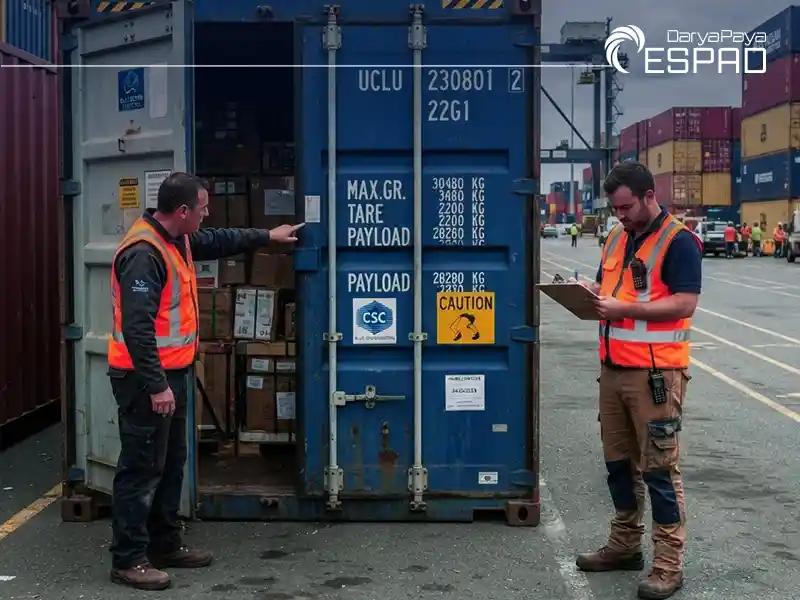
Iran’s imports in 2025–2026 can be classified into six principal categories according to economic function and tariff structure.
| Product category | Predominant transport mode | Mandatory inspections and approvals | Main operational challenge |
|---|---|---|---|
| Agricultural inputs and grains | Seaborne dry bulk | Animal and plant quarantine; mandatory standards certification | Vessel demurrage and foreign-exchange settlement |
| Chemical raw materials | Containerised transport and ISO tanks | Laboratory analysis and standards compliance | Dangerous-goods packaging and IMDG compliance |
| Industrial machinery | Containers, flat racks and open-top containers | Authenticity, newness and pre-shipment inspection | Customs valuation under the TSC system and domestic-manufacturing review |
| Electronic equipment | Air freight and secure containerised transport | Hamta registration; ICT and regulatory approvals | Weekly value ceilings and seasonal import quotas |
| Healthcare products and pharmaceuticals | Air freight and refrigerated containers | Food and Drug Organization approvals and IRC tracking codes | Maintaining cold-chain integrity and managing limited shelf life |
| Completely or semi-knocked-down parts—CKD/SKD | Standard dry containers | Localisation-ratio assessment and engineering conformity | Maintaining a continuous flow of parts to prevent production-line stoppages |
2.1 Essential Commodities, Animal Feed and Grains
Animal-feed inputs and oilseeds consistently account for a substantial proportion of Iran’s physical import tonnage and foreign-exchange expenditure. Feed corn, soybean meal, soybeans, barley and crude edible oils remain among the leading imported commodities by weight.
These products are generally transported in large dry-bulk or liquid-bulk vessels and discharged at Iran’s southern and northern ports. Their exposure to international commodity prices, limited storage life and mandatory animal- and plant-quarantine sampling makes their clearance particularly dependent on precise logistical coordination.
Key operational considerations include:
- Global commodity-price volatility
- Vessel scheduling and berth availability
- Sampling and laboratory procedures
- Storage capacity at silos and terminals
- Quarantine approvals
- The risk of demurrage caused by delayed clearance or foreign-exchange settlement
2.2 Chemical, Petrochemical, Polymer and Metal Inputs
Iranian chemical, textile, packaging, polymer and metallurgical industries require a continuous supply of intermediate materials that are either not manufactured domestically or are produced in insufficient quantities.
This category includes:
- Special-grade engineering polymers
- Purified terephthalic acid
- Specialised petrochemical catalysts
- Industrial solvents
- Metal oxides
- Stainless and alloy steel sheets
- Other industrial chemical inputs
Such products are commonly shipped in 20-foot standard containers, ISO tanks or big-bag packaging. They frequently require detailed laboratory testing and documentary verification by customs and national standards authorities.
For hazardous substances, compliance with the International Maritime Dangerous Goods Code—IMDG Code—is essential. Incorrect classification, inadequate labelling or non-compliant packaging can result in cargo refusal, additional inspections, re-packing costs and prolonged port storage.
2.3 Machinery, Production Lines and Industrial Spare Parts
The modernisation of factory equipment and the importation of automated production lines are central to improving industrial productivity.
This category includes:
- CNC milling and turning machines
- Polymer extruders
- Continuous packaging lines
- Industrial generators
- Compressors
- Heavy mechanical equipment
- Specialised replacement parts
These imports are generally classified under Chapters 84 and 85 of Iran’s Export and Import Regulations. Subject to the applicable legal requirements, businesses may be eligible for exemptions relating to machinery that is not manufactured domestically, including exemptions associated with Clause “G” of Article 119 of Iran’s Customs Affairs Law.
In practice, importers should be prepared to demonstrate:
- The machine’s technical specifications
- Its condition and manufacturing date
- The absence of an equivalent domestically produced item
- Its intended industrial use
- Its purchase price and valuation basis
- Its conformity with the registered import order
Customs valuation under the TSC system—the Iranian customs valuation database—is often one of the most consequential issues in this category.
2.4 Electronic, Communications and Information-Technology Equipment
Smartphones, servers, electronic boards, telecommunications equipment and semiconductor components represent a significant share of the value of Iran’s non-oil imports.
Smartphone imports are administered through different valuation mechanisms, foreign-exchange ceilings and customs-duty structures depending on product category and price band. Because these goods have a high unit value relative to their physical volume, rapid clearance and strict chain-of-custody controls are particularly important.
Operational priorities include:
- Secure handling and storage
- Accurate serial-number documentation
- Registration in Iran’s Hamta device-registration system
- Compliance with communications and cybersecurity regulations
- Verification of customs valuation
- Management of import quotas
- Prevention of documentary discrepancies
advanced drug formulations Pharmaceuticals, Active Pharmaceutical Ingredients and Medical Equipment
Healthcare-related imports—including active pharmaceutical ingredients, advanced drug formulations, operating-room equipment and laboratory diagnostic kits—are among the most sensitive categories in Iran’s import system.
The Iranian Food and Drug Organization exercises continuous oversight over import licensing and customs clearance. Many products require an IRC tracking and registration code, along with technical documentation, health certificates and product-specific approvals.
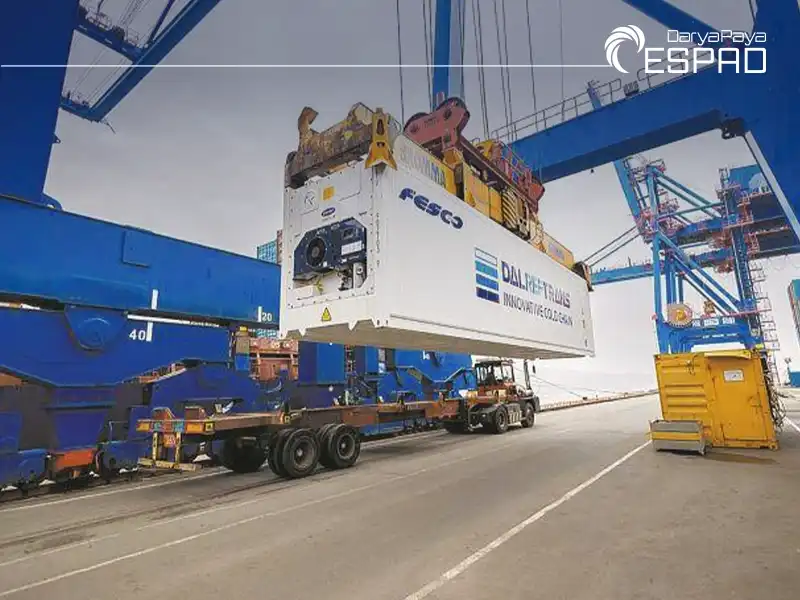
For temperature-sensitive products, cold-chain integrity must be maintained during:
- Loading at the origin
- Inland transport to the port
- Maritime or air transport
- Discharge and temporary storage
- Final delivery to the importer or healthcare facility
Any break in the cold chain may compromise product quality and result in rejection, destruction or substantial financial loss.
2.6 Completely and Semi-Knocked-Down Automotive Parts—CKD/SKD
CKD and SKD shipments consist of components prepared for vehicle assembly. They support domestic automotive production and the supply of standardised replacement parts.
These shipments are usually transported in standard dry containers and require close coordination among:
- The foreign supplier
- The importer
- Customs authorities
- Automotive manufacturers
- Technical inspection bodies
- Inland transport providers
A key operational challenge is continuity. A delay affecting a single component may interrupt the entire assembly process. Importers must therefore coordinate shipment schedules carefully and maintain sufficient safety stock for critical components.
3. Iran’s Import Geography: Principal Countries of Origin
Iran’s import geography is shaped by a combination of trade agreements, established logistics corridors, regional distribution hubs and non-bank settlement arrangements.
The following table summarises five of the principal origins for Iran’s formal imports.
| Country or region of origin | Functional role in the supply chain | Major product categories | Main logistics and loading routes |
|---|---|---|---|
| China | Iran’s largest industrial and equipment-supply partner | Industrial machinery, polymers, chemicals and automotive CKD parts | Direct container services from Shanghai, Ningbo, Shenzhen and Qingdao to Shahid Rajaee Port |
| United Arab Emirates | Regional logistics, trans-shipment and re-export hub | Electronics, spare parts, intermediate goods and advanced-technology products | Feeder vessels and container barges from Jebel Ali to Iranian ports in the Persian Gulf |
| Türkiye | Supplier of industrial and intermediate goods | Textiles, steel profiles, chemical inputs and packaging lines | Integrated road transit through Bazargan, Sero and Razi border crossings |
| India | Traditional source of grain, food and pharmaceutical inputs | Long-grain rice, tea, raw sugar, mineral oxides and APIs | Container and bulk services from Nhava Sheva and Mundra to southern Iranian ports |
| Russia and the Eurasian region | Supplier of basic commodities, agricultural inputs and timber | Wheat, feed barley, construction timber, newsprint and crude sunflower oil | Caspian shipping to Amirabad and Anz Principal Source of Industrial Components and Infrastructure Sarakhs |
3.1 China: The Principal Source of Industrial Components and Infrastructure
China remains Iran’s leading source of direct industrial supplies. A broad range of machinery, electrical equipment, assembly lines, base chemicals and high-technology products is shipped from major Chinese ports, including:
- Shanghai
- Ningbo
- Shenzhen
- Qingdao
The principal advantages of sourcing from China include:
- Flexible production capacity
- Broad supplier diversity
- Competitive manufacturing costs
- Large-scale industrial output
- The availability of settlement arrangements involving local currencies and alternative financial channels
However, rigorous pre-shipment inspection—PSI—is essential. Importers should verify the supplier’s identity, product specifications, manufacturing quality, quantity, packaging and conformity with the purchase contract before the cargo is loaded.
3.2 The United Arab Emirates: A Regional Re-Export and Trans-Shipment Gateway
The United Arab Emirates—particularly Jebel Ali Port and Dubai’s free zones—functions as a regional trans-shipment and re-export hub for the Iranian market.
A significant proportion of goods declared with the UAE as their documentary origin may, in operational terms, be:
- European-origin equipment
- High-technology products
- Spare parts
- Intermediate goods
- Cargo consolidated, sorted and re-exported through UAE logistics facilities
Goods may be discharged in Dubai, stored or consolidated, and then shipped to Iranian ports under revised commercial documentation. The principal strengths of this route are:
- Access to global shipping services
- High-frequency feeder connections
- Regional warehousing
- Cargo consolidation
- Short transit times
- A mature logistics-services ecosystem
Importers must nevertheless distinguish carefully between the country of shipment, country of origin and documentary origin, as these may have different customs and regulatory implications.
3.3 Türkiye: Integrated Overland Supply of Intermediate Goods
Türkiye is a major supplier of textile inputs, polymers, spare parts, construction products and industrial equipment to Iran.
The defining advantage of the Turkish route is the possibility of using an integrated road-freight service through the Bazargan, Sero and Razi border crossings. This can eliminate intermediate port handling and reduce delivery times from the supplier’s warehouse to the Iranian factory.
Compared with maritime transport, the road route may offer:
- Faster delivery
- Door-to-door service
- Greater shipment-frequency flexibility
- Reduced port handling
- More direct communication between supplier, carrier and consignee
Its disadvantages may include higher costs per tonne, border congestion, customs delays and exposure to road-freight capacity constraints.
3.4 India: A Traditional Source of Grains and Healthcare Inputs
India is an important supplier of:
- Rice
- Tea
- Sugar
- Textile fibres
- Mineral oxides
- Active pharmaceutical ingredients.
Shipments are commonly loaded at Nhava Sheva—Jawaharlal Nehru Port—and Mundra before being transported to southern Iranian ports.
Given the health and agricultural sensitivity of many Indian-origin products, smooth clearance depends on:
- Valid phytosanitary certificates
- Compliance with plant-quarantine requirements
- Food-safety documentation
- Laboratory analysis
- Correct packaging and labelling
- Advance coordination with the relevant Iranian authorities
3.5 Russia and the Eurasian Region: Northern Corridors for Grain and Timber
Russia and the members of the Eurasian Economic Union are important sources of bulk grain, timber, newsprint and edible oils.
These flows use:
- The Caspian Sea corridor;
- Amirabad Port
- Anzali Port
- Noshahr Port
- The Sarakhs rail corridor
Products commonly imported through these routes include:
- Wheat
- Feed barley
- Construction timber
- Newsprint
- Crude sunflower oil
- Other agricultural and forestry products
Preferential tariffs under Iran’s trade arrangements with the Eurasian Economic Union can further strengthen the commercial attractiveness of this origin.
4. The Strategic Role of Maritime Transport in Iran’s Imports
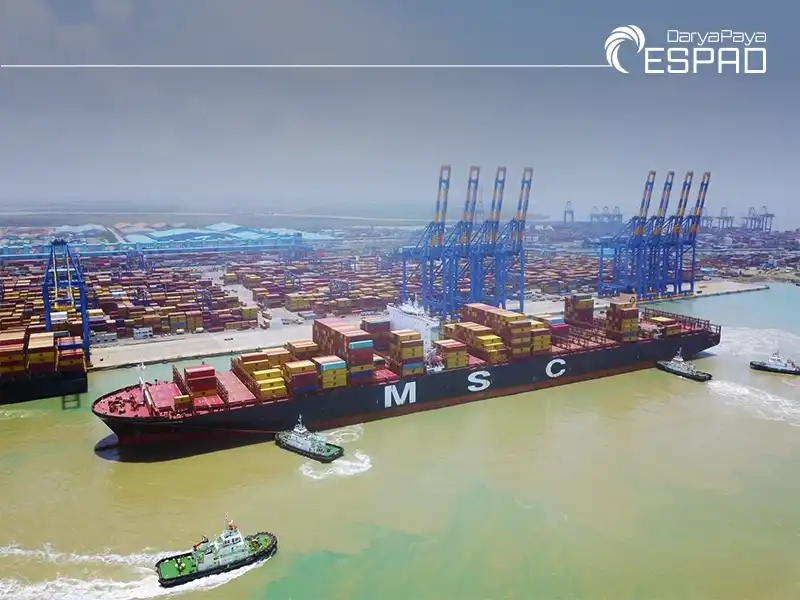
Maritime transport is the backbone of Iran’s international trade. Based on port-performance statistics and prevailing logistics patterns, more than 88% of the total weight of Iran’s imported cargo and over 75% of its total import value are estimated to move through maritime gateways.
By comparison, road and rail transport account for approximately 10% of total imports, while air freight represents roughly 2% by volume. Air cargo is primarily used for lightweight, high-value and time-sensitive products.
| Transport mode | Approximate share by weight | Approximate share by value | Typical cargo | Principal competitive advantage |
|---|---|---|---|---|
| Maritime transport | 88% | 75% | Bulk commodities, heavy raw materials, machinery and containers | Lowest cost per tonne-kilometre and very high capacity |
| Road and rail | 10% | 18% | Textiles, plastics, light machinery and spare parts | Faster delivery, door-to-door service and reduced port handling |
| Air freight | 2% | 7% | Pharmaceuticals, specialised medical items, electronics, circuit boards and smartphones | Maximum speed, high security and continuous shipment monitoring |
The figures above are approximate and should be treated as indicative rather than as a substitute for official statistical reporting.
4.1 Economies of Scale and Maritime Fleet Capacity
Economies of scale are the principal reason for the dominance of maritime transport. Over long distances, the cost of moving one tonne of cargo by ship is significantly lower than the cost of transporting it by road or air.
For bulk commodities—such as millions of tonnes of animal-feed inputs—or for large industrial shipments, no alternative transport mode can technically or economically match the capacity of ocean-going vessels.
Maritime transport is particularly well suited to:
- Dry bulk
- Liquid bulk
- Containerised cargo
- Heavy-lift equipment
- Project cargo
- Oversized machinery
- Large-volume industrial inputs
5. Functional Specialisation of Iran’s Principal Ports
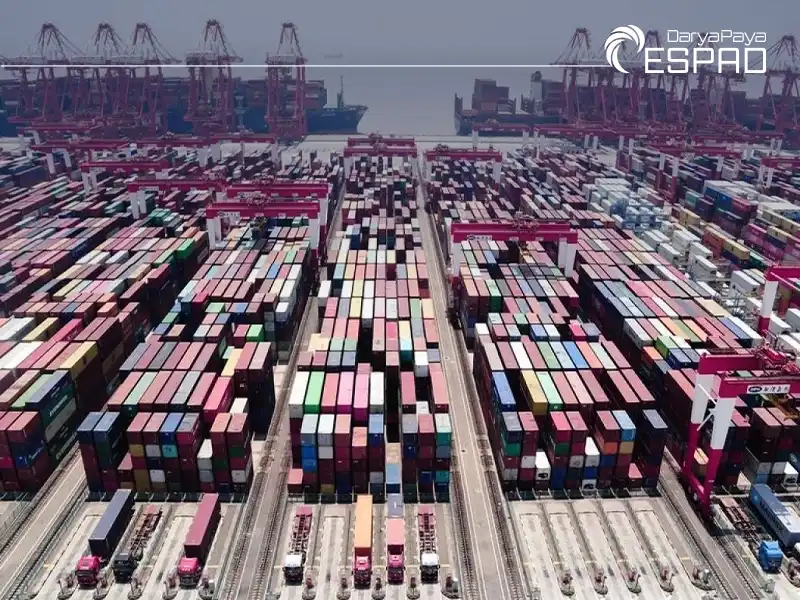
Iran’s principal ports have developed specialised capabilities for receiving different vessel types and cargo categories.
5.1 Shahid Rajaee Port—Bandar Abbas
Shahid Rajaee Port is Iran’s principal container and general-cargo gateway. It is equipped with advanced shore-based gantry cranes and some of the country’s largest logistics terminals.
Its main functions include:
- Full-container-load and less-than-container-load cargo
- Industrial machinery
- General cargo
- Automotive parts
- Electronics
- Containerised chemical products
5.2 Imam Khomeini Port—Khuzestan
Imam Khomeini Port is Iran’s principal hub for grains and dry bulk. Its infrastructure includes deep-water berths, grain silos and rapid unloading systems connected to the port.
It is particularly suited to:
- Feed corn
- Barley
- Soybean meal
- Wheat
- Oilseeds
- Liquid bulk commodities
5.3 Chabahar Port—Shahid Beheshti
Chabahar is Iran’s principal ocean-facing gateway on the Gulf of Oman. Its location outside the Persian Gulf provides direct access to the Indian Ocean and reduces dependence on passage through the Strait of Hormuz.
The port is suitable for:
- Ocean-going vessels
- Project cargo
- Heavy equipment
- Bulk cargo
- Containerised trade
5.4 Amirabad and Anzali Ports
Amirabad and Anzali serve as important gateways to the Caspian Sea and connect northern maritime trade with Iran’s rail network.
They are particularly relevant to imports from Russia, Kazakhstan and other northern markets, including:
- Timber
- Grain
- Oilseeds
- Paper products
- Other bulk commodities
| Port | Maritime basin and location | Specialised cargo function | Strategic capabilities |
|---|---|---|---|
| Shahid Rajaee | Persian Gulf, Hormozgan Province | Containers, industrial equipment and general cargo | Advanced container terminals, super-post-Panamax gantry cranes and the largest concentration of direct shipping services |
| Imam Khomeini | Musa Channel, Khuzestan Province | Dry bulk, grain, animal feed and liquid bulk | Suitable draught for Panamax and Capesize vessels, silo connectivity and high-speed unloading systems |
| Chabahar—Shahid Beheshti | Gulf of Oman, Sistan and Baluchestan Province | Bulk, containers, project cargo and heavy equipment | Direct Indian Ocean access, outside the Persian Gulf and suitable for ocean-going vessels |
| Amirabad | Caspian Sea, Mazandaran Province | Grain, oilseeds and construction timber | Dedicated rail terminal, direct rail-to-quay connectivity and modern grain-storage silos |
6. Understanding Port and Customs Terminology: What Is a Depot?
In logistics terminology, a depot is a storage facility, consolidation yard or cargo-handling terminal. In commercial ports and customs environments, however, the term is used to describe several distinct facilities.
Failure to distinguish among these facilities can create serious financial and legal misunderstandings, especially for inexperienced importers.
The standard movement of a container generally follows the sequence below.
6.1 Discharge from the Vessel
After the ship arrives and the cargo is discharged, the container is transferred from the vessel to the port’s quay-side or terminal area.
6.2 Transfer to the Shipping Line’s Container Yard—CY
The container is stacked in the terminal’s container yard under the supervision of the shipping line and terminal operator. The free-time countdown generally begins at this stage, subject to the terms of the carrier’s tariff and the applicable terminal procedures.
6.3 Routing According to the Clearance Procedure
Direct container clearance
After the customs release order is issued, the container is loaded directly onto a truck and transported to the factory or final warehouse.
Inspection and stripping
If customs inspection, cargo separation or detailed examination is required, the container may be transferred to a customs warehouse or general cargo depot. The goods are then removed from the container—a process known as stripping—for examination, assessment or partial delivery.
6.4 Return to the Empty-Container Depot
After the cargo has been unloaded at the consignee’s premises, the empty container must be returned in sound condition to the location designated by the shipping line.
The consignee should obtain an Equipment Interchange Receipt—EIR. This document serves as evidence that the container has been returned and may be required for the release of a guarantee cheque, bank guarantee or cash deposit.
| Depot type | Legal and operational operator | Principal function | Main charges and penalties |
|---|---|---|---|
| Container Yard—CY | Shipping line and terminal operator | Storage and stacking of full containers after discharge | Container demurrage after free time expires |
| Customs depot or public customs warehouse | Islamic Republic of Iran Customs Administration and public warehousing companies | Physical examination, documentary inspection, stripping and storage until clearance | Official storage charges based on weight and length of stay |
| Empty-container depot | Shipping line or specialised depot contractor | Inspection and return of empty containers; issuance of the EIR | Detention for late return and damage-related charges |
6.5 The Shipping Line’s Container Yard—CY
The Container Yard is part of the port terminal where inbound full containers are stacked after discharge. Containers remain there until they are either transferred to a customs warehouse or loaded onto trucks for onward transport.
The terminal operator and shipping line are responsible for the physical handling of the container and, generally, the integrity of its seal while it remains within the terminal system.
If the container remains at the terminal beyond the permitted free time, the resulting charge is generally referred to as demurrage. It is usually calculated according to the shipping line’s tariff and may be denominated in a foreign currency.
6.6 Customs Depot or Official Customs Warehouse
A customs warehouse is an enclosed facility operating under the supervision of the Islamic Republic of Iran Customs Administration.
Cargo may be transferred there when:
- A physical inspection is required
- Customs needs to verify the contents
- The goods must be stripped from the container
- The importer intends to remove the cargo using conventional trucks
- The container cannot be released directly
Storage charges at these facilities are generally referred to as warehousing fees. They are calculated under approved governmental tariffs and normally depend on factors such as weight and length of stay.
Customs storage charges are separate from shipping-line demurrage.
6.7 Empty-Container Depot
Once a loaded container has been released from the port and the cargo has been unloaded at the buyer’s warehouse, the empty unit must be returned to the depot designated by the shipping line.
Depot personnel typically inspect:
- The container’s external panels
- The wooden floor
- The roof
- The doors and locking mechanisms
- The internal condition
- Signs of structural damage
- Cleanliness and usability
If the container is returned without unacceptable damage, the depot issues an Equipment Interchange Receipt—EIR. This receipt generally forms the basis for releasing the importer’s guarantee or cash This receipt generally forms the basis for releasing the importer’s guarantee or cash 2025–2026
Iran’s import process is connected to a complex chain of regulations, electronic systems and logistical obligations. The principal operational challenges include the following.
6.8 Demurrage, Detention and Customs Storage: Key Differences
One of the most common sources of confusion in import logistics import logistics is the assumption that all post-arrival storage and delay charges are the same practice, demurrage, detention and customs storage fees are separate charges, imposed by different parties and triggered at different stages of the cargo cycle.
Demurrage
Demurrage is charged by the shipping line when a full container remains within the port terminal or the carrier’s container yard beyond the agreed free-time period.
It usually begins after the container has been discharged from the vessel and remains uncleared or uncollected within the port system.
Demurrage is generally calculated according to:
- The shipping line’s tariff
- The number of days beyond free time
- The type and size of the container
- The terminal or destination port
- The applicable contractual terms.
Because shipping lines often denominate demurrage in foreign currency, even a short customs or documentary delay may create a significant financial liability.
Detention
Detention is charged when the importer retains the shipping line’s container outside the port beyond the permitted period before returning it to the designated empty-container depot.
The typical sequence is:
- The full container is released from the port
- The cargo is transported to the importer’s warehouse
- The cargo is unloaded
- The empty container remains with the importer or transport operator
- The container is returned after the permitted period has expired.
Detention is therefore associated with the time spent outside the port before the empty container is returned.
Customs Storage Fees
Customs storage fees are charged by the customs warehouse or public warehousing operator for holding goods under customs supervision.
These fees are separate from both demurrage and detention and are generally calculated according to:
- The weight or volume of the cargo
- The duration of storage
- The type of goods
- The applicable public tariff
- The storage facility involved
Comparative Summary
| Charge | Charged by | Where the cargo or container is located | Typical trigger |
|---|---|---|---|
| Demurrage | Shipping line or terminal operator | Full container inside the port or terminal | Free time expires before the full container is collected |
| Detention | Shipping line | Empty or loaded container outside the port | Container is not returned within the permitted period |
| Customs storage fee | Customs warehouse or public warehousing operator | Goods held under customs supervision | Cargo remains in storage pending clearance or removal |
Why the Distinction Matters
An importer may be liable for more than one of these charges at the same time. For example, a shipment may incur:
- Customs storage fees while the cargo is awaiting inspection
- Demurrage while the full container remains within the port
- Detention if the empty container is returned late after delivery to the importer’s warehouse
Effective cost control therefore requires the importer to monitor three separate deadlines:
- The deadline for collecting the full container from the terminal
- The deadline for completing customs procedures and removing the goods
- The deadline for returning the empty container
These deadlines should be recorded separately in the importer’s shipment-management system, together with the relevant shipping-line tariff, free-time terms and documentary requirements.
7. Operational Challenges Affecting Iran’s Imports in 2025–2026
With the missing section inserted, the next heading should be renumbered as follows:
7.1 Foreign-Exchange Allocation and Verification of Currency Origin
Waiting periods in foreign-exchange allocation queues and the requirement to match the source of foreign currency with export-related declarations can create major bottlenecks in working-capital circulation.
Delays may affect:
- Import-order registration
- Payment to the overseas supplier
- Issuance of shipping documents
- Customs release
- The importer’s ability to avoid demurrage
7.2 Cargo Accumulation and Escalating Storage Costs
Incomplete inspection documentation, late payment of delivery orders, system inconsistencies or delays in obtaining required approvals can cause cargo to accumulate at ports and customs warehouses.
The resulting costs may include:
- Foreign-currency-denominated demurrage
- Customs warehousing fees
- Container detention
- Truck waiting charges
- Additional inspection costs
- Financing costs arising from immobilised working capital
7.3 Tariff Volatility and Regulatory Amendments
Periodic changes to commercial-profit duties, the withdrawal of exemptions following the emergence of domestic substitutes, and revisions to TSC valuation codes require importers to obtain up-to-date advice from customs specialists.
A tariff classification that was commercially viable at the time of contract signing may become less attractive by the time the cargo arrives.
7.4 Pre-Shipment Inspection—PSI
Failure to obtain a compliant pre-shipment inspection certificate at origin may result in:
- Additional testing at the Iranian port
- Rejection of the cargo
- Prolonged customs detention
- Repackaging or relabelling costs
- Difficulty obtaining final clearance
Importers should therefore select a qualified inspection company and define the scope of inspection before the cargo is loaded.
8. Step-by-Step Checklist for Reducing Import Risk in 1405
The following checklist is intended for importers planning operations in 1405—approximately March 2026 to March 2027.
8.1 Verify the HS Code and TSC Valuation History
Before finalising the import order, verify:
- The eight-digit HS code
- Historical customs acceptance of the proposed valuation
- Compatibility with the EPL customs declaration system
- Whether the product is subject to import restrictions
- Whether domestic-production requirements apply
- Whether the product is eligible for foreign-exchange allocation
8.2 Appoint a Qualified International Inspection Company
Arrange pre-shipment inspection and obtain the relevant quality and quantity certificates—such as COI and PSI—before loading.
The inspection should cover:
- Quantity
- Product specifications
- Packaging
- Labelling
- Serial numbers
- Country of origin
- Manufacturing date
- Technical conformity
- Visible damage
8.3 Negotiate the Maximum Practical Free Time
Obtain a written commitment from the freight forwarder or shipping line for at least 14 to 21 days of free time at the destination port, where commercially and operationally feasible.
Additional free time can provide protection against:
- Foreign-exchange delays
- Customs-system interruptions
- Approval bottlenecks
- Port congestion
- Delays in obtaining delivery orders
8.4 Reconcile the Four Core Commercial Documents
Before the original documents are dispatched, ensure complete consistency among:
- The bill of lading
- The commercial invoice
- The packing list
- The certificate of origin
The following details must be checked carefully:
- Importer and consignee names
- Product description
- HS code
- Gross and net weight
- Number of packages
- Container numbers
- Seal numbers
- Country of origin
- Shipping marks
8.5 Pursue Regulatory Approvals in Parallel
Do not wait until the vessel arrives to begin the approval process. Where possible, apply in parallel for approvals from:
- Health authorities
- The Food and Drug Organization
- The Atomic Energy Organization
- Environmental authorities
- Plant and animal-quarantine bodies
- The national standards organisation
- Relevant telecommunications or cybersecurity regulators
9. Strategic Recommendations for Importers and Commercial Operators
9.1 Manage Transport Contracts and Incoterms Carefully
The selected Incoterm should reflect the importer’s actual ability to manage logistics.
Businesses with a strong freight-forwarding network may prefer FOB arrangements because they allow greater control over:
- The selection of the shipping line
- Freight rates
- Free-time negotiations
- Port charges
- Transit schedules
- Cargo insurance
However, FOB is not automatically superior. Importers must have the expertise and operational infrastructure required to manage the main carriage and associated risks.
9.2 Ensure Absolute Consistency Across Commercial and Transport Documents
The four principal documents—the bill of lading, commercial invoice, packing list and certificate of origin—must be consistent in every material respect.
Particular attention should be paid to:
- Spelling of names
- Product descriptions
- Net and gross weights
- Package counts
- Container numbers
- Seal numbers
- Country of origin
- Declared values
Even minor inconsistencies can delay customs assessment and create problems in the declaration and clearance process.
9.3 Integrate the Commercial and Customs-Clearance Teams
Draft documents should be sent to the customs broker before the vessel berths. This allows the broker to:
- Review discrepancies in advance
- Initiate the electronic delivery-order process
- Prepare the customs declaration
- Identify missing approvals
- Coordinate with the importer before storage and demurrage charges escalate
9.4 Use Temporary Admission and Bonded or Dedicated Warehouses
Manufacturing companies importing intermediate goods for re-export may be able to use temporary-admission procedures under Article 51 of Iran’s Customs Affairs Law.
Where appropriate, establishing a dedicated customs warehouse at or near the factory can also reduce:
- Port storage costs
- Inland transport inefficiencies
- Cargo-handling expenses
- Inventory congestion
- Exposure to prolonged port dwell time
10. The Outlook for Inbound Trade and Supply-Chain Continuity
Iran’s import system in 2025–2026 has become increasingly specialised and dependent on data analysis, regulatory knowledge and logistical expertise.
The majority of Iran’s import basket consists of essential commodities, industrial raw materials, machinery and intermediate goods. These are supplied primarily through commercial relationships with China, the United Arab Emirates, Türkiye, India and Russia.
With maritime transport accounting for more than 88% of import tonnage, Iran’s quays, container terminals and port yards remain strategically important components of the national supply chain.
For professional importers, a detailed understanding of the following is indispensable:
- The distinction between container yards and customs warehouses;
- Free-time calculations
- Demurrage and detention exposure
- Customs valuation
- HS-code classification
- Foreign-exchange allocation
- Inspection requirements
- Inland transport planning
- Documentary consistency
By adopting a disciplined approach to Incoterm selection, document control and customs coordination, businesses can reduce supply-chain risk and preserve the operational continuity of their manufacturing and commercial activities.
11. The Strategic Role of Espad Darya Shipping in Iran’s Import Supply Chain
Given the complexity of Iran’s foreign-trade ecosystem and the country’s reliance on maritime transport for more than 88% of import tonnage, Espad Darya Shipping occupies an important position in facilitating supply-chain continuity and strengthening commercial logistics resilience.
As one of Iran’s leading private-sector shipping lines, Espad Darya provides access to containerised transport, international maritime connections and services linking strategic origins with Iranian ports.
Its network connects Iranian importers with important commercial gateways, including:
- Shanghai
- Ningbo
- Shenzhen
- Indian ports
- Major trans-shipment hubs in the Middle East.
These services support the movement of cargo to Shahid Rajaee Port and other southern Iranian ports.
By implementing integrated logistics mechanisms, Espad Darya can help reduce the risk of:
- Container shortages
- Documentation bottlenecks
- Prolonged customs dwell time
- Foreign-currency demurrage
- Delayed electronic delivery orders
- Inefficient container-yard operations
Its logistics solutions may include:
- Flexible free-time arrangements
- Electronic delivery-order processing
- Container-yard coordination
- Empty-container management
- Multimodal transport combining sea, rail and road
- Reefer and temperature-sensitive cargo handling
- Transport of production-line inputs
- Shipment-tracking and documentation support
By combining maritime services with inland logistics and customs-compatible documentation, Espad Darya Shipping can serve as an important component of Iran’s trade resilience. Its role is particularly relevant to maintaining the continuity of domestic production lines and controlling the landed cost of imported goods.
Conclusion
Iran’s import system in 2025–2026 is defined by three fundamental characteristics:
- A high concentration of industrial inputs, essential commodities and production equipment
- A geographically diversified but strategically concentrated network of origins
- A dominant reliance on maritime transport and port-based logistics
For international suppliers, freight forwarders and investors engaging with the Iranian market, commercial success depends not only on price and product availability but also on a detailed understanding of customs classification, foreign-exchange procedures, port operations, documentation and inland distribution.
The most resilient import strategies are those that integrate procurement, inspection, shipping, customs clearance, warehousing and final delivery into a single coordinated operating model.