Shipped on Board vs. Received for Shipment: A Practical Guide for International Traders
What the Distinction Actually Means — and Why It Matters
In international trade, a significant share of disputes and unforeseen costs originate not from the goods themselves, but from the precise language of shipping documents. Two phrases that regularly appear on Bills of Lading (B/L) and in correspondence with freight forwarders and carriers exemplify this perfectly: Shipped on Board and Received for Shipment. They encode a single but consequential distinction — whether cargo has actually been loaded onto a vessel, or merely handed over to the carrier in anticipation of loading.
For exporters, this difference directly touches the timing of payment, the acceptability of documents under a Letter of Credit, fulfilment of contractual shipment obligations, and liability management. For importers, understanding it enables more accurate arrival planning, better allocation of financial resources, and a healthier skepticism toward vague assurances that goods have been “dispatched.”

Shipped on Board
The notation Shipped on Board — also appearing as On Board, Laden on Board, or simply Shipped — certifies that the cargo or container has physically been loaded onto a named vessel. The B/L will carry the vessel name, the on-board date, and often the voyage number. From that moment, the act most buyers and banks regard as the definitive point of dispatch has occurred.
The operational gap between “cargo delivered to the carrier” and “cargo loaded onto the vessel” is wider than it might appear. A container may have passed through terminal gates, been weighed and documented, and received a booking confirmation — and still miss its intended sailing due to space constraints, vessel schedule changes, port congestion, VGM submission delays, or carrier prioritisation. A document that merely acknowledges receipt of cargo is therefore materially different from one that confirms loading. Shipped on Board provides the more complete and reliable evidence of actual dispatch, particularly under contracts where delivery timing and banking obligations are sensitive.
Received for Shipment
Received for Shipment indicates that the carrier — or, in a house bill structure, a freight forwarder — has accepted the cargo for carriage, but has not necessarily loaded it onto any vessel yet. The goods are typically in a port warehouse or terminal yard, a booking has been made, and preparation for loading is underway, but the on-board event has not been confirmed.
In many routing structures, particularly those involving forwarders or multi-leg arrangements, a Received for Shipment document is issued first. Once loading is confirmed, an On Board notation — a dated stamp or endorsement — is added to the same document, or an entirely new Shipped on Board B/L is issued.
Received for Shipment is informative: it confirms that cargo has entered the logistics chain. However, it does not protect against roll-over (the carrier bumping a container to a later sailing) or schedule changes. From a commercial risk standpoint, the shipment remains in a state of contingency.
The Core Distinction in Plain Terms
| Received for Shipment | Shipped on Board | |
|---|---|---|
| Operational meaning | Cargo accepted by carrier; not yet loaded | Cargo physically loaded onto named vessel |
| Roll-over risk | Present; potentially significant | Eliminated for that sailing |
| Acceptability under LC | Often insufficient unless expressly permitted | Generally required or strongly preferred |
| Reliable date for “shipment” | Date of receipt | Date of loading |
| Typical timing | Before loading; during congestion or booking phase | At or near departure |
| Planning certainty for importer | Lower | Higher |
| Dispute potential with counterparty | Higher | Lower |
Where These Notations Appear on Documents
On a standard ocean B/L, the status manifests in several places:
- A Shipped on Board clause or stamp, typically alongside vessel details, carrying an explicit on-board date
- The main body language of the B/L, which may read Received for Shipment or Received for Carriage in the absence of an on-board notation
- A subsequently added On Board endorsement, applied once loading is confirmed, which supersedes the received status
Under a House Bill of Lading (HBL) issued by a forwarder, Received status may be recorded considerably earlier than the corresponding Master B/L (MBL) from the actual carrier reflects loading. The on-board notation on the HBL must ultimately be reconciled against confirmed loading on the underlying MBL.
A critical operational point: the issuance of a B/L number does not constitute proof of on-board status. Many disputes begin precisely when a seller declares shipment complete on the basis of a document number, while the buyer or bank finds that the document only evidences receipt.
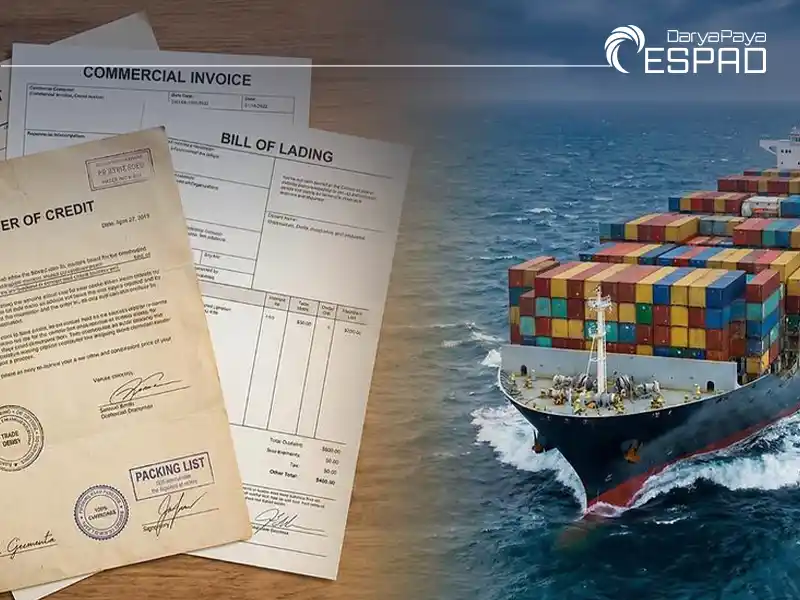
Implications for Letters of Credit
Under LC-governed transactions, banks work from the document text against the LC terms, typically subject to UCP rules. Most LCs either explicitly require a Shipped on Board B/L or operate under rules that treat the on-board date as the determinative shipment date. Presenting a Received for Shipment document where an on-board B/L is required constitutes a discrepancy, which can result in delayed payment, conditional acceptance, or outright rejection of the document set.
The on-board date carries particular weight: it is the date against which banks verify whether shipment occurred within the LC’s permitted window. If the shipment deadline is July 15th and your document shows an on-board date of July 16th, the discrepancy is absolute regardless of when the cargo arrived at the terminal.
That said, some LCs and contracts do explicitly permit Received for Shipment documents. This must be agreed and documented fr the cargo arrived at the terminal.
That said, some LCs and contracts do explicitly permit Received for Shipment documents. This must be agreed and documented fr to Incoterms
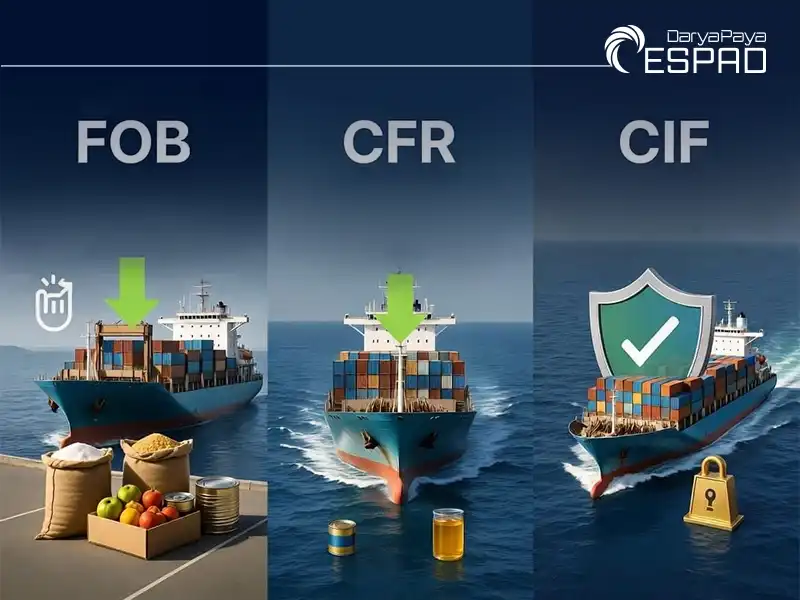
Under FOB, the seller’s obligation is fulfilled when cargo is loaded aboard the named vessel at the port of origin. The concept of on-board loading is therefore inherent to FOB; a Received for Shipment document alone does not demonstrate that the seller has completed their obligation.
Under CFR and CIF, the seller arranges the contract of carriage, but risk transfer still occurs at the point of loading onto the vessel. In both cases, a Shipped on Board document provides the more defensible evidence that the seller’s delivery obligation — and risk transfer — has occurred.
There are niche structures, particularly under FCA with documentary credit adaptations, where delivery to the carrier at an inland point may be the operative moment, and a received-type document may be appropriate. However, in conventional ocean trade, Shipped on Board is the standard of reliability for both parties.
House Bills vs. Master Bills: A Structural Nuance
When a freight forwarder issues an HBL, their document and the carrier’s MBL operate in parallel but are not automatically synchronised. Common scenarios include:
- The HBL carries an on-board notation, but the MBL has not yet confirmed loading — meaning the HBL notation is premature
- The HBL is still in Received status while the MBL reflects a completed loading
- The forwarder provides verbal on-board confirmation, but a roll-over subsequently occurs before the MBL is endorsed
In practice, an exporter or importer relying solely on forwarder communications should validate on-board status against vessel name, voyage number, actual departure (ATD), gate-in confirmation, and — where accessible — carrier tracking. These data points together provide a more complete picture than any single document status.
A Recurring Scenario: Received but Never Loaded
Consider an exporter who delivers cargo to a terminal on schedule. The container clears gate-in, all formalities are completed, and the forwarder issues a B/L. The document reads Received for Shipment. The exporter, treating this as confirmation of dispatch, notifies the buyer and prepares to present documents to the bank.
Due to port congestion, the container is rolled to the following vessel. The exporter’s contractual shipment date has passed. The LC window may have expired. The buyer, who had production or resale commitments tied to arrival, may raise a claim. The bank declines the document set on the basis that no on-board date falls within the permitted period.
None of this involves bad faith. It is the direct consequence of conflating document issuance with confirmed loading. The practical remedy is straightforward: do not treat a shipment as complete, and do not commit to downstream obligations, until an on-board date has been confirmed and recorded.
How to Verify On-Board Status on a Document
When reviewing a B/L, look for the following as positive indicators of Shipped on Board status:
- Explicit use of the phrase Shipped on Board, On Board, or Laden on Board
- A specific on-board date (distinct from any earlier receipt or issue date)
- Vessel name and voyage number alongside that date
- An On Board stamp or notation with a date, if added after initial issuance
If the document lists only a receipt date, references receipt for carriage in its operative language, and carries no on-board date or endorsement, it has not yet reached Shipped on Board status. The absence of an on-board date is itself a meaningful signal.
Operational Implications for Importers
For an importer, the distinction shapes arrival planning, customs preparation, and allocation of funds. A Shipped on Board document — with a confirmed vessel name, sailing date, and ETA — provides a reasonable basis for scheduling customs clearance, arranging inland transport, and booking warehouse capacity.
A Received for Shipment document warrants more conservative planning. The cargo may still be rolled to a later sailing; the arrival window is genuinely uncertain. Committing to demurrage-sensitive slot bookings, currency transfers, or assembly lines timed to a provisional ETA based solely on received status carries unnecessary financial exposure.

Contractual Drafting Considerations
Many disputes over shipment dates arise not from dishonesty but from an ambiguous contractual definition of “shipment.” Parties frequently use the word without specifying whether it means delivery to the carrier or confirmed loading aboard the vessel.
In professionally drafted contracts, “Shipment Date” should be explicitly defined as the on-board date on the B/L. Where the trading route involves potential roll-overs, transit port congestion, or multi-leg arrangements, building a realistic buffer into the contractual shipment window is prudent risk management rather than a sign of weak negotiating.
For exporters operating on routes where vessel availability is intermittent or congestion is seasonal, this kind of explicit contractual clarity is particularly valuable: it removes ambiguity before a dispute arises rather than requiring resolution after the fact.
Practical Verification Checklist
Before presenting documents to a bank, confirming shipment to a buyer, or committing to downstream logistics decisions, run through these checks:
- Does the B/L carry an explicit on-board date?
- Does it name the vessel and voyage number?
- Is the on-board date within the LC’s permitted shipment window (if applicable)?
- Have you confirmed the vessel’s actual departure (ATD) with the forwarder or carrier?
- If working from an HBL, is the on-board status corroborated by the MBL or carrier tracking?
- If only a Received status is available, have you accounted for roll-over risk in your timeline and communications?
Summary
The distinction between Shipped on Board and Received for Shipment is not a matter of documentary formalism — it reflects a real operational difference between confirmed vessel loading and provisional cargo acceptance. Received for Shipment means the cargo is in the logistics chain; it does not mean the cargo is at sea. Shipped on Board, with a named vessel and an on-board date, means loading has occurred and the shipment has a concrete, verifiable starting point.
For exporters, this matters at the moment of presenting documents to banks, fulfilling contractual shipment obligations, and communicating with buyers. For importers, it matters at the moment of planning arrivals, allocating resources, and evaluating whether a seller has genuinely performed.
The remedies are neither complex nor costly: understand what each document status actually says, verify on-board status through multiple data points before treating a shipment as complete, and define “shipment date” unambiguously in your contracts. In practice, that level of discipline consistently prevents delays, financial exposure, and commercial friction that invariably cost more than the diligence that would have prevented them.