Bitumen in the Global Market: Influencing Factors and Trends
Bitumen is one of the most strategic and widely used materials in infrastructure industries, playing a key role in countries’ economic development. Since bitumen is mainly derived from the crude oil refining process, fluctuations in the oil market, energy policies, climate change, and geopolitical developments have a direct impact on its supply, demand, and pricing on the global stage. In recent years, rising demand in developing countries, coupled with export barriers and transportation constraints, has presented the bitumen market with numerous challenges and opportunities.
A precise understanding of this market’s structure, the main players, the factors affecting pricing, and future trends is essential for economic actors, producers, and exporters in this field. This article has been prepared with the aim of providing a comprehensive review of the global bitumen market and its pricing system, and seeks to present a clear picture of the current situation and the outlook ahead.
Introduction to Bitumen
Bitumen is a semi-solid or viscous petroleum-based material primarily used in road construction, insulation, and infrastructure projects. Bitumen is either obtained from crude oil refining (refined bitumen) or exists naturally in bitumen deposits (natural bitumen). Given its access to abundant crude oil resources, Iran is one of the main bitumen suppliers in Africa, Asia, and the Middle East. Some of the world’s other largest bitumen producers include:
- The United States
- China
- India
- Russia
- Saudi Arabia
Bitumen is produced either naturally or through crude oil refining. In the global market, refined bitumen accounts for the largest share and is mainly used for asphalt production and waterproofing. Bitumen grades are generally classified based on two systems:
Penetration Grade System:
Common in Asia and the Middle East (e.g., 60/70, 80/100);
Determined by the needle penetration test at a specified temperature.
Performance Grade (PG) System:
Common in North America and Europe (e.g., PG 64-22, PG 76-10);
Based on bitumen behavior at high and low temperatures and its service life.
In recent years, the use of Polymer-Modified Bitumen (PMB) and emulsion bitumen has increased to improve durability, resistance to temperature fluctuations, and reduce energy consumption during application.

Factors Affecting Bitumen Pricing
In the bitumen market, pricing is influenced by a combination of economic, technical, and environmental factors that directly or indirectly affect the supply and demand of this material. Understanding these factors is essential for analyzing market trends and making accurate business decisions. Some of the most important factors are as follows:
1. Crude Oil Price
As one of the final products of crude oil refining, bitumen is directly linked to fluctuations in global oil prices. Any increase or decrease in crude oil prices directly affects the cost of bitumen production. Since refineries reassess profitability in response to oil price changes, bitumen production may also experience increases or decreases in supply as a result of these fluctuations. When oil prices rise, some refineries may prefer to produce lighter and more valuable fuels rather than bitumen. This can lead to reduced bitumen supply and higher market prices.
2. Seasonal Factors
The bitumen market is highly seasonal. Road construction, asphalt paving, and many civil engineering activities that require bitumen are carried out during the warmer months of the year (spring and summer), since working with bitumen in cold weather is difficult and costly. This causes global bitumen demand to rise in the first half of the year, which usually leads to price increases during this period. By contrast, in the colder seasons (autumn and winter), demand declines and prices fall relatively. Therefore, producers and exporters must plan carefully for seasonal storage, supply, and pricing.
3. Transportation Costs
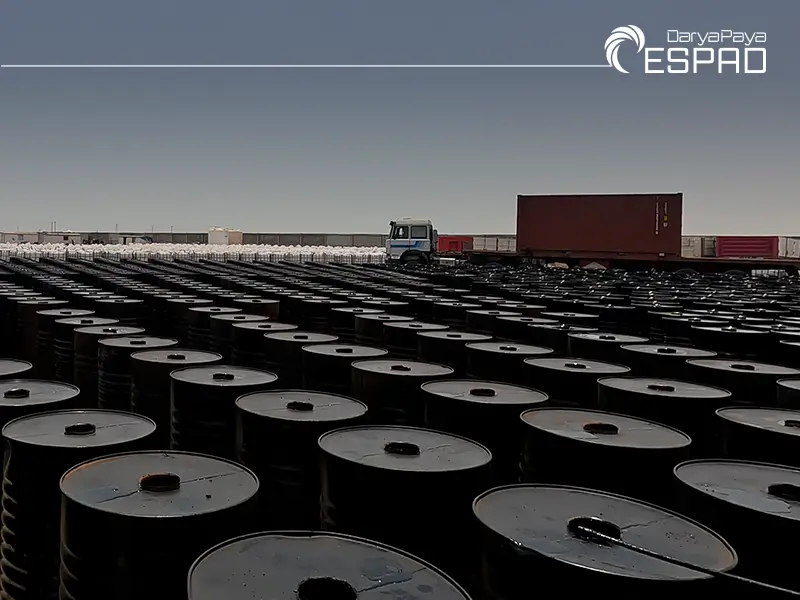
Exported bitumen is usually shipped in drums or in bulk (via heated tankers or ISO tanks). Therefore, transportation costs—including container costs, sea freight charges, customs duties, insurance, and loading/unloading expenses—play a very important role in the final bitumen price. Especially when the global transport market is affected by crises such as wars, sanctions, or fuel price increases, the cost of transporting bitumen can multiply. For example, during a global container crisis or rising vessel fuel rates, bitumen exporters face lower profit margins or reduced competitiveness.
4. Bitumen Quality and Grade
Bitumen is classified based on physical characteristics such as penetration grade, softening point, and viscosity. Common grades such as 60/70, 80/100, or Performance Grade are used depending on the application, climate, and the standards of each country. For example, 60/70 grade is more widely used in hot-climate countries for road construction. The price of each bitumen grade differs, and higher-quality bitumen or bitumen produced with special additives (such as polymer-modified or emulsified bitumen) is priced higher. Therefore, understanding bitumen’s technical specifications and matching them to the target market’s requirements is one of the key factors in pricing and commercial success.
5. Global Demand
Bitumen demand is heavily dependent on countries’ infrastructure development plans. Countries such as India, China, Indonesia, African nations, and Central Asian countries—where major road and urban development projects are underway—account for a significant share of the global bitumen market. In addition, projects such as railway construction, airport runways, ports, and energy infrastructure increase bitumen consumption. The higher the demand in these markets, the greater the pressure on the supply chain and pricing. Conversely, a slowdown in construction or reduced public infrastructure budgets in consuming countries can reduce demand and cause prices to fall.
6. Sanctions and Export Restrictions
In some countries, particularly Iran, international economic and trade sanctions have had direct and indirect impacts on bitumen exports. These effects include more difficult money transfers, restrictions on official exports to certain countries, lack of access to international transport fleets, and reliance on intermediaries. These issues force bitumen sellers to offer lower prices in order to remain competitive in the global market, or to use informal sales methods that carry high commercial risk. In addition, some countries may impose restrictions on importing bitumen from specific sources for environmental or economic reasons, including:
- The official international payment systems LC and SWIFT being blocked;
- Sellers moving toward cash, barter, or payments through informal exchange offices;
- Bitumen prices in these countries being offered below true market value through price dumping to cover buyer risk.
Bitumen Consumption Markets
Due to its specific physical properties—such as high adhesion, moisture resistance, and thermal flexibility—bitumen is used in various industries. However, the largest share of consumption belongs to infrastructure and civil engineering sectors. The bitumen consumption market can be divided into several main categories:
1. Road Construction and Asphalt
This sector is the world’s largest consumer of bitumen. Bitumen is used as the main binder in asphalt mixtures, helping bind aggregates together and increasing the durability of road surfaces. Bitumen in various forms is used in urban road projects, highways, expressways, airport runways, rail corridors, and even internal city roads. Strong demand in this sector is directly linked to the level of government investment in transport and infrastructure.
2. Insulation and Waterproofing
Due to its high resistance to moisture and waterproofing properties, bitumen is widely used in roof insulation, building foundations, basement walls, water and wastewater pipelines, and even swimming pool construction. In these applications, bitumen is used either in its pure form or as products such as oxidized bitumen, emulsion bitumen, or roll membrane waterproofing (Easement/Izogam).
3. Chemical and Petrochemical Industries
In this sector, bitumen is mainly used as a raw material in the production of certain chemical compounds or as a coating material. For example, bitumen derivatives are used in manufacturing anti-corrosion protection for pipelines, anti-rust coatings, and even some adhesives and sealants. Consumption in this sector is lower than in others, but more specialized.
4. Maritime and Port Industries
In the construction and maintenance of port surfaces, docks, and fuel storage tanks, bitumen is used as a protective layer against moisture, saltwater, and temperature fluctuations. There are also certain special applications in shipbuilding and coastal structures.
5. Geographic Markets
From a geographical perspective, countries with warm climates and less-developed infrastructure sectors—such as India, Southeast Asia, Africa, South America, and Central Asia—are usually the main consumers of bitumen, as road construction and urban development projects in these countries are growing rapidly. By contrast, developed countries such as the United States and European nations are also major consumers, but they place greater emphasis on modified and environmentally friendly bitumen.
Global Trends and the Future of the Bitumen Market
In recent years, the global bitumen market has been influenced by a series of major trends, including the growth of infrastructure projects in developing countries, rising demand for road construction, and a shift toward modified and environmentally friendly bitumen. Countries such as India, Indonesia, and several African nations—through heavy investment in road and urban network development—have become among the main drivers of global bitumen market growth.
On the other hand, global pressure to reduce emissions and comply with environmental standards has pushed producers toward new formulations, including polymer bitumen and longer-lasting bitumen products. In addition, fluctuations in the oil market and global freight costs remain among the major challenges affecting export bitumen pricing.
In this context, the role of specialized companies in the bitumen supply chain and export process is highly critical. Espad International Transport Company, as a reputable player in this sector, has created a reliable platform for exporters by providing specialized bitumen transport services—both bulk and drum shipments—to various destinations across Asia, Africa, and Europe. With a precise understanding of the global bitumen market, trade routes, and countries’ customs requirements, the company has played an effective role in facilitating bitumen exports from Iran.