Bitumen Trade from Iran to Africa: An Analysis of Market Challenges and Opportunities
Trading bitumen from Iran to the African continent, despite robust regional demand, is perpetually characterized by operational complexities. Iranian traders navigate a landscape fraught with logistical bottlenecks, including the absence of direct liner services, prolonged dwell times at transshipment hubs, incremental double-handling costs, and a lack of destination-side depoting infrastructure. Furthermore, financial intermediation constraints, aggressive international competition, and disparate regulatory frameworks pose significant hurdles. A granular understanding of these challenges is imperative not only for risk mitigation but also for orchestrating a strategic market entry. This report delineates the critical operational facets of bitumen trade from Iran to Africa.
The Bitumen Market Landscape in Africa
In recent decades, Africa has undergone an unprecedented surge in civil engineering projects, encompassing the expansion of road networks, port infrastructure, and urban development. As bitumen remains a foundational material for pavement construction and infrastructure maintenance, demand across several African jurisdictions is on a consistent upward trajectory.
According to Global Market Insights, bitumen demand in Africa is projected to register a CAGR (Compound Annual Growth Rate) of approximately 5% through 2028.
Emerging economies such as Nigeria, Kenya, Tanzania, Côte d’Ivoire, and Ghana—driven by substantial CAPEX in road infrastructure—have evolved into high-priority trade destinations. Conversely, the deficit in local refining capacity across most of these nations necessitates a heavy reliance on imports. In this context, Iranian bitumen, characterized by its competitive price-to-quality ratio, plays a pivotal role in bridging the supply-demand gap.
It is critical to note that many African nations enforce stringent technical specifications for paving grade bitumen (e.g., VG30 or Penetration Grade 60/70). It is incumbent upon Iranian traders to ensure full compliance with the destination country’s standards through rigorous pre-shipment inspections and quality assurance protocols before finalizing trade agreements.

Logistical Frameworks for Bitumen Trade: Iran to Africa
Executing bitumen trade from Iran to African markets requires meticulous logistical planning, encompassing the selection of optimal freight modalities and transit corridors. Depending on the Incoterms, destination infrastructure, and port facilities, two primary modalities are utilized:
Sea Freight (Liner/Tramp Services)
The most prevalent and cost-efficient modality for bitumen trade involves maritime transport from southern Iranian gateways, specifically Bandar Abbas and Bandar Imam Khomeini (BIK).
Multimodal / Transshipment Solutions
In scenarios where direct liner connectivity is restricted, cargo is routed via multimodal frameworks—typically involving transshipment through a third-party hub such as the UAE (Jebel Ali) or India (Nhava Sheva)—before final onward carriage to Africa.
Primary Maritime Transit Corridors: Iran to Africa
| Origin (POL) | Destination (POD) | Proposed Routing / Transshipment Hubs | Estimated Transit Time (T/T) |
|---|---|---|---|
| Iran | Nigeria | 1. BND/BIK → 2. Jebel Ali (UAE) → 3. Port of Lagos | 30 – 40 Days |
| Iran | Kenya | 1. BND → 2. Jebel Ali (UAE) or Nhava Sheva (India) → 3. Port of Mombasa | 25 – 35 Days |
| Iran | Tanzania | 1. BND → 2. Jebel Ali (UAE) → 3. Port of Dar es Salaam | 30 – 40 Days |
| Iran | Côte d’Ivoire | 1. BND → 2. Jebel Ali (UAE) → 3. Port of Abidjan | 35 – 45 Days |
| Iran | Ghana | 1. BND → 2. Jebel Ali (UAE) or Nhava Sheva (India) → 3. Port of Tema | 35 – 45 Days |
Operational Challenges in Bitumen Trade
While the African market offers lucrative prospects, traders must navigate a complex array of logistical, financial, and regulatory barriers:
- Inadequate Port Superstructure and Inland Logistics: Many African ports suffer from berth congestion, a lack of specialized discharge equipment, and inefficient hinterland connectivity. These inefficiencies often lead to vessel delays and can compromise the integrity of the cargo packaging.
- Financial Intermediation and FX Settlement Constraints: Due to global banking restrictions and compliance mandates, cross-border fund transfers and FX settlements from certain African jurisdictions to Iran remain highly complex.
- Intensified Global Competition: Suppliers from India, the UAE, and China maintain a robust presence in Africa, often leveraging aggressive pricing strategies or flexible credit terms to secure market share.
- Oil Price Volatility: Bitumen indices are intrinsically linked to crude oil benchmarks. Sharp fluctuations in global oil prices can erode trade margins and lead to contractual defaults or procurement delays.
- Customs Bureaucracy and Regulatory Compliance: Disparate technical standards, mandatory local quality certifications, and complex customs valuation processes can result in protracted clearance timelines and unforeseen demurrage charges.
- Market Information Asymmetry: A lack of granular market intelligence, coupled with the absence of local commercial representation, increases the risk of engaging with unreliable consignees and complicates legal recourse or after-sales support.
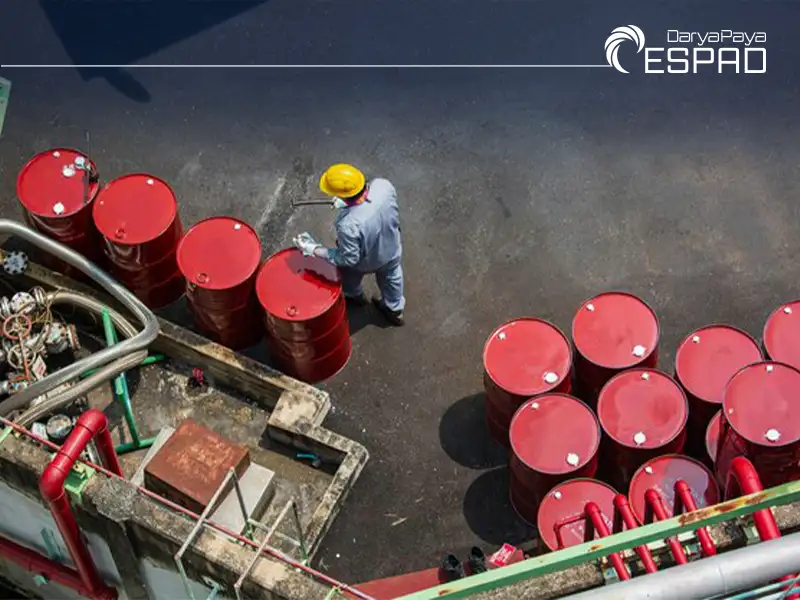
The Strategic Role of Freight Forwarders in Facilitating Bitumen Trade
The bitumen trade—particularly to long-haul African destinations—is a multi-tiered process requiring seamless synchronization between traders, consignees, carriers, and customs authorities. Freight forwarders and Lead Logistics Providers (LLPs) are instrumental in managing this end-to-end supply chain through:
- Optimal Route Engineering: Evaluating transit times vs. freight rates to select the most efficient corridor.
- Unitization and Packaging Solutions: Managing specialized packaging (Drumming, Jumbo Bags, or Flexitanks) to ensure cargo stability.
- Customs Brokerage and Documentation: Ensuring all export manifests, certificates of origin, and technical appraisals are compliant with local mandates.
- Risk Management: Coordinating marine insurance and contingency planning for transshipment delays.
- Real-time Tracking and Visibility: Providing stakeholders with continuous updates on cargo status.
The Espad Shipping Advantage
Securing a reliable logistics partner with deep domain expertise in the Iran-Africa bitumen trade is the differentiator between a successful commercial transaction and a costly logistical failure. Espad Darya Paya (Espad Shipping) leverages extensive experience in international freight forwarding and a specialized understanding of African maritime corridors. We provide end-to-end solutions—from specialized packaging and route optimization to complex customs brokerage—ensuring your cargo reaches its destination with maximum efficiency.
Contact our operational team today to optimize your bitumen trade strategy.