The Importance and Principles of Cargo Classification in Maritime Shipping
The international shipping industry facilitates the transport of diverse goods worldwide and remains the most vital, primary, and cost-effective mode of transport. Consequently, businesses prioritize this method, resorting to alternatives such as air or land freight only when maritime routes are unavailable or vessel capacity is constrained.
Maritime shipping is ideally suited for moving an extensive array of goods, including raw materials, bulk commodities, liquids and gases, foodstuffs, and live animals. Due to this diversity, cargo classification in maritime transport is mandatory. To ensure businesses are well-versed in these classifications, this article from the Espad blog examines the various categories of cargo in maritime shipping.
In international logistics, classifying goods based on physical characteristics, storage requirements, economic value, potential hazards, and handling methods is both essential and unavoidable. This classification impacts not only the selection of vessel type and equipment but also directly influences customs procedures, insurance, voyage safety, and total landed costs. Consequently, international organizations such as the IMO play a pivotal role in standardizing maritime transport by establishing codes and guidelines, such as the IMDG Code.
Containerized Cargo Shipping
Containerized shipping represents a significant share of maritime trade. Initiated by the invention of the intermodal container in the 1950s, this method rapidly evolved into a highly secure and efficient logistics solution. Categories of goods typically transported in containers include:
- Consumer goods
- Industrial components
- Agricultural products
For these goods, various standard ISO containers are utilized, including Dry Containers, Reefer (refrigerated) Containers, Open Top containers, and Flat Rack containers, selected according to the dimensions, weight, and specific requirements of the cargo. Proper stowage, secure packaging, and appropriate labeling are fundamental requirements for this mode of transport.
Transport of Foodstuffs and Perishables
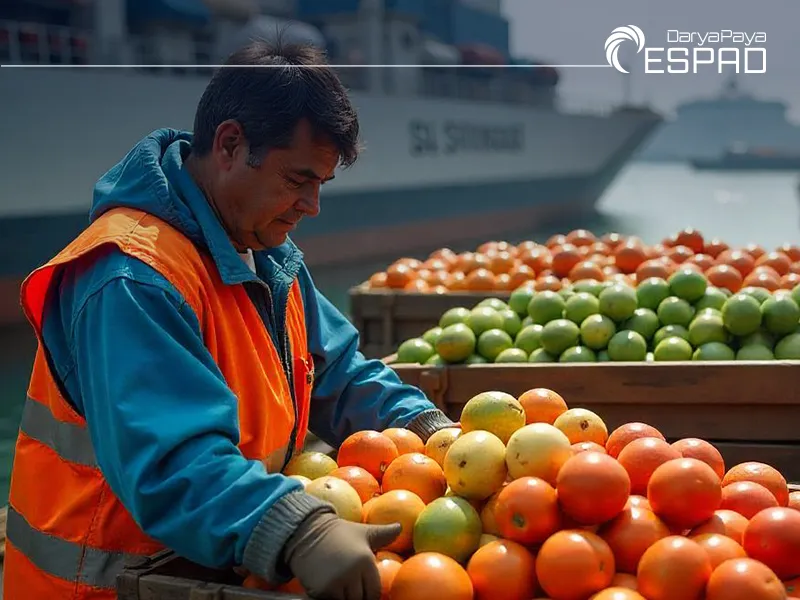
Foodstuffs fall under specialized maritime classification. Due to their limited shelf life and high susceptibility to spoilage, they present one of the most significant challenges in maritime shipping. Primary foodstuffs transported via sea include:
- Fresh produce (fruits and vegetables)
- Packaged foods
- Semi-processed food items
- Frozen foods (e.g., various meats)
Since various food products may remain on merchant vessels or in port warehouses for several months, storage conditions are critical. While a significant percentage of high-value food transport occurs via air, businesses utilize maritime shipping when the volume and weight exceed the capacity of air freight.
To preserve quality and safety, reefer containers equipped with precise temperature, humidity, and ventilation controls are employed. Advanced technologies, such as Controlled Atmosphere (CA) and Temperature Monitoring Systems, allow for the maintenance of optimal environmental conditions. Furthermore, the transport of these goods is subject to international regulations, such as the ATP Agreement, which dictates the conditions for the carriage of perishable foodstuffs.
Businesses must account for the following factors when shipping food and perishables:
- Short shelf life
- High risk of spoilage
- Risk of route deviations during the voyage
Therefore, the only viable solution for maintaining product integrity is the use of specialized refrigerated vessels, known as “reefers.” These vessels feature adjustable temperature controls to prevent food spoilage.
Transport of Livestock and Live Animals
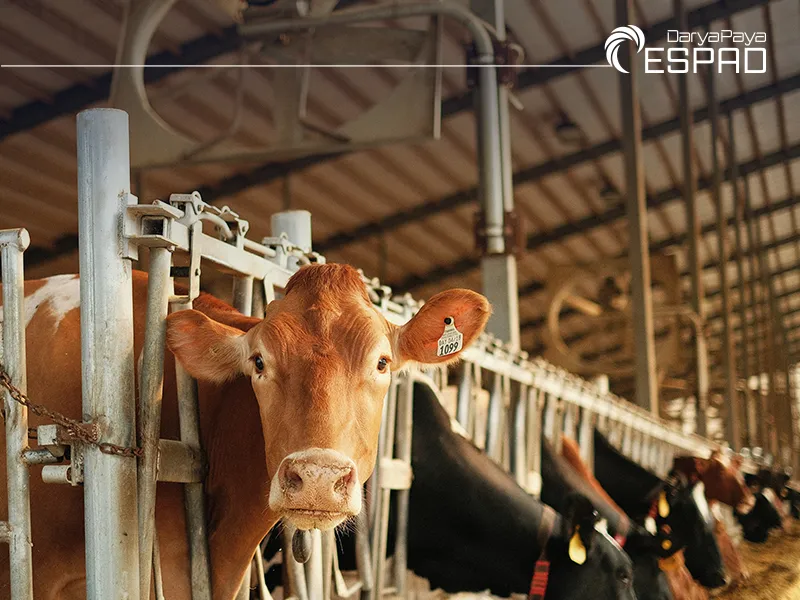
The maritime transport of livestock and live animals is conducted for breeding, meat production, and by-product processing. This category entails numerous challenges, the most significant being ensuring the survival and well-being of the animals throughout the sea voyage.
Key operational requirements include:
- Provision of water and feed
- Sufficient lighting
- Proper ventilation
- Maintenance and sanitation of animal holding areas
Specialized vessels, known as Livestock Carriers, are designed specifically to meet these needs regarding ventilation, space, light, and nutrition. Some of these ships are converted from bulk or container vessels to comply with health and welfare standards. This transport is regulated by IMO and the World Organisation for Animal Health (WOAH/OIE) guidelines, which are crucial for animal welfare and preventing the spread of diseases.
Multi-deck vessels provide artificial lighting, though businesses often prefer decked systems to ensure optimal care. However, such systems require implementing multiple decks beneath the main deck, which can be capital-intensive.
Transport of LNG, CNG, and Gases
The largest maritime cargo classification involves petroleum products and their derivatives, including:
- Crude oil
- Volatile fuels
- Compressed Natural Gas (CNG)
- Liquefied Natural Gas (LNG)
- Various chemical derivatives
Merchant vessels (tankers) are primarily utilized for these commodities, as maritime shipping is the most economical method for high-volume, high-weight goods. Carrying these fuels requires specialized vessels with hulls engineered to withstand the intense pressure of liquids and gases.
LNG carriers typically feature spherical or membrane tanks with high-efficiency thermal insulation, maintaining gas at approximately -162°C. Conversely, CNG is transported under high pressure within specialized cylindrical tanks. These vessels are designed to rigorous IMO and safety standards to minimize the risk of explosion or gas leaks.
Transport of Vehicles
Vehicle transport is a common trade, particularly in the Middle East, parts of Asia, Europe, and the Americas. Roll-on/Roll-off (Ro-Ro) vessels are utilized to transport vehicles along coastal lines. These vessels are specifically built to support the high weight of various vehicles, accounting for forces exerted on the ship’s stern during the loading and discharge of both light and heavy vehicles.
A key characteristic of Ro-Ro vessels is having one or two decks, with the superstructure and bridge located at the bow. A hydraulic stern ramp allows vehicles to be driven directly onto the vessel.
Vehicle carriers are divided into two main types: Pure Car Carriers (PCC) for cars only, and Pure Car and Truck Carriers (PCTC) designed for trucks, buses, and heavy machinery. On these vessels, loading safety is ensured through lashing systems and multi-level hydraulic ramps, allowing for direct pier-to-ship loading without the need for cranes.
Transport of Machinery, Equipment, and Plant Components
The transport of machinery, equipment, and factory components is a high-profit segment, especially for large-scale shipments. This is primarily because these goods often do not require specialized loading, warehousing, or discharge facilities. Consequently, they can be moved as either break-bulk or bulk cargo.
However, the main challenge is the risk of corrosion. Shipping lines generally maintain dry holds, but during the voyage, leakage or other vessel issues may introduce humidity. Therefore, general bulk carriers utilize specialized drying units to constantly monitor hold humidity levels.
These goods are often handled as “Break Bulk” or “Over-Dimensional/Heavy-Lift” cargo, requiring specialized cranes, reinforced loading bridges, and sometimes Heavy-Lift vessels. Preparation for such shipments involves dismantling sensitive components, robust packaging, anti-rust coatings, and the use of moisture-absorbing desiccants.
Dry Bulk Cargo
Dry bulk cargo refers to any commodity transported unpackaged and loose in a vessel’s holds. This category includes:
- Grains (wheat, rice, corn)
- Minerals (ores)
- Coal
- Machinery and components (in certain bulk configurations)
Transporting these goods entails risks such as cargo shifting, which can destabilize the vessel. Consequently, specialized compartmentalization or “stowage factors” must be utilized to keep the cargo in a fixed position.
Liquid Bulk Cargo
Liquid bulk consists of commodities in liquid form that must be transported in bulk. Products in this category include:
- Petroleum goods
- Petroleum by-products
- Chemicals
- Liquefied gases
Liquid cargoes are often highly volatile; their maritime transport presents risks not only to the crew but also to the environment and the vessel. Therefore, they must be carried in double-hulled tanks. These tanks feature double bottoms to prevent leakage in the event of an accident. Furthermore, tanks are fitted with anti-sloshing longitudinal divisions to reduce fluid movement and internal pressure.
Flammable liquid bulk must be isolated from other holds, as mitigating the movement of such liquids is more complex than with other cargo types.
Hazardous Cargo, Chemicals, and Toxic Products
Hazardous, chemical, and toxic goods represent a critical classification, as they often cannot be carried via air freight. The demand for their transport arises from the specialization of certain countries in synthesizing specific chemicals.
Hazardous and toxic materials present multi-faceted challenges:
- High risk of corrosion to the vessel or container units
- Potential for chemical and toxic leaks
- Risks of poisoning
- Environmental contamination threats
In these cases, not only are the crew and operators at risk during storage, loading, and transit, but the cargo also poses significant threats to the vessel and the ecosystem.
For such shipments, reinforced and specialized storage units with high resistance to corrosion and rust must be used. They must be impervious to vapors, leaks, and secondary effects of hazardous materials from loading until discharge at the port.
Transport is permitted only upon strict adherence to the IMDG Code and accurate classification within the nine hazard classes. Supporting documentation, precise labeling, Material Safety Data Sheets (MSDS), and crew training for leakage or potential explosion response are mandatory requirements. Vessels must also be equipped with specialized fire detection and suppression systems.
Cargo Classification and Secure Shipping with Espad
Classifying cargo in maritime transport is the foundational step toward ensuring the appropriate equipment and services are provided. With at least 80% of global goods transported by merchant vessels, familiarity with these classifications facilitates the principled and efficient selection of transport equipment, such as containers, tanks, and compartmentalized holds.
As detailed in this article, transporting any specific commodity requires specialized facilities and a deep understanding of the cargo’s requirements. We recommend utilizing the services of Espad International Transport Company. With access to comprehensive infrastructure, specialized equipment, and deep industry expertise, Espad ensures your cargo reaches its final destination securely, undamaged, and on schedule.