Comparing Iranian and International Shipping Companies in Terms of Services, Pricing, and Routes
The shipping industry is one of the fundamental pillars of international trade and global cargo movement. Without maritime transportation, the large‑scale exchange of goods between continents would not be possible with the same level of efficiency, capacity, and cost effectiveness.
For exporters, importers, freight forwarders, and international trading companies, choosing the right shipping company plays a crucial role in ensuring smooth logistics operations.
According to UNCTAD, more than 80% of global trade by volume and around 70% by value is transported by sea. Iran also handles over 100 million tons of cargo annually through its ports (Source: Iran Ports and Maritime Organization, 2023). In such a market, selecting the right shipping partner is a critical decision for businesses involved in international trade with Iran.
Comparing Iranian shipping companies with major international carriers helps traders better understand the strengths and limitations of each option. In this article, we examine key aspects including shipping services, pricing structures, operational quality, and route coverage. At the end, we provide practical recommendations for companies involved in global trade with Iran.
What Is a Shipping Company?
A shipping company is a commercial organization responsible for transporting goods and passengers via seas and oceans. Using cargo vessels or passenger ships, these companies move goods between ports around the world and play a vital role in the global supply chain.
Shipping companies generally operate in two primary models:
- Liner Shipping
Regular scheduled services operating on fixed routes and timetables, such as Maersk or IRISL.
- Tramp Shipping
Charter‑based shipping without fixed schedules, typically used for bulk commodities or project cargo.
In addition, some carriers operate as feeder services, transporting cargo between smaller regional ports and major international hubs.
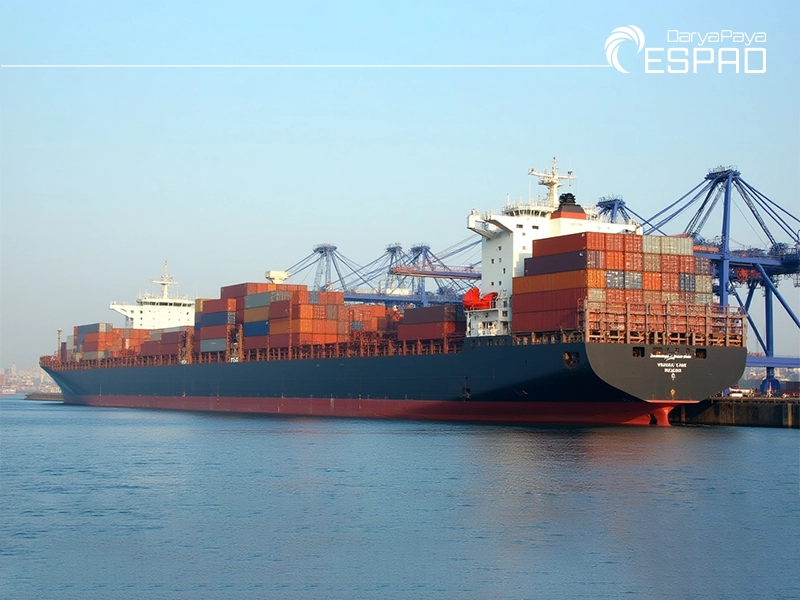
Main Responsibilities of Shipping Companies
Shipping companies typically perform several key functions within the global logistics chain:
- Owning or chartering cargo and passenger vessels
- Planning maritime shipping routes and schedules
- Providing container, bulk, tanker, refrigerated, and specialized cargo transport
- Managing cargo loading and unloading operations at ports
- Offering complementary logistics services such as warehousing, cargo insurance, and customs support
- Ensuring cargo safety and compliance with international maritime regulations
Shipping Companies Active in Iran
Several domestic and regional shipping companies operate in Iranian waters and ports. These include:
- Islamic Republic of Iran Shipping Lines (IRISL) – operating more than 145 vessels with an approximate capacity of 150,000 TEU and serving over 30 ports in 20 countries (Source: IRISL, 2023)
- Espad Darya Paya – the largest private shipping company in Iran with more than 300,000 active containers and one of the few international private carriers operating in the country
- Tarang Darya Shipping
- Daryapeyma Amin Pars
- Bar‑o‑Bahr Shipping
- Toosheh Bar Shipping
- Sahel Bikaran Arya
- Abdis Marine
- Hormoz Marine
- Haft Darya Shipping
- Valfajr Shipping
- Arya Darya Khazar
- Setareh Oghianous Badie
- Darya Parto Gita
Most of these companies operate primarily within the Persian Gulf, Gulf of Oman, the Caspian Sea, and selected Asian routes.
Services Offered by Iranian Shipping Companies
Typical services provided by Iranian carriers include:
- Container and bulk cargo transport
- Port loading and unloading services
- Limited complementary logistics support
- Basic cargo tracking, often through manual or phone‑based systems
- Standard cargo insurance services
Strengths and Limitations of Iranian Shipping Companies
Strengths
- Competitive pricing on regional routes
- Strong familiarity with Iranian regulations and the domestic logistics environment
- Regional trade relationships that may facilitate customs procedures
Limitations
- Limited global route coverage
- Less developed digital platforms and online service systems
- Smaller and sometimes older fleets compared to major international carriers
Espad Darya Paya stands out in this sector by providing shipping coverage to more than 300 ports in over 30 countries, offering broader services than most regional carriers operating in Iran.
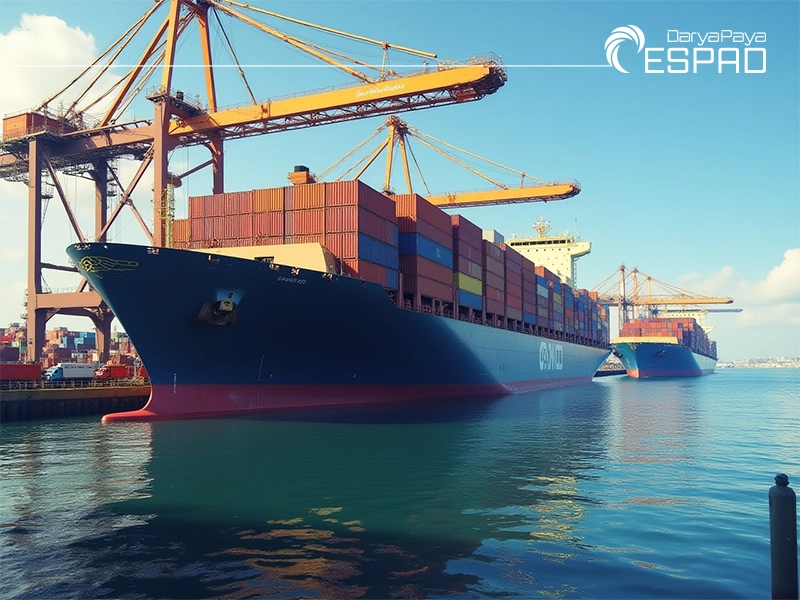
Major Global Shipping Companies
Some of the world’s largest container shipping lines include:
- MSC (Switzerland–Italy) – 5.6 million TEU capacity, ranked #1 globally
- Maersk (Denmark) – 4.2 million TEU capacity, ranked #2 globally
- CMA CGM (France) – 3.6 million TEU capacity, ranked #3 globally
- Hapag‑Lloyd (Germany)
- COSCO (China)
- Evergreen (Taiwan) – 2.8 million TEU
- ONE – Ocean Network Express (Japan) – 1.5 million TEU
- Yang Ming (Taiwan) – 1.1 million TEU
- HMM – Hyundai Merchant Marine (South Korea) – 1.3 million TEU
These companies operate large and technologically advanced fleets, global route networks, and extensive digital logistics services.
Services Offered by Global Shipping Companies
International carriers typically provide:
- Online booking systems and real‑time cargo tracking
- Integrated logistics and warehousing services
- Transport options for specialized containers (reefer, tank, flat rack, etc.)
- Comprehensive cargo insurance and international shipping contracts
- 24/7 multilingual customer support
Comparison Between Iranian and Global Shipping Companies
Route Coverage
Iranian carriers typically focus on regional routes within the Persian Gulf, Caspian Sea, and nearby markets, while global carriers operate extensive networks covering nearly every major port worldwide.
Digital Services
Iranian carriers usually offer basic digital services, whereas global carriers provide advanced digital platforms, online dashboards, and mobile applications.
Container Types
Iranian fleets primarily handle standard container types, while international carriers provide a wide range of specialized containers for various cargo types.
Customer Support
Local carriers often operate during regular business hours, whereas international shipping companies offer 24/7 multilingual support teams.
Pricing
Iranian companies may offer competitive rates for regional shipments, while global carriers benefit from economies of scale on long‑distance international routes.
Espad Shipping, supported by logistics specialists with experience in international shipping lines and advanced market analysis, has established itself as one of the most prominent maritime transport providers in Iran.
As the largest private shipping company in the country, Espad operates a fleet with more than 300,000 active containers, enabling regular weekly services from major Iranian ports to over 350 ports across more than 30 countries worldwide.
With an extensive network of regional offices and agents, Espad provides effective operational support for clients and has positioned itself beyond the typical scale of regional carriers.
Choosing the Right Shipping Company
When selecting a shipping partner for cargo moving to or from Iran, several factors should be considered:
- Clearly defining the shipping route and final destination
- Evaluating the type and weight of the cargo
- Comparing pricing structures and available services
- Assessing cargo tracking capabilities and customer support
- Choosing companies that offer comprehensive insurance coverage and transparent contracts
Pricing Factors in the Shipping Industry
Shipping costs depend on several key variables:
- Fuel costs (bunker prices)
- Route distance and number of port calls
- Cargo type and weight
- Market conditions and international trade restrictions
- Level of competition among shipping companies
Shipping Rates on Different Trade Routes
For regional routes, such as shipments between Iran and the UAE or India, Iranian carriers often provide lower and more competitive rates.
For long‑distance international routes, such as shipments between Iran and Europe or the Americas, global shipping companies often offer better transit times and operational efficiency due to their larger fleets and optimized networks.
Overall, global maritime freight rates are influenced by numerous economic and geopolitical factors that smaller regional carriers may have limited ability to control.
Shipping Routes and Geographic Coverage
One of the most important factors when choosing a shipping company is route coverage. The ability of a carrier to transport cargo quickly with minimal transshipment points is a major competitive advantage.
Route Coverage of Iranian Shipping Companies
Persian Gulf routes
UAE (Dubai, Jebel Ali), Oman, Qatar, Kuwait, Bahrain
Gulf of Oman and Indian Ocean
India (Mumbai, Nhava Sheva), Pakistan (Karachi)
Caspian Sea routes
Astrakhan (Russia), Baku (Azerbaijan), Turkmenbashi (Turkmenistan), Aktau (Kazakhstan)
Central Asia and CIS combined routes
Using southern Iranian ports combined with rail transport into CIS countries
Occasional services to China, Malaysia, or Indonesia through charter vessels or partner carriers
Note: For companies trading with neighboring countries or the CIS region, working with Iranian shipping companies can often provide advantages in terms of cost and smoother customs procedures.
Route Coverage of Global Shipping Companies
Asia – Europe
China, Japan, South Korea ↔ European ports such as Hamburg, Rotterdam, Antwerp
Asia – North America
East Asia ↔ U.S. West and East Coast ports (Los Angeles, New York, Houston)
Europe – Africa
Northern European ports ↔ East and West African ports
Asia – South America
China and India ↔ Brazil, Argentina, Chile
Europe – Australia and New Zealand
Less frequent but active routes
Cross‑Trade Operations
Shipments where neither origin nor destination is Iran but are managed by global carriers.
Note: If your cargo is destined for Europe, the United States, Africa, or South America, international shipping companies are generally recommended due to their global route networks and advanced fleets.
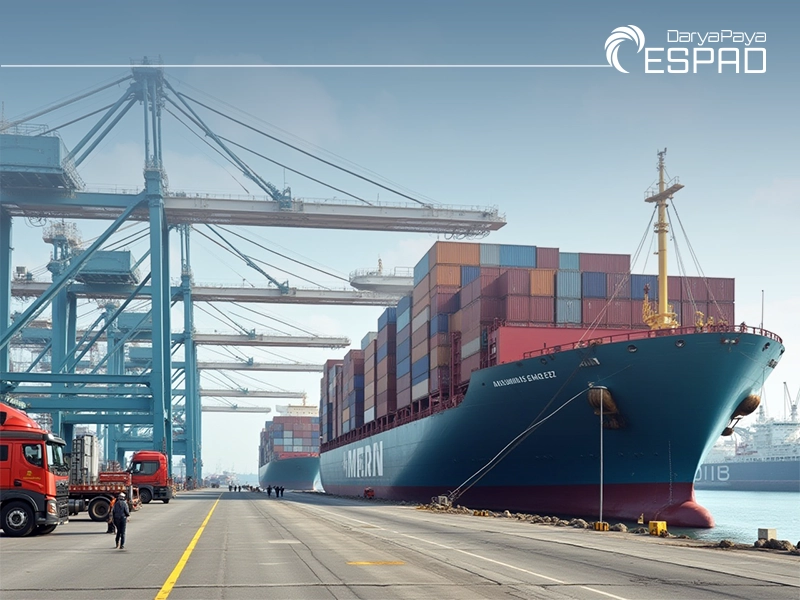
Important Note for International Traders Working with Iran
Based on industry experience and logistics analysis, companies exporting goods to regional markets or importing goods from China, India, or Russia into Iran may benefit from working with Iranian carriers such as IRISL or regional operators.
However, for shipments involving Europe, Africa, or transcontinental routes, international carriers with established global networks often provide more efficient solutions.
That said, Espad Darya Paya, with its modern fleet, integrated logistics services, and strong international partnerships, is capable of managing even complex shipments between Iran and global markets including Europe and Africa.
Conclusion
A comparison of Iranian and global shipping companies shows that each group has its own advantages and operational limitations.
Iranian carriers such as IRISL often provide cost‑effective services on regional routes and possess strong familiarity with local regulations and port procedures. In contrast, global carriers like Maersk and MSC offer advanced technology, modern fleets, and worldwide route networks that dominate international shipping markets.
Espad Darya Paya, however, bridges part of this gap by combining extensive container capacity, integrated logistics services, and the ability to manage international cargo flows, including routes connecting Iran with Europe and Africa.
Ultimately, choosing the right shipping company should depend on several factors: cargo type, destination, budget, transit time requirements, and the level of service needed.
By consulting logistics professionals and experienced providers such as Espad Shipping, businesses involved in trade with Iran can make more informed decisions in the complex world of international maritime transportation.