Container Shipping Terminology: A Comprehensive Operational Guide
Containerized shipping serves as a cornerstone of global commerce, facilitating the cross-border transit of goods via maritime vessels. This intricate process necessitates a specialized lexicon utilized by exporters, importers, carriers, and customs authorities worldwide. Mastery of container shipping terminology is essential not only for operational efficiency but also for mitigating legal risks and financial discrepancies.
This article reviews the primary terms prevalent in container logistics. With this technical foundation, you will be equipped to navigate international trade processes with precision and avoid costly operational errors.
Booking and Reservation Terminology
The following terms are fundamental to the booking and space allocation phase of container logistics:
- FCL (Full Container Load): A shipment mode where the entire capacity of a container is utilized by a single consignor. This method enhances security, minimizes the risk of cargo damage, and expedites customs clearance as the entire consignment belongs to one owner.
- LCL (Less than Container Load): Utilized when the cargo volume is insufficient to fill a standard container. Multiple shipments from various consignors are aggregated (Consolidation) and subsequently separated at the destination (Deconsolidation).
- TEU (Twenty-foot Equivalent Unit): The standard unit of measurement in the industry, equivalent to one 20-foot container. It is used to quantify vessel capacity and terminal throughput.
- Booking: The formal reservation of slot capacity on a vessel for cargo transit, specifying loading dates, equipment type, and ports of origin/destination.
- Cut-off Date: The final deadline for the physical gate-in of containers at the terminal and the submission of all mandatory shipping documentation to the carrier.
- Gate-in / Gate-out: Refers to the timestamped entry or exit of a container from a port terminal or Inland Container Depot (ICD).
- Booking Confirmation: A formal document issued by the carrier upon finalization of a reservation, containing the booking reference, equipment type, ETD, vessel name, and Voyage Number.
- VGM (Verified Gross Mass): The mandatory declaration of a container’s total weight, as required by SOLAS regulations, which must be submitted to the carrier prior to vessel loading.
- CRO (Container Release Order): An authorization issued by the carrier’s operations department or freight forwarder, permitting the retrieval of empty equipment from the terminal or container yard (CY). It specifies details such as the container number, pickup location, feeder/vessel details, and return deadlines.
Equipment and Container Type Terminology
Selecting the appropriate equipment is critical for cargo integrity. Common container types include:
- Dry Van (Standard Container): General-purpose equipment for non-specialized commodities (textiles, electronics, consumer goods).
- Reefer (Refrigerated Container): Specialized units equipped with integral refrigeration systems for temperature-sensitive cargo, such as perishables or pharmaceuticals.
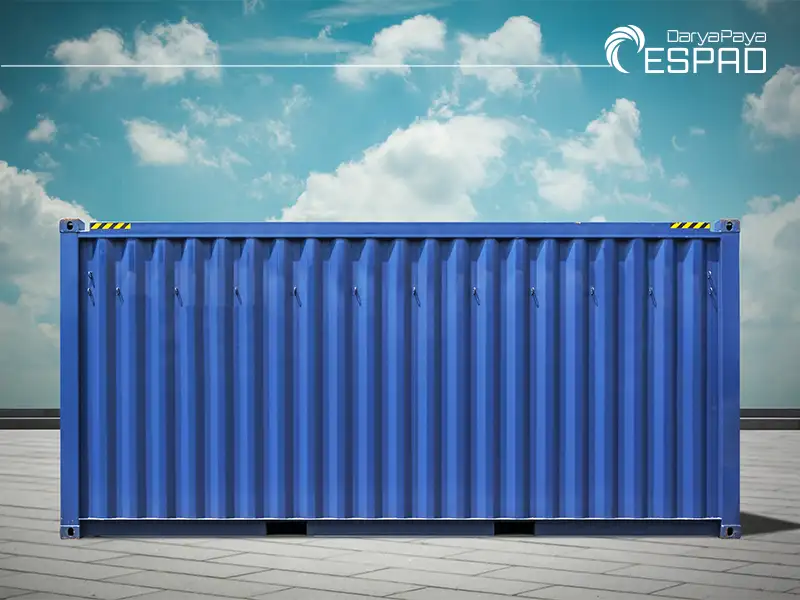
- Open Top: Designed for over-height or bulky cargo that cannot be loaded through standard doors; typically features a removable tarpaulin roof.
- Flat Rack: Equipment consisting of a reinforced floor with end-walls but no side walls or roof, used for heavy machinery or Out-of-Gauge (OOG) cargo.
- Tank Container / ISO Tank: A stainless steel pressure vessel encased in a standard ISO frame, used for transporting liquids, gases, or chemicals in bulk.
- High Cube (HC): Containers with an increased height of 9’6″ (compared to the standard 8’6″), providing greater volumetric capacity.
Documentation Terminology
Accurate documentation is the backbone of maritime law and customs compliance:
- B/L (Bill of Lading): A legal instrument serving as evidence of the contract of carriage, a receipt for the cargo, and a document of title.
- SWB (Sea Waybill): A non-negotiable document similar to a B/L, used when a transfer of title is not required, facilitating faster cargo release.
- Commercial Invoice: An official document issued by the seller to the buyer, detailing the goods sold, valuation, and terms of payment.
- Packing List (P/L): A detailed inventory specifying the contents, weight, and dimensions of each package within the container.
- Manifest: A comprehensive list of all cargo on board a vessel, submitted to customs and port authorities for regulatory oversight.
- Switch B/L: A second set of Bills of Lading issued to replace the original for commercial reasons (e.g., protecting supplier identity in tripartite trade), subject to carrier approval.
- Arrival Notice: A formal notification issued by the carrier or forwarder upon vessel arrival, providing container discharge information.
- Delivery Order (D/O): A document issued by the carrier to the consignee or their agent, authorizing the release of cargo from the terminal.
- LOI (Letter of Indemnity): A formal guarantee issued to the carrier to facilitate cargo release when original documents are lost or delayed, assuming liability for any resulting claims.
- Customs Clearance Documents: The suite of mandatory paperwork (B/L, Invoice, P/L, COO, Import Licenses) required for legal entry at the destination port.
Costs, Surcharges, and Services
- Freight: The remuneration paid to the carrier for the transit of goods from origin to destination.
- THC (Terminal Handling Charges): Fees collected for the movement of containers within the port, including stevedoring and terminal logistics.
- Demurrage: A penalty fee incurred when the consignee exceeds the allowed “free time” for container storage inside the port terminal.
- Detention: A penalty applied when a container is held by the customer outside the port premises beyond the agreed-upon period for stripping or stuffing.
- CAF (Currency Adjustment Factor): A surcharge applied to offset exchange rate fluctuations between the freight currency and the carrier’s operating currency.
- BAF (Bunker Adjustment Factor): A floating surcharge applied to account for fluctuations in global fuel (bunker) prices.
- Documentation Fee: Administrative charges for the issuance of transport documents and customs manifest filings.
International Shipping and Trade Terms
- Incoterms (International Commercial Terms): A set of standardized rules defining the allocation of costs, risks, and responsibilities between buyer and seller (e.g., FOB, CIF, EXW).
- POL (Port of Loading): The port facility where the cargo is physically loaded onto the vessel.
- POD (Port of Discharge): The destination port where the container is offloaded from the vessel for final delivery or transshipment.
- Transit Time: The duration of the sea voyage from the POL to the POD.
Port and Vessel Operations
- ETA (Estimated Time of Arrival): The projected arrival time of the vessel at the port of destination.
- ETD (Estimated Time of Departure): The projected departure time of the vessel from the port of origin.
- Berthing Window: An allocated time slot for a vessel to dock at a specific quay for cargo operations.
- Stevedoring: The operational labor and equipment usage involved in loading and discharging containers from the vessel.
Conclusion
A rigorous understanding of container shipping terminology is indispensable for any professional engaged in international trade. These terms streamline communication between stakeholders and prevent operational failures during transit and customs clearance.
Should you require specialized consultancy in international logistics or container reservations, Espad Shipping Company offers extensive expertise to optimize your global supply chain.