Comprehensive Guide to Importing Ball Bearings into Iran: Tariffs, Customs Documents, and Key Trade Considerations
Ball bearings are among the most widely used industrial components worldwide, found in machinery, automotive systems, factory equipment, production lines, and various industrial sectors. Due to the extensive domestic demand, importing ball bearings into Iran plays a significant role in supporting the country’s industrial supply chain.
In 2023, Iran’s ball‑bearing imports totaled approximately USD 82.6 million. Within the Middle East, Iran—alongside Turkey and the UAE—accounts for a major share of bearing imports. Between October 2023 and September 2024, Iran imported 2,027 shipments of ball bearings, with 54% sourced from India, 43% from Turkey, and around 2% from Uzbekistan.
This article provides a detailed overview of the entire import process—from tariff codes and customs requirements to clearance procedures, regulations, and essential trade considerations—offering traders a practical and reliable reference.
Why Importing Ball Bearings Matters
As a developing industrial economy, Iran relies heavily on ball bearings across key sectors, including automotive manufacturing, oil and gas, food processing, textiles, cement, and steel. Since a substantial portion of domestic demand is met through imports, understanding the correct legal and logistical framework is crucial for traders in this sector.
Common supplier countries include China, Germany, Japan, South Korea, and India.
Tariff Structure for Importing Ball Bearings into Iran
Iran’s import tariff system for bearings includes several components. The primary charge is customs duties, assessed upon entry of goods into the country. Additional costs—such as VAT, inspection fees, and clearance charges—also impact the final landed cost.
It is important to note that certain bearing types fall under mandatory Iranian Standard Organization (ISIRI) regulations and cannot be cleared without a Certificate of Conformity or testing approval from an accredited laboratory.
Key tariff components include:
- HS Code: 84821000
- Customs Duty: 2% of CIF value
- Value‑Added Tax (VAT): 10% (based on 1404 regulations)
- Additional Fees: warehousing, demurrage, standard inspection, inland transportation, and business‑card service fees
Customs Duties (Import Duty)
As of the latest regulations, the applicable HS Code for importing ball bearings into Iran is 84821000. The import duty for this product is set at 2% of the CIF value (Cost + Insurance + Freight).
Value‑Added Tax (VAT)
For imported goods, the VAT rate for 1404 is 10%, calculated on a deferred (accrual) basis.
Additional Costs in Bearing Imports
Beyond customs duty and VAT, several operational costs must be considered:
- Clearance fees: charges related to customs brokerage and documentation
- Warehousing & demurrage: fees for storage at port terminals and penalties for late container return
- Testing & standard compliance: required when goods fall under ISIRI mandatory standards
- Domestic transportation: cost of moving cargo from port to final destination
- Business‑card service fees: applied when using a commercial card for import activities
Accurately calculating these elements is essential for determining the true landed cost of bearings.
Required Documents for Importing Ball Bearings
To ensure a smooth and legally compliant customs clearance process, complete and accurate documentation is critical. Key documents include:
- Commercial Invoice
- Packing List
- Bill of Lading (B/L)
- Certificate of Origin
- Customs Declaration (TTN)
- Order Registration Approval (NTSW)
- Valid Business Card
For sea or air shipments, providing a Letter of Instructions (LOI) to the forwarder or shipping line is mandatory for issuing the correct Bill of Lading and specifying delivery conditions.
Commercial Documentation
- Proforma Invoice: issued by the foreign supplier
- Commercial Invoice: containing pricing, payment terms, and product details
- Packing List: specifying dimensions, weights, and packaging configuration
- Certificate of Origin: issued by the exporting country’s chamber of commerce
- Bill of Lading: issued by the carrier or freight forwarder
- Order Registration (NTSW): required before cargo shipment
Customs Documentation
- Customs Declaration (TTN)
- Correct and verified HS Code classification
- Warehouse Receipt (Cargo Arrival Notice)
- Mandatory Standard Certificate (if applicable)
- Valid Business Card
Steps to Import Ball Bearings into Iran
-
Market research and supplier selection:
Evaluate reputable global brands such as SKF, KOYO, NSK, NTN, FAG, etc., and request quotations.
-
Receive Proforma and register the order:
This must be completed through the NTSW single‑window trade system.
-
Currency transfer (if required):
Depending on regulations, payment may be made through NIMA, export‑offset imports, or licensed exchange offices.
-
Cargo shipment & issuance of Bill of Lading:
Once the cargo is shipped, the B/L is issued and shared with the Iranian buyer.
-
Customs clearance:
Submit documents, pay duties and taxes, and obtain cargo release authorization.
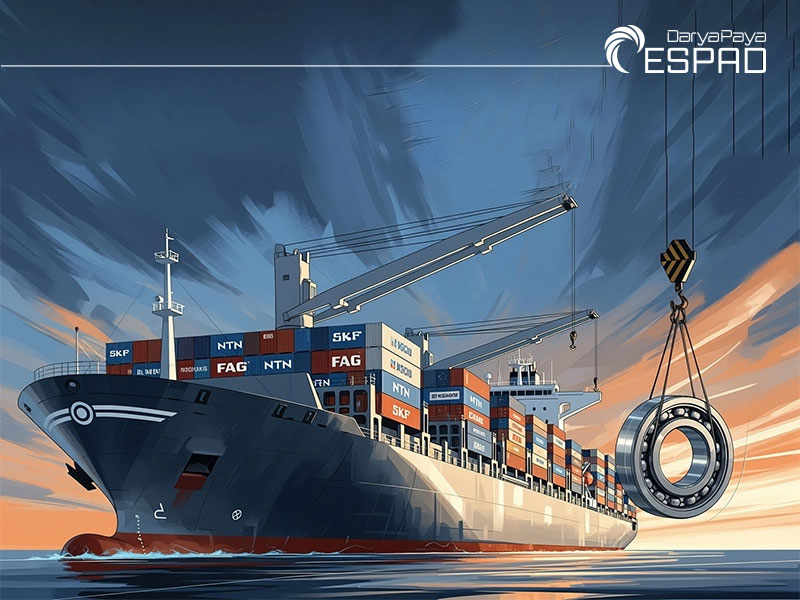
For sea freight, dry containers (standard containers) are typically used. For sensitive cargo, palletizing with moisture‑resistant wrapping is recommended. Securing Marine Cargo Insurance (ICC A) is essential to cover potential maritime risks.
Key Considerations for Traders
Quality & Standards
Bearings are sensitive components; poor quality can cause machinery failures and financial losses. Only purchase from suppliers with internationally recognized certifications.
Supplier Reliability
Avoid unknown or unverified suppliers. If possible, use Letters of Credit (LC) or secure payment terms with bank guarantees.
Regulatory Updates
Iran’s import and customs regulations change frequently. Always consult with professional customs brokers or trade advisors.
Hidden Costs
Beyond base price, consider costs such as inland haulage, insurance, laboratory inspection, standard certification, and potential container demurrage.
Reputable Bearing Brands for Import
| Brand | Country | Quality |
| SKF | Sweden | Very High |
| NSK | Japan | High |
| FAG | Germany | Very High |
| KOYO | Japan | High |
| NTN | Japan | High |
| ZWZ | China | Medium |
| C&U | China | Medium |
Challenges & Risks in Bearing Import
- Risk of counterfeit products
- Exchange‑rate fluctuations
- Clearance delays due to missing documents or permits
- International transport disruptions, especially in sea routes
Conclusion
Importing ball bearings into Iran can be highly profitable when conducted properly and in compliance with customs and trade regulations. Given the high dependency of Iran’s industrial sectors on imported bearings, traders must stay updated on tariffs, documentation requirements, quality standards, and clearance processes.
Working with reputable suppliers, understanding current import regulations, and partnering with experienced freight forwarders and customs brokers are key factors for success.