The Key Role of Feeder Vessels in the Supply Chain and Maritime Transport
In the dynamic realm of maritime transport, feeder vessels play a crucial yet often overlooked role. These smaller ships bridge local and secondary ports with main international hubs, acting as vital links between the initial and final stages of the global supply chain. Without their presence, efficient transfer of goods from remote locations onto primary maritime trade routes would be impossible. This article examines feeder vessels, their operations, and their significance within the supply chain.
What Is a Feeder Vessel?
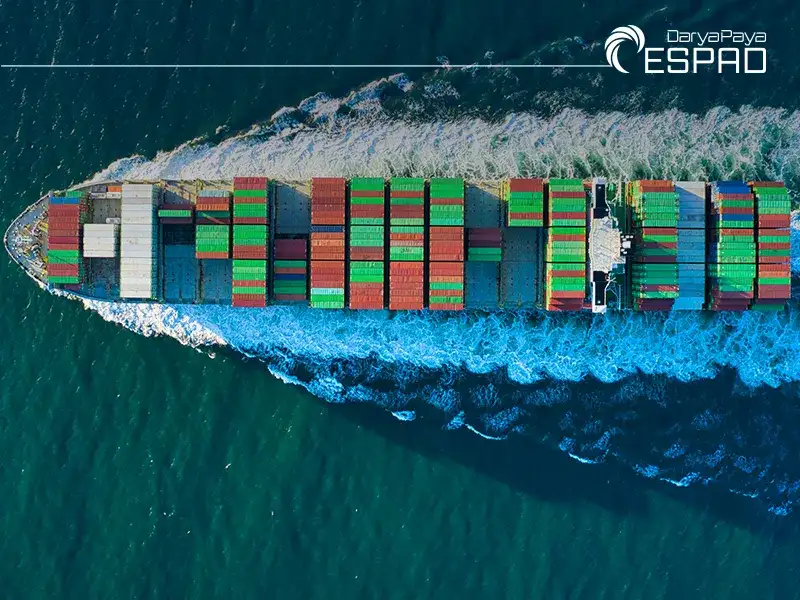
A Feeder Vessel is a type of cargo ship whose primary function is to transport containers between smaller ports and large hub ports. Feeder vessels generally have much smaller capacity compared to ocean-going ships and are designed for short-haul transportation.
Serving as a connecting link in major maritime transport chains, feeder vessels transfer cargo discharged at large ports to local or regional ports.
Feeder vessels are commonly classified based on capacity as follows:
- Feeder: Less than 1,000 TEU
- Feedermax: Between 1,000 and 2,000 TEU
- Handy Feeder: Up to approximately 3,000 TEU
Operationally, feeders are also categorized by geographic scope into Coastal Feeders (serving coastal routes), Short-Sea Feeders (regional routes), and Deep-Sea Feeders (operating on oceanic connections).
Difference Between Feeder Vessels and Large Mainline Vessels
The key differences between feeder vessels and large mainline ships lie in size, capacity, operational routes, and functions, summarized below:
| Ship Feature | Feeder Vessel | Mainline Vessel (Large) |
|---|---|---|
| Capacity | Small (typically below 3,000 TEU) | Over 14,000 TEU
(up to 24,000 TEU) |
| Operational Route | Short-haul (regional or local) | Long-haul
(intercontinental routes) |
| Primary Function | Connecting secondary ports to hubs | Direct shipping between major global ports |
| Port Accessibility Flexibility | High flexibility accessing shallow or small ports | Limited access
(requires deepwater and extensive infrastructure) |
In summary, feeder vessels complement ocean-going vessels; without them, the smooth and optimized operation of the global maritime supply chain would face serious challenges.
The Role of Feeder Vessels in the Global Supply Chain
Within a global supply chain intensely dependent on containerized transport, feeder vessels perform an indispensable and pivotal role. Acting as connectors between small ports and major hubs, feeders ensure goods carried by ocean-going vessels reach their final destinations. The key roles of feeder vessels in the global supply chain include:
-
Connecting Local Ports to the Global Trade Network
Many small and medium ports, due to infrastructure limitations, cannot accommodate large vessels. Feeder vessels bridge this gap by transferring containers to or from main hubs, enabling these ports’ integration with the international supply chain.
-
Enhancing Transport Flexibility
Shipping companies leverage feedering systems to optimize schedules and routing with greater flexibility, reducing waiting times for large vessels at main ports.
-
Cost and Efficiency Optimization
Feedering consolidates shipments from multiple small ports for more efficient, bulk delivery to primary hubs, reducing costs and minimizing fragmented voyages—thus lowering overall shipping expenses for cargo owners.
-
Facilitating Multimodal Operations
As part of multimodal transport, feeder vessels play a critical role when cargo must be transferred from main ports to inland or neighboring country destinations, acting as the initial or last maritime leg alongside rail, road, or air transport.
Advantages and Challenges of Using Feeder Vessels
Utilization of feeder vessels in maritime supply chains offers significant operational advantages yet entails certain technical and economic challenges. Awareness of these factors is crucial for strategic decision-making in maritime transport.
Advantages:
- Access to Small, Shallow Ports: Compact size and lower draft allow feeders to berth at minor and shallow ports.
- Improved Efficiency at Major Ports: By handling regional cargo, feeders enable mega-ports to focus on ocean-going vessels and core operations.
- Reduced Operational Costs: Consolidation and route optimization via feeders decrease overall transport costs for logistics firms and cargo owners.
- Support for Regional and Short-Haul Transport: Feedering provides a fast, cost-effective means to transfer goods among neighboring countries or nearby islands.
- Greater Supply Chain Flexibility: Diverse route planning and rapid response to demand fluctuations are enabled by feeders.
Challenges:
- Increased Timing Coordination Complexity: Successful feeder operations require precise synchronization with mainline vessel schedules; delays can disrupt entire transport programs.
- Dependency on Hub Port Infrastructure: Feeder performance heavily depends on the efficiency of cargo handling and port management at central hubs; congestion or operational inefficiencies may cause delays.
- Fuel Costs and Environmental Concerns: Operating feeders on low-load or long-haul routes may be inefficient fuel-wise and environmentally less sustainable.
What Is Feedering?
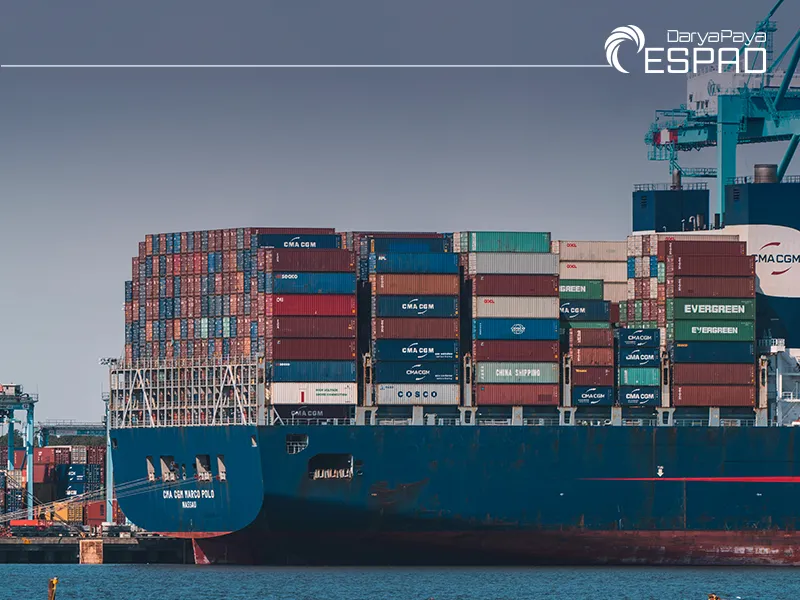
Feedering refers to the process of transferring cargo between smaller ports and larger hub ports using feeder vessels. This operation enables connections to global transport networks from ports with limited capacity or specific geographical constraints.
Common Models of Feedering Operations
Depending on geography, port capacities, transport network structure, and market demand, feedering can be conducted through different models:
-
Hub-and-Spoke Model
A main hub port acts as a distribution center, with feeder vessels operating like spokes connecting smaller ports. Cargo flows from small ports to the central hub via feeders, then onwards with ocean-going vessels on international routes.
- Advantage: High efficiency, cost savings, centralized operations.
- Application: Common in high-traffic regions such as Southeast Asia, Europe, and the Persian Gulf.
-
Point-to-Point Model
Feeders directly connect two ports without routing through a hub, chosen when cargo volume justifies direct transport.
- Advantage: Reduced transit time, elimination of intermediate stops.
- Application: Preferred on high-traffic or time-sensitive routes.
-
Multimodal/Intermodal Feedering Model
Feeders function as part of a multimodal chain, where cargo discharged at a port is further transported by truck, train, or other modes to its final destination.
- Advantage: Enhanced flexibility and coverage for inland or landlocked regions.
- Application: Important in international transit, especially in countries with strong rail or road infrastructure.
Feedering in the Persian Gulf and Sea of Oman
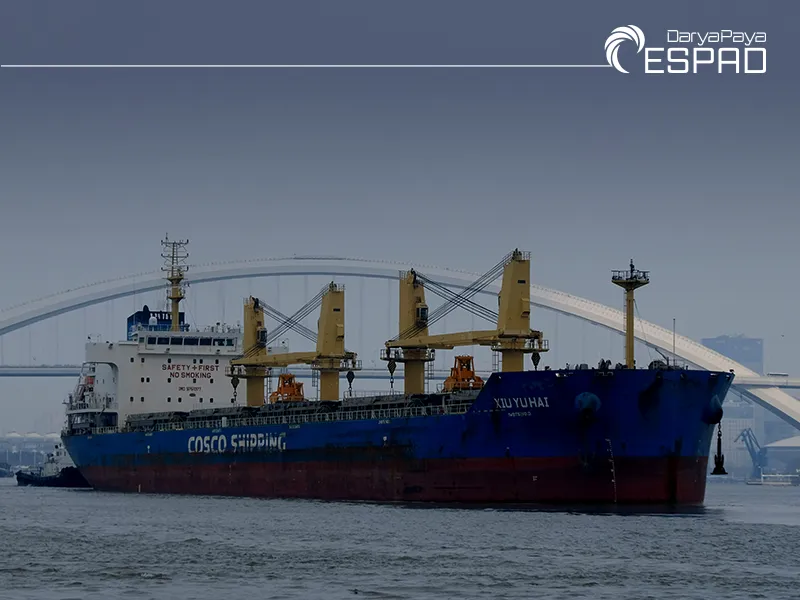
Due to significant geopolitical importance and concentration of commercial and oil ports, the Persian Gulf and Sea of Oman region represent one of the world’s key maritime transport hubs. Here, feeder operations centrally link local ports to major regional and international hubs such as Jebel Ali (UAE), Khalifa (Abu Dhabi), and Sohar (Oman).
Ocean-going vessels arrive at these main hubs, where feeder vessels distribute containers to smaller ports in Iran, Iraq, Kuwait, Bahrain, and other surrounding countries of the Gulf and Oman Sea.
Iran’s extensive coastline along the Persian Gulf and Sea of Oman provides substantial capacity for developing a regional feeder network. Key Iranian ports involved in feeder operations include:
- Shahid Rajaee Port: The country’s primary container port, acting as a gateway connecting to UAE and Oman hubs.
- Chabahar Port: Strategically located on the Indian Ocean, an emerging feeder hub for South Asia and East Africa.
- Bushehr, Khorramshahr, Lengeh, and Imam Khomeini Ports: Complementary regional distribution points for feedered cargo.
The Role of Forwarding Companies and NVOCCs in Feeder Transport Coordination
In feedering operations, freight forwarders and Non-Vessel Operating Common Carriers (NVOCCs) play vital roles in coordinating and integrating transport stages. Forwarders manage route planning, feeder vessel booking, customs clearance, and documentation, streamlining the process for cargo owners. Meanwhile, NVOCCs provide containers and issue independent bills of lading, enabling the shipment of smaller or diversified cargo lots.
Collaboration between these entities improves regional market access, reduces costs, and increases flexibility within the supply chain.