Major Russian Seaports and Their Impact on Global Trade
Russian seaports function as the principal gateways for the country’s international trade and play a critical role in connecting Russia to global markets. For companies seeking to expand maritime trade operations with Russia, understanding the country’s key ports, their infrastructure capabilities, and the transport corridors they serve is essential.
This article provides an operational overview of the most important Russian seaports, their development projects, and their integration with international shipping and logistics routes.
The Importance of Russian Seaports in International Trade
In today’s globalized economy, seaports operate as critical chokepoints within international supply chains. These large-scale maritime infrastructures facilitate the movement of millions of tons of cargo between continents and represent the backbone of global trade logistics.
Russia, as the largest country in the world, has strategic access to maritime routes in the north, west, and east. This geographical advantage has enabled the development of an extensive network of major seaports.
These ports not only serve as logistical bridges connecting Asia, Europe, and North America, but also play a vital role in the export of natural resources, the import of strategic commodities, and the formation of emerging international trade corridors.
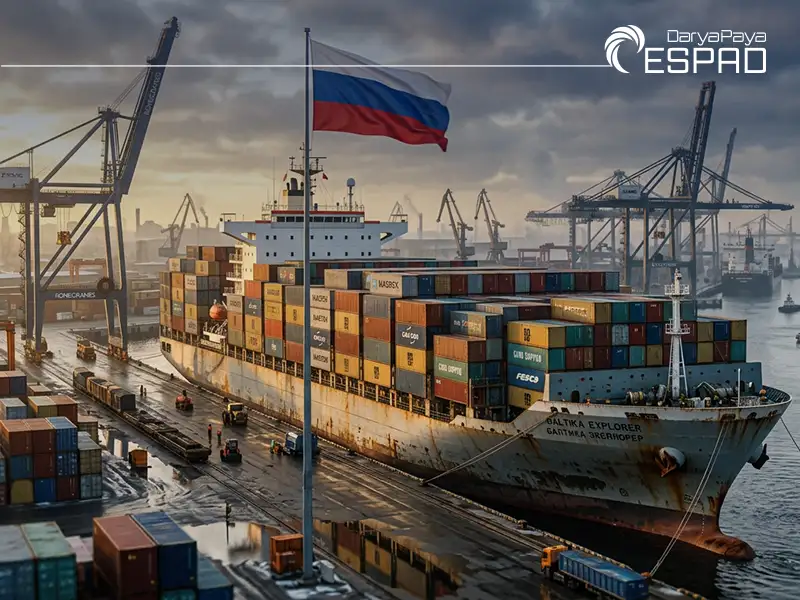
Major Russian Ports in the Baltic Sea, Black Sea, Caspian Sea, and Arctic Route
With extensive coastlines along the Baltic Sea, Black Sea, Arctic Ocean, and Pacific Ocean, Russia operates a diverse portfolio of strategically positioned seaports. Each port is equipped with specialized infrastructure and operational capabilities that support different segments of international maritime trade.
Below is an overview of the most significant Russian seaports.
Key Ports in the Baltic Sea
Port of Saint Petersburg
The Port of Saint Petersburg is Russia’s largest seaport on the Baltic Sea and serves as the country’s primary maritime gateway for trade with Europe.
The port specializes in containerized cargo, light bulk commodities, automotive shipments, and consumer goods. It is also one of the main entry points for European imports into Russia. The port is capable of accommodating large ocean-going vessels, including ships in the Post‑Panamax class.
Infrastructure and Capacity
The Port of Saint Petersburg is equipped with advanced container terminals, heavy-duty quay cranes, internal rail transport systems, and modern warehousing facilities.
Its annual cargo throughput capacity is approximately 60 million tons, with container handling exceeding 2 million TEUs per year.
Development Projects
Current development initiatives include:
- Expansion of container berths
- Digitalization of cargo clearance procedures
- Increased rail connectivity between the port and inland logistics hubs
Port of Ust‑Luga
The Port of Ust‑Luga is one of the most modern and rapidly developing ports in Russia. With deep-water access and advanced cargo-handling infrastructure, it has substantial capacity for both bulk and container operations.
The port plays a significant role in the export of mineral resources, fertilizers, and petroleum products.
Major Ports in the Black Sea
Port of Novorossiysk
Located on the Black Sea coast, the Port of Novorossiysk is one of Russia’s most strategically important maritime hubs. Due to its geographic position, it serves as a key gateway connecting Russia to Mediterranean and Middle Eastern markets.
The port specializes in the export of crude oil, petroleum products, metals, grain, and mineral raw materials. It also functions as one of Russia’s primary energy export terminals to Europe and other international markets.
Infrastructure and Capacity
The port features:
- Large-scale oil terminals
- Dry bulk handling facilities
- Heavy cargo loading cranes
- Advanced grain storage and refrigeration infrastructure
Novorossiysk has an annual cargo handling capacity of approximately 140 million tons.
Operational terminals include:
- Oil terminals
- Dry bulk terminals
- Container terminals
- Ro‑Ro (Roll‑on/Roll‑off) terminals
Development Projects
Ongoing development projects include:
- Expansion of oil storage and terminal capacity
- Upgrading rail and road access to the port
- Modernization of grain handling facilities
Port of Tuapse
The Port of Tuapse is a specialized export port focusing on crude oil, petrochemical products, and coal shipments.
Located near Novorossiysk, the port plays an important role in Russia’s bulk commodity export operations and has considerable capacity for handling raw materials.
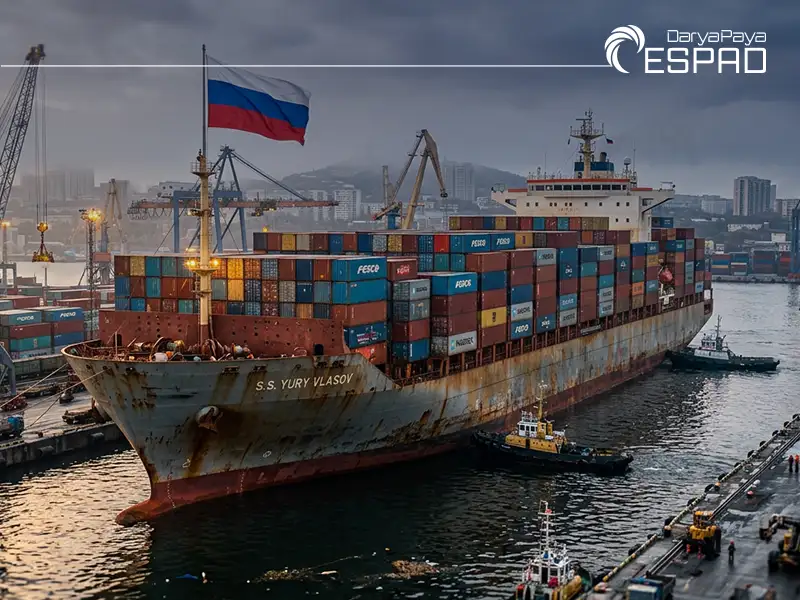
Ports in Eastern Russia
Port of Vladivostok
The Port of Vladivostok is located in the Russian Far East along the Pacific Ocean. It serves as Russia’s primary maritime gateway to Asia, particularly China, Japan, and South Korea.
The port also functions as a starting point for Eurasian transit logistics connecting East Asia to Europe.
Vladivostok specializes in international transit cargo, seafood exports, and the import of consumer goods from Asian markets.
Infrastructure and Capacity
The port is equipped with:
- Container terminals
- Mobile port cranes
- Automotive cargo handling facilities
- Specialized infrastructure for project cargo
The Port of Vladivostok handles more than 25 million tons of cargo annually, including approximately 700,000 TEUs of containerized cargo.
Development Projects
Key development initiatives include:
- Expansion of container terminal capacity
- Increasing berth depth to accommodate ocean‑going vessels
- Establishment of free trade zones to attract international logistics operators
Port of Nakhodka
The Port of Nakhodka operates multiple dry bulk, liquid bulk, and container terminals.
The port plays a significant role in exporting coal and raw materials while also handling imports of industrial goods. Its strong connection to the Trans‑Siberian Railway (TSR) enhances its strategic value within Eurasian logistics networks.
Major Ports in the Caspian Sea
Port of Makhachkala
The Port of Makhachkala is Russia’s only major port located on the western coast of the Caspian Sea. It facilitates maritime trade with Iran, Azerbaijan, Kazakhstan, and Turkmenistan.
The port plays a critical role in the International North–South Transport Corridor (INSTC).
Additionally, it supports multimodal logistics operations combining road, rail, and maritime transport, enabling cargo flows between northern Russia, Iran, and India.
Port of Astrakhan
Astrakhan functions as a major logistics hub within the Caspian region and operates specialized terminals for container cargo, bulk commodities, and petroleum products.
The port is involved in several development projects aimed at expanding container capacity and strengthening rail connectivity within the INSTC corridor.
Major Ports Along the Arctic Route
Port of Murmansk
The Port of Murmansk is located in northern Russia along the Barents Sea. It is the largest port in the Arctic region and plays a crucial role in mineral exports, energy shipments, and operations related to the Northern Sea Route.
Murmansk specializes in exporting mineral resources to European markets and supporting shipping activity along Arctic maritime routes. The port also serves as the primary base for Russia’s nuclear-powered icebreaker fleet.
Infrastructure and Capacity
Murmansk is equipped with specialized cargo-handling infrastructure for:
- Coal
- Iron ore
- Crude oil
- Frozen cargo
The port operates ice-class berths designed for Arctic conditions and has an annual cargo handling capacity exceeding 50 million tons.
Development Projects
A major infrastructure initiative known as the Murmansk Transport Hub Project is currently underway. This project includes:
- Construction of new mineral export terminals
- Expansion of rail infrastructure
- Upgrading cargo-handling equipment to support operations in harsh Arctic conditions
Port of Arkhangelsk
Arkhangelsk is another important northern port involved in supplying remote Arctic regions and exporting raw materials such as timber and minerals.
Connectivity of Russian Ports to International Transport Corridors
Due to Russia’s unique geographical position, its seaports function as strategic bridges linking Asia, Europe, and even North America.
These ports are integrated with extensive rail, road, and maritime networks, making them key components of global logistics chains.
Below are the most important international transport routes connected to Russian ports.
International North–South Transport Corridor (INSTC)
Ports located along the Caspian Sea and Black Sea—such as Novorossiysk—connect Russia directly to Iran, India, and South Asian markets through the INSTC corridor.
This route significantly reduces both transit time and transportation costs for cargo moving between Russia and southern markets.
Trans‑Eurasian Corridor
Eastern Russian ports—particularly Vladivostok—are connected to the Trans‑Siberian Railway, which enables cargo movement from East Asia (China, South Korea, and Japan) to Europe through Russia.
Compared with traditional maritime routes, this corridor offers substantially shorter transit times for certain cargo categories.
Northern Sea Route (NSR)
The Port of Murmansk serves as the western gateway to the Northern Sea Route, a strategic maritime corridor passing along Russia’s Arctic coastline.
This route provides a shorter shipping path between Europe and East Asia and has gained increasing importance in recent years due to climate change and improved Arctic navigation capabilities.
Baltic Sea Shipping Network
The Port of Saint Petersburg maintains direct maritime connections with major European ports such as Hamburg, Rotterdam, and Antwerp.
These shipping routes handle a significant portion of Russia’s trade flows with the European Union.
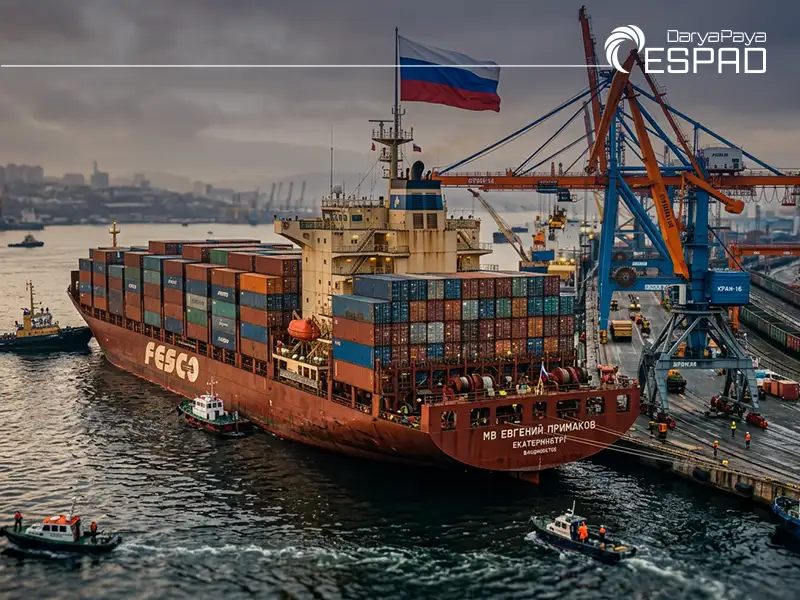
The Future of Russian Seaports in Global Trade
Russian seaports act as critical arteries for the country’s international trade, supporting the export of natural resources, the import of consumer goods, and Russia’s integration into global markets.
With ongoing infrastructure expansion, stronger integration into new trade corridors such as the North–South Corridor and the modern Silk Road, and a gradual transition toward smart and green port technologies, Russian ports are expected to gain an even more strategic position within global supply chains.
Russia’s geopolitical location and continuous investment in maritime infrastructure are likely to transform its port network into one of the most influential logistics hubs in international trade over the coming decades.
For businesses seeking to expand maritime trade with Russia, Espad Darya Paya, with its experienced team and specialized logistics services, can serve as a reliable partner in navigating this market. For consultation and cooperation opportunities, you can contact the company’s experts today.