Operational Processes in a Container Terminal: From Vessel Arrival to Container Exit
With the rapid growth of international trade and the expansion of maritime transport, container terminals are recognized as one of the most critical pillars of the global supply chain. These specialized facilities play a vital role in facilitating cargo flows, improving vessel turnaround, and optimizing both port-side and hinterland operations.
In this article, we examine the concept of a container terminal, outline its principal components, and explain the operational processes associated with the discharge, loading, storage, and transfer of containers. The purpose of this review is to provide a clearer understanding of how these terminals function and to highlight their strategic position within global trade and the multimodal transport system.
Definition of a Container Terminal
A container terminal is one of the core infrastructures of a commercial port, specifically designed for the receipt, temporary storage, loading, and discharge of containers. These terminals serve as the interface between maritime and inland transport and play a fundamental role in the international supply chain. Within this environment, containers discharged from vessels are stored for a limited period and are subsequently dispatched to their final destination by truck, rail, or other inland transport modes.
In many cases, terminals do not merely function as transit points en route to the final destination; they also serve as hubs for cargo consolidation, deconsolidation, and rerouting.
Container terminals rely on specialized equipment such as quay cranes, internal transport systems, and Terminal Operating System (TOS) software to execute logistics operations with a high degree of accuracy and speed. These terminals are generally designed to handle large volumes of containers within short time windows while maintaining high standards of safety, productivity, and operational efficiency.
Main Components of a Container Terminal
The main components of a container terminal comprise a set of specialized infrastructure assets and equipment designed to ensure the fast, safe, and coordinated execution of container loading, discharge, and handling operations. Each of the following components plays a critical role in securing the overall efficiency and productivity of the terminal.
1. Quay
The quay is the berth area where container vessels moor and is considered the first point of contact between ship and shore. It must have sufficient water depth and an appropriate design to accommodate large container ships. Berthing lines are usually allocated to incoming and outgoing vessels according to a predefined schedule. Fenders, tugboats, and navigational guidance systems are essential in this section for the safe berthing of vessels.
2. Quay Cranes / STS Cranes
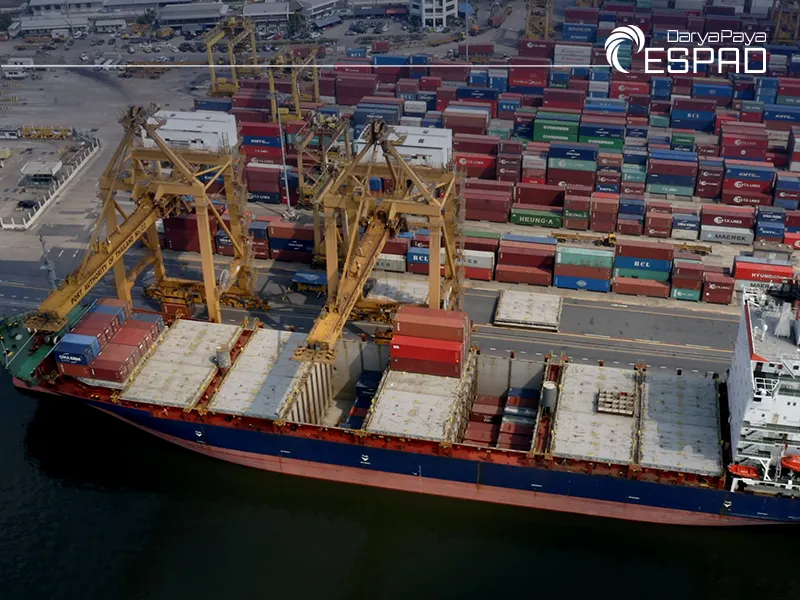
These massive cranes are responsible for discharging and loading containers between the vessel and the quay. Equipped with long outreach and horizontal and vertical movement capability, they can lift containers from different tiers of the vessel and place them onto trucks or other landside transfer equipment. Today, many of these cranes are designed as semi-automated or fully automated units and utilize imaging systems and precise positioning technologies to increase speed and accuracy.
3. Container Yard
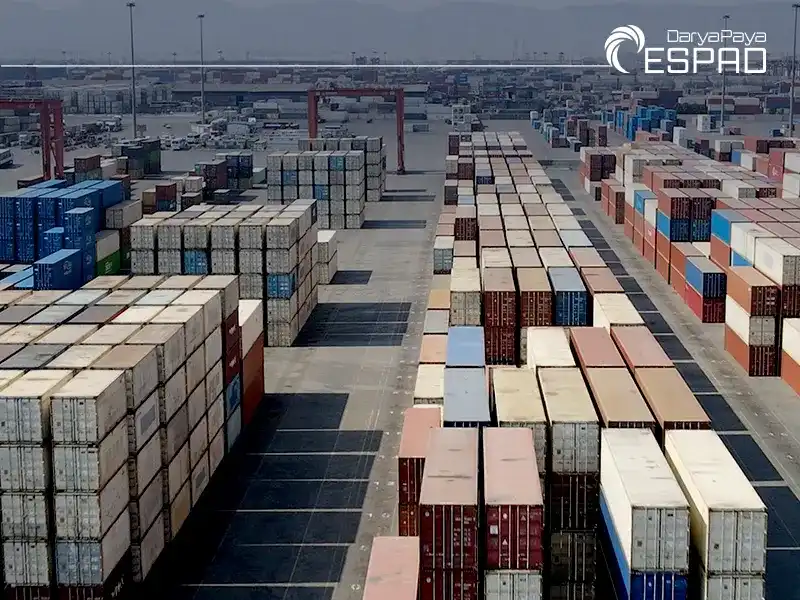
This is a large area designated for the temporary storage of containers after discharge from the vessel or prior to loading onboard. The yard is typically arranged in blocks and includes separate zones for import containers, export containers, reefer containers, and dangerous goods. Efficient management of this area is critical, as limited yard capacity can result in congestion and reduced terminal productivity.
4. Yard Handling Equipment
This equipment is used to move containers between the quay, the yard, and the gate complex. The most important units include:
RTG (Rubber-Tyred Gantry Crane): A wheeled gantry crane used for the vertical stacking of containers within the yard. With both horizontal and vertical movement capability, it provides rapid and efficient access to containers.
Reach Stacker: A multipurpose handling machine used for lifting and moving containers, particularly in confined operating environments.
Terminal Tractors: Vehicles used to transport containers mounted on dedicated chassis between the quay and the yard.
5. Gate Complex
This is the point through which containers enter or leave the terminal by road or rail. It includes control stations, document inspection, security checks, and customs verification. In modern terminals, this area is equipped with license plate recognition systems, RFID, and intelligent camera systems to enable seamless gate-in and gate-out processing.
6. Terminal Operating System (TOS)
The TOS is a central and advanced software platform that monitors, coordinates, and optimizes all terminal operations. From vessel planning and berth allocation to yard container management and crane scheduling, all activities are managed through the TOS. The use of a TOS reduces errors, enhances productivity, and enables precise tracking of containers at every operational stage.
Operational Processes in a Container Terminal
Operational processes in a container terminal consist of a series of interconnected activities that cover the entire cycle from vessel arrival to container exit from the terminal. These processes are executed with the objective of managing container flows efficiently and minimizing dwell time through the use of advanced technologies and precise operational coordination.
1. Vessel Arrival and Berthing
The process begins when the vessel arrives within the port limits. Information relating to the vessel and its cargo is transmitted to the terminal in advance, usually through EDI systems. Based on the berth planning schedule, a designated berth position is assigned to the vessel. Marine pilots and tugboats then guide the vessel to the berth. This stage requires close coordination between the shipping line, port traffic control, and the terminal operator.
2. Container Discharge and Loading
Once the vessel is berthed, the discharge of import containers and the loading of export containers commence using quay cranes. These operations must be carried out with a high degree of precision, as the vessel’s weight distribution and stability must also be maintained. After being lifted from the vessel, containers are transferred by terminal tractors or other mechanized systems either to the yard or directly to the terminal exit. The data of each container is recorded and tracked in the TOS.
3. Transfer to the Container Yard
After being discharged from the vessel or received from inland transport, containers are transferred to the temporary storage area, namely the Container Yard. This transfer is usually performed by means of terminal tractors, reach stackers, or RTGs. The storage location of each container is determined based on factors such as container type (standard, reefer, dangerous), the planned time of delivery or subsequent loading, and the available yard capacity. Intelligent yard planning improves accessibility and reduces operational time.
4. Exit from the Terminal by Land
Containers destined for inland locations, such as domestic final destinations or neighboring countries, leave the terminal by truck or rail after customs formalities, security procedures, and system registration have been completed. Exit gates are usually equipped with automated systems for license plate capture, weighing, bill of lading scanning, and inspection. In some terminals, the gate-out process is fully automated and performed without stopping.
5. Entry of Export Containers
Containers intended for export are brought into the terminal by inland transport vehicles. At the entry gate, the documents are checked, the cargo is scanned, and the relevant information is entered into the system. The containers are then directed to the yard, where they remain until the scheduled loading window, after which they are transferred to the vessel. Precise management of the arrival timing of these containers is highly important in order to prevent congestion and avoid yard space shortages.
Types of Containers in Terminals
- Standard Container (Dry)
- Reefer Container
- Tank Container
- Open Top Container
- Flat Rack Container
The Role of the Container Terminal in Global Trade
In today’s world, where global trade is heavily dependent on fast, secure, and reliable supply chains, the container terminal serves as a critical node linking ports to domestic and international markets. By facilitating the loading, discharge, storage, and distribution of containers, these terminals minimize both transit time and transport costs. The smooth and efficient functioning of a container terminal has a direct impact on the performance of international trade and the satisfaction of end customers.
Spad Shipping Company, as one of the active players in the logistics and transport sector, plays a decisive role in optimizing the utilization of container terminal capacities. Drawing on its experience and extensive network, the company provides services including customs clearance, cargo handling, transit operations, and integrated cargo transportation. Through close cooperation with reputable terminals, it contributes to the facilitation of trade flows and the enhancement of operational efficiency for both domestic and international clients. A container terminal is not merely a physical location; it is the primary platform connecting service providers to the global economy.