Ten Key Criteria for Selecting the Optimal Shipping Line for Containerized Transport to Iran
Selecting an appropriate shipping line for containerized transport to Iran is of paramount importance. In international trade—particularly on routes such as Iran that involve specific constraints and complexities (including sanctions and customs regulations)—an ill-informed choice may lead to prolonged delays, additional costs, and even legal complications. By considering factors such as delivery speed and reliability, compliance with local regulations, and pricing stability, supply chain–related risks can be effectively minimized.
In this article, ten key criteria are presented to importers and exporters to enable them to make the most informed and strategic selection among available shipping lines.
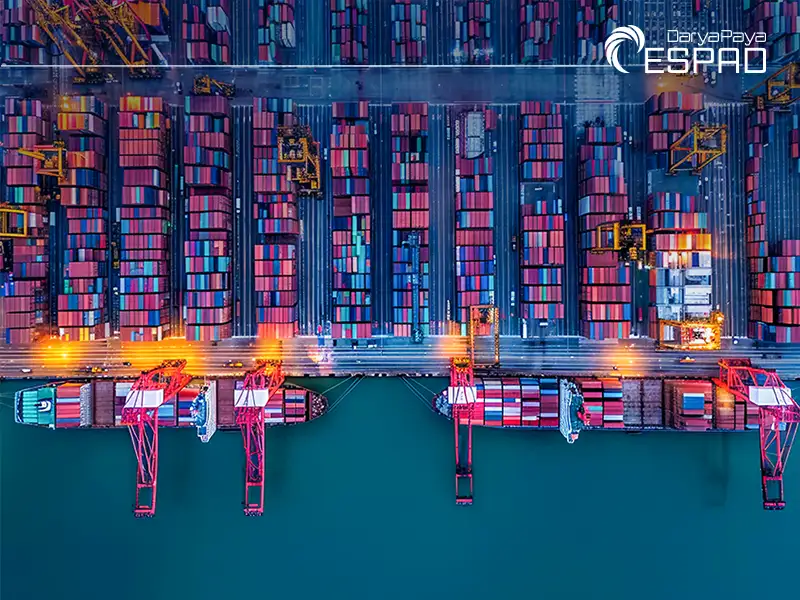
Ten Key Criteria in Selecting a Shipping Line for Containerized Transport to Iran
-
Transit Time:
Transit time directly influences supply chain efficiency. The shorter and more predictable the voyage duration, the more accurately warehousing and cargo delivery schedules can be planned. Selecting a shipping line with an appropriate and reliable transit time contributes to inventory optimization and the reduction of holding costs. Therefore, it is advisable to choose carriers that maintain a clearly defined sailing schedule and consistent service frequency on the respective route in order to mitigate the risk of unexpected delays.
-
Reputation and Standing at the Destination Port:
The standing and track record of a shipping line among companies and operational authorities at the destination port (such as terminal operators and customs administrations) are of considerable importance. Reputable carriers typically offer strong support services, more efficient loading and discharge facilities, and prompt resolution of potential operational issues. Selecting a company that is well-recognized and maintains a positive reputation at the destination port facilitates faster discharge and customs clearance processes, while reducing the risk of unforeseen delays or cargo detention.
-
Operational Capability and Transport Capacity:
The shipping line must possess an adequate fleet and sufficient capacity to accommodate your intended shipment volumes. Larger vessels equipped with higher container capacity enable the consolidation of cargo within fewer sailings and reduce the risk of space shortages during peak market periods.
Furthermore, ensuring that the destination port is equipped with appropriate infrastructure and operational capacity facilitates faster discharge and seamless transfer of the cargo to the subsequent stage of the logistics chain. -
Stable and Transparent Freight Rates:
Freight rate fluctuations in the global market can significantly impact import and export costs. Selecting a shipping line or contractual arrangement that offers fixed rates or guaranteed minimum pricing provides assurance against sudden transportation cost increases.
Moreover, the carrier should maintain a transparent pricing structure free from hidden charges, thereby enabling accurate budgeting and financial forecasting. In the era of digital logistics platforms, real-time rate comparison has become increasingly accessible, and cost transparency constitutes a distinct competitive advantage for any reputable shipping line.
-
Regular and Well-Scheduled Trade Routes:
Regular (Liner) shipping lines operate according to fixed sailing schedules and predetermined timetables. This structure ensures that multiple vessels navigate a designated route at consistent intervals between ports. The existence of regular services and continuous sailings to Iranian destinations enhances scheduling flexibility and reduces the likelihood of blank sailings or prolonged delays.
Accordingly, it is advisable to engage carriers that commit to weekly or periodic service frequencies and can reliably guarantee schedule integrity. -
Track Record and Experience in Trade with Iran:
A shipping line’s experience on the Iran trade lane is of considerable importance. Companies with a proven track record of shipments to Iran are well-acquainted with the specific market conditions, customs frameworks, documentary challenges, and local agency networks. This familiarity enables them to deliver more efficient services and avoid common operational errors.
For instance, well-established Iranian and international container carriers have, in recent years, maintained stable performance even under sanction-related constraints. The presence of a carrier with a solid track record in Iran reflects the confidence of the trading community and demonstrates the company’s command over the procedural and logistical requirements associated with this destination. -
Quality of Terminal Services:
Port facilities and services at the destination—such as loading and discharge equipment, warehousing infrastructure, and transshipment capabilities—play a crucial role in reducing vessel turnaround time. Reputable shipping lines typically maintain close collaboration with leading terminal operators or operate dedicated loading and discharge facilities of their own.
It is advisable to select carriers that provide comprehensive coverage at the destination ports and ensure access to high-quality container terminal services, thereby minimizing the risk of unnecessary berthing delays or customs-related disruptions.
-
Cost Transparency and Advisory Services:
Beyond the base freight rate, ancillary charges—such as insurance, warehousing, customs duties, and documentation fees—must be transparent and clearly defined in advance. Reputable shipping lines and their authorized agents disclose all applicable costs comprehensively and provide the opportunity for review and comparison.
Equally important is the advisory support offered by the carrier. A professional shipping line maintains experienced consultants who provide detailed explanations regarding pricing structures, transit schedules, and potential contingencies. Therefore, when requesting a freight quotation, ensure that all surcharges and contractual conditions are thoroughly clarified, and explicitly inquire about any potential hidden costs. -
Documentary and Customs Support:
The proper execution of customs formalities requires the submission of accurate and comprehensive documentation. The shipping line or freight operator must possess the capability to issue and provide essential documents, such as a valid Bill of Lading, certificates of origin, and confirmed booking documentation. Robust documentary support entails professional guidance in completing customs forms and corresponding with relevant authorities. Experience demonstrates that companies with strong expertise in documentation management effectively prevent critical errors and customs delays, thereby facilitating a smoother clearance process.
-
Experience Under Sanctions and Regulatory Compliance:
The Iran trade lane is subject to complex and specialized regulations due to international sanctions. Selecting a shipping line or operator with proven experience under sanction-related conditions signifies familiarity with sensitive compliance requirements and legal intricacies. Companies that maintain dedicated compliance teams continuously monitor policy updates and regulatory changes, thereby mitigating legal risks.
Accordingly, partnering with a carrier experienced in shipments to sanctioned jurisdictions enhances the reliability of customs clearance procedures, licensing processes, and the preparation of export/import documentation.
Common Mistakes in Selecting Shipping Lines for Iran
Selecting an inappropriate shipping line can result in hidden costs and significant delays. Among the most common mistakes are the following:
- Focusing Solely on the Lowest Cost: Selecting a shipping line exclusively based on the lowest freight rate can be highly risky. The chosen carrier may lack an adequate fleet, strong support services, or a solid presence at the destination port, ultimately leading to operational delays or additional unforeseen costs.
- Overlooking Time Considerations: Some importers focus solely on cost and fail to prioritize transit time. Ignoring the regularity of sailing schedules or the extended voyage duration of a particular carrier may disrupt production planning or downstream distribution operations.
- Failure to Consider Legal and Sanctions-Related Requirements: Disregarding the legal framework governing trade with Iran and neglecting to verify sanctions compliance may lead to serious legal repercussions. It is essential to ensure that the selected shipping line holds valid authorization and is fully permitted to operate on the Iran trade route.
- Relying Solely on Brand Reputation: Even large and well-established shipping lines may exhibit weak coverage or limited capacity on specific trade routes. Therefore, beyond assessing overall brand reputation, it is essential to evaluate the carrier’s operational performance and equipment availability on the Iran trade lane.
- Overlooking Coordination with Local Agents: The importance of after-sales services and the presence of a local representative is sometimes underestimated. If a shipping line lacks a strong office or reliable partner in Iran, document coordination and the resolution of local operational issues may become significantly more challenging.
By avoiding these common mistakes and carefully considering the aforementioned criteria, the risks associated with maritime transport to Iran can be significantly mitigated.
How Does the Proper Selection of a Shipping Line Impact the Logistical Performance of Iranian Companies?
In today’s highly challenging international trade environment, Iranian companies—particularly exporters and importers of high-value or time-sensitive goods (such as industrial components, chemicals, medical equipment, etc.)—require stable and reliable logistics performance. One of the critical determinants of supply chain success for these enterprises is the appropriate selection of a shipping line.
When a shipping line operates on a consistent and regular basis between key ports such as Jebel Ali, Hamburg, or Bandar Abbas, Iranian companies are able to manage warehousing, re-export activities, and final delivery to customers with greater precision and predictability. This is particularly significant in markets such as Iraq, Afghanistan, or Central Asia, where Iran functions as a strategic transit hub.

The Role of Shipping Lines in the Export Value Chain from Iran
For sustainable exports from Iran—particularly in sectors such as steel, petrochemicals, ceramics, and food products—the selection of an appropriate shipping line can be decisive in terms of cost efficiency, transit time, and cargo security. For instance, in the export of products with limited shelf life, such as tomato paste or milk powder, any misalignment between vessel scheduling and market demand may render the entire shipment economically unviable.
Shipping lines that possess experience and operational flexibility in collaboration with Iranian exporters can enhance the competitiveness of Iranian products in destination markets by offering services such as Door-to-Port solutions or professionally managed transshipment operations. Consequently, for companies seeking to establish and strengthen their brand presence in regional markets, the strategic selection of a logistics partner carries critical importance.
Espad – A Trusted Name in the Maritime Transport Industry
A strategic selection of the shipping line plays a pivotal role in the success of import and export operations to Iran. In this context, multiple factors—ranging from transit time and service reliability to compliance with legal and regulatory frameworks—must be carefully evaluated. By taking these criteria into account, importers and exporters can mitigate potential risks and achieve optimal efficiency in containerized shipments to Iran.
In the highly competitive landscape of international trade, merely offering lower rates cannot serve as a sustainable success factor in the maritime transport industry. Companies such as Espad, operating within the sea freight sector, must establish competitive advantage through the provision of specialized consultancy, operational transparency, precise responsiveness, an integrated customer experience, and strict adherence to SLAs (Service Level Agreements).
Espad has positioned and consolidated its brand within the Iranian shipping market precisely on the foundation of these core values.
To obtain accurate container shipping rates and identify the most suitable maritime transport solution to Iran, it is advisable to consult companies specializing in containerized shipments to Iran. Experienced professionals within such firms can assess your specific requirements, recommend the most appropriate carrier and service, and provide a comprehensive freight quotation with detailed cost breakdowns.