Shipping Goods from China to Iran When the Strait of Hormuz Is Closed
A Practical, Non‑Maritime Logistics Guide for International Exporters
Over the past decades, China has become one of the primary sourcing hubs for Iranian industries. A significant share of Iran’s manufacturing lines, trading companies, and supply chains rely on Chinese-origin raw materials, industrial parts, machinery, electronics, and consumer goods. Because of this structural dependence, any disruption in logistics corridors—particularly maritime routes—has immediate consequences for Iran‑bound trade.
One of the most sensitive scenarios is the closure of the Strait of Hormuz, a waterway through which a major portion of regional sea freight normally passes.
Although ocean freight plays a central role in Iran‑bound shipments, it’s important to note that closing the Strait of Hormuz does not stop trade between China and Iran. Instead, exporters must activate alternative land‑ and rail‑based corridors to keep shipments moving.
This article provides a practical, operational, and logistics‑focused guide for international exporters shipping from China to Iran when maritime routes are inaccessible and all cargo must move through land, rail, or combined corridors.
This guide is fully technical and logistics‑oriented, without any political analysis. It focuses solely on feasible transportation models for moving Chinese-origin cargo to Iran under restricted maritime conditions.
Importance of China–Iran Trade and the Need for Non‑Maritime Routes
For Iranian companies, China is a critical link in their supply chain. Many factories and distributors depend on Chinese-origin machinery, components, industrial inputs, and finished goods to keep production and sales stable.
Under normal circumstances, the flow of goods from China to Iran relies heavily on southern Iranian ports and ocean freight services.
However, when sea freight becomes unavailable, exporters must shift to land and rail networks that are stable, predictable, cost‑efficient, and time‑managed.
Contrary to common assumptions, China and Iran are fully connected by land across Central Asia. When sea corridors are unavailable, cargo flow remains possible—and in some cases even faster than traditional maritime routes, particularly for time-sensitive goods.
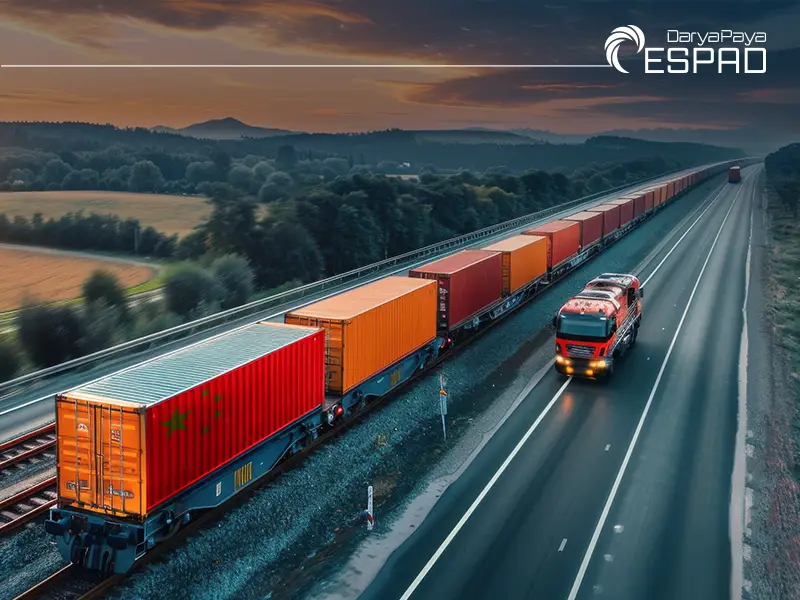
Main Land and Rail Corridors from China to Iran
Infrastructure That Keeps Trade Running Even in Crisis
During recent years, Central Asian corridors, China–Europe rail connections, Kazakhstan transit routes, and the road networks of the region have experienced continuous development. These corridors are particularly valuable when maritime routes become inaccessible and exporters need alternative solutions.
Below are the most reliable corridors based on speed, cost, stability, and practicality.
1. China – Kazakhstan – Turkmenistan – Iran (Rail Corridor)
The Most Economical and Reliable Route When Sea Freight Is Not Available
This corridor is the primary land‑based route for stable, large‑scale shipments from China to Iran.
Freight trains move from various Chinese origin points into Khorgos, cross Kazakhstan, continue into Turkmenistan, and then enter Iran’s rail network.
Ideal for:
industrial goods, raw materials, bulk cargo, project cargo, and shipments requiring predictable scheduling.
Key advantages:
- Stable transit planning
- Reasonable cost
- High wagon capacity
- Low disruption probability
Even in normal conditions, many companies use this corridor for faster‑than‑sea delivery.
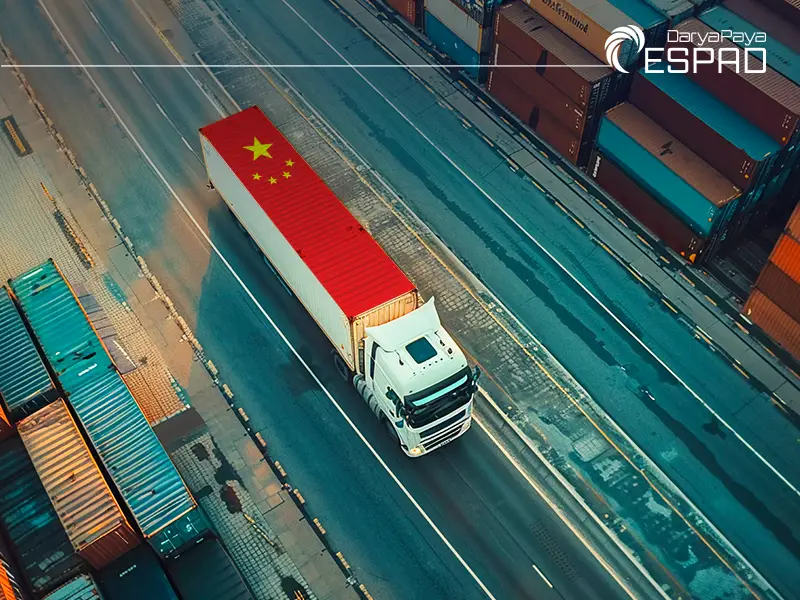
2. China – Kazakhstan – Turkmenistan – Iran (Direct Road Corridor)
Fastest Option for Urgent Iran‑Bound Shipments
If speed is the top priority, road transport becomes the best choice.
Trucks move from Western China into Kazakhstan, pass through Turkmenistan, and enter Iran via northeastern borders.
Ideal for:
- Electronics
- Auto parts
- High‑value cargo
- Time‑critical shipments
Although road transport is more expensive than rail, it is often cost‑effective when delays in production or sales could create larger financial losses.
3. Combined Rail–Road Transport
The Balanced Solution Between Speed, Flexibility, and Cost
With this model, goods travel by rail up to Kazakhstan or Turkmenistan, then transfer to trucks for final delivery into Iran.
Advantages:
- Faster than full rail
- Cheaper than full trucking
- Flexible for semi‑urgent or bulky cargo
A practical option for mixed‑priority shipments.
4. China – Kyrgyzstan – Uzbekistan – Turkmenistan – Iran
Alternative Route for Avoiding Kazakhstan Congestion
This corridor has gained traction in recent years thanks to expanded Central Asian infrastructure.
Useful when:
- Kazakhstan border is congested
- Temporary restrictions occur
- Exporters need a secondary, parallel corridor
Typical transportation mode:
combined rail + road.
5. China – Russia – Azerbaijan – Iran (North–South Corridor)
Best for Heavy, Project, and High‑Volume Cargo
Part of the extensive North–South Corridor, this route passes from China to Russia, then Azerbaijan, and enters Iran via Astara.
Key advantages:
- High rail capacity
- Suitable for heavy machinery, industrial equipment, project cargo
- Stable long-distance rail infrastructure
Transit time is longer but reliability is excellent for large‑scale industrial projects.
Transit Time and Costs for Land/Rail Shipping to Iran
Average transit times:
- Full Trucking: 10–15 days
- Full Rail: 18–25 days
- Combined Rail–Road: 15–18 days
- North–South Corridor: 20–30 days
Costs depend on cargo type, weight, volume, and the final destination inside Iran.
- Road = Fastest but most expensive
- Rail = Cheaper but slower
- Rail–Road = Balanced option
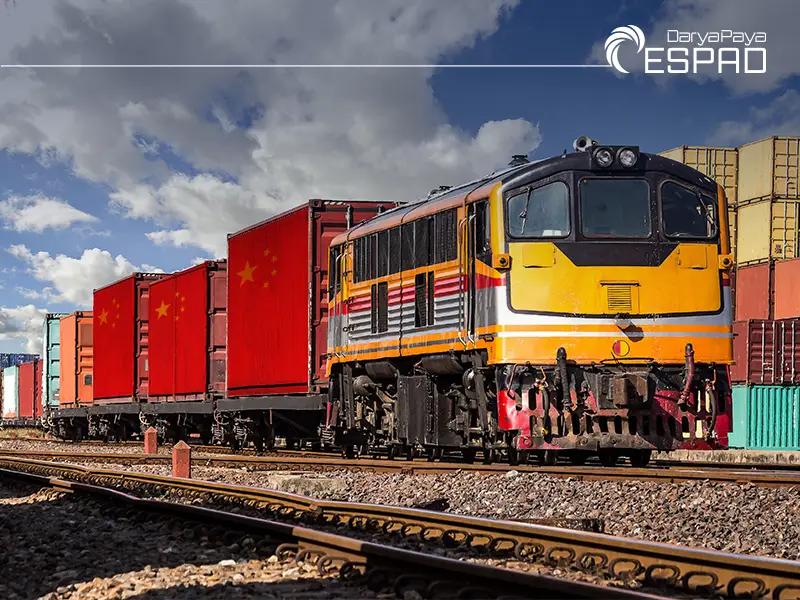
6. China – Afghanistan – Iran Rail Corridor
A Developing Capacity for Complementary Routing
As part of the Belt & Road Initiative, China–Afghanistan rail connections have grown significantly.
Although less commonly used than Kazakhstan routes, this corridor becomes valuable when:
- Other corridors are congested
- Exporters need additional flexibility
- Alternative capacity is required
Advantages:
- Shorter geographical route
- Growing rail infrastructure
- Useful for mid‑sensitivity industrial goods, electronics, and machinery parts
Transit time: 12–20 days
Practical note:
While operational, the corridor is still developing and requires coordination with experienced freight forwarders.
Risk Management for Land and Rail Transport to Iran
Why Planning and Professional Freight Forwarding Matters
Non‑maritime shipping requires more sophisticated coordination than sea freight. Proper timing and communication between:
- Chinese suppliers
- Freight forwarders
- Trucking companies
- Rail operators
- Border authorities
…is essential.
A specialized forwarder helps:
- Design optimal routes
- Predict potential challenges
- Manage documentation smoothly
- Maintain continuous cargo flow
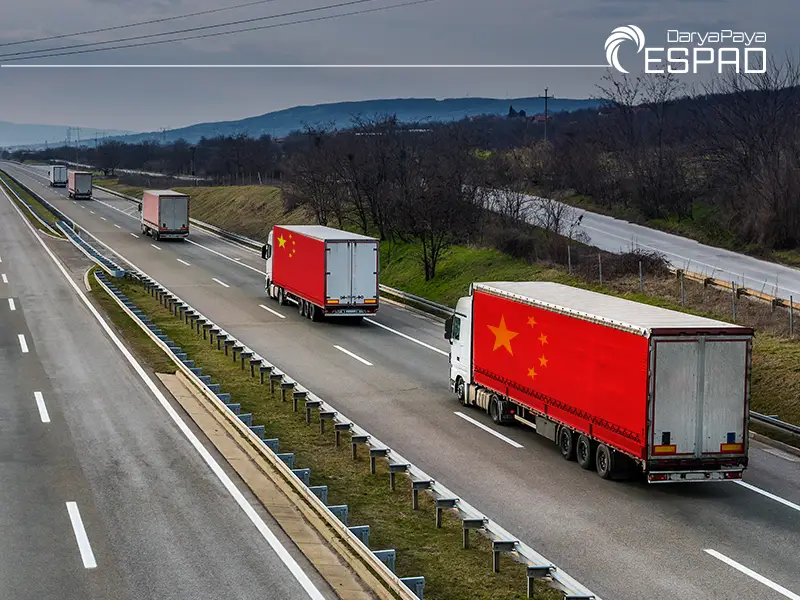
Shipping from China to Iran Without Sea Freight Is Still Possible and Practical
Closing the Strait of Hormuz does not stop trade between China and Iran.
With the proper use of rail, road, and combined Central Asian corridors, exporters can continue supplying Iranian buyers with minimal disruption.
Trade remains stable when exporters:
- Choose the right corridor
- Plan realistic transit times
- Manage documentation proactively
- Maintain multiple routing options
International trade consistently adapts—even in the most complex scenarios—and the China–Iran land network is a resilient example of this adaptability.
Request Transit Routes, Costs, and Schedules
Espad Shipping Offers Complete Land & Rail Logistics to Iran
If your business exports goods from China to Iran and you want to ensure uninterrupted cargo flow—even when maritime routes are blocked—Espad provides:
- Professional logistics consultation
- Route design based on cargo type
- Land and rail freight quotations
- End‑to‑end shipment management
With extensive experience in China–Iran logistics, Espad can design the most suitable route depending on speed, budget, and cargo specifications.
Contact our team to receive updated rates and a tailored logistics plan.