What Is a Packing List? Why Is It Critical in Import and Export Operations?
The Often-Overlooked Document That Everything Depends On
In every international trade transaction, a wide range of documents is exchanged among the buyer, seller, bank, freight forwarder, carrier sometimes the insurance company. Among these documents,. Among these documents, the Commercial Invoice and the Bill of Lading usually receive the most attention. Yet experienced traders know that, in practice, one of the most important documents is the Packing List—a document that may look simple at first glance, but can directly affect customs clearance speed, logistics costs, and even the legal and regulatory risk profile of a shipment.
For many exporters and importers—especially those who are relatively new to international trade—the exact function of a packing list, how it differs from other shipping documents, and where it fits into the import/export process are not always fully understood.
This article provides a clear, practical, and professionally structured explanation of the packing list from an operational, legal, and customs perspective. By the end, even readers unfamiliar with the distinction between a customs warehouse and a container depot will have a much clearer understanding of how the entire process works.
What Is a Packing List?
A Packing List is a shipping document that provides detailed information about how goods are packed within a **“At the Commercial Invoice answers the questions “What goods were sold?” and “At what value?”, the packing list answers a different set of questions:
- Which goods are packed in which cartons, pallets, packages, drums, bags, or containers?
- How many packages are included in the shipment?
- What are the dimensions and weights of each package?
- What is the total net weight and gross weight of the shipment?
- Which packages should be opened for inspection, sampling, or verification if required?
In simple terms, the packing list is the physical map of the shipment.
It enables customs authorities, carriers, warehouses, depots, freight forwarders, insurers, and the final consignee to understand how the cargo is physically arranged and documented.
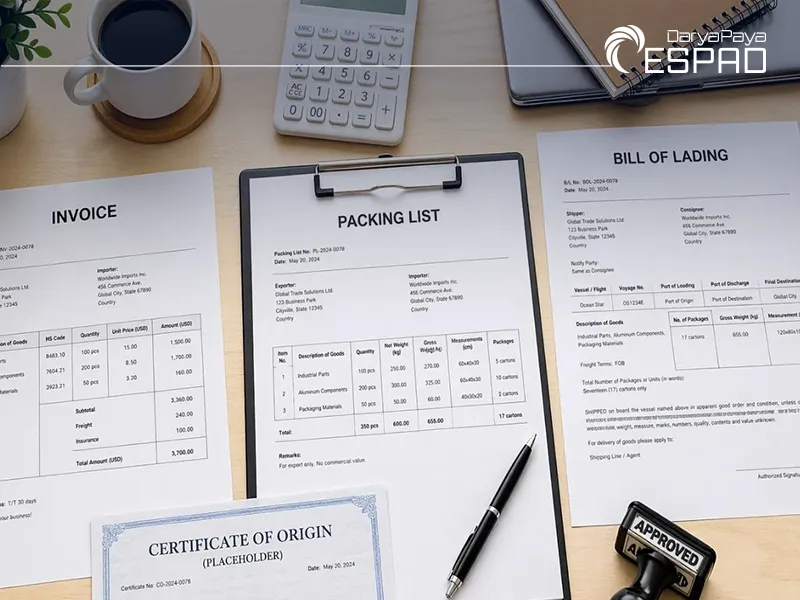
In most international shipments, the exporter or seller is responsible for issuing the packing list. It is usually sent to the buyer together with the commercial invoice, proforma invoice, and other shipping documents. In many transactions, especially those involving Letters of Credit (LCs), the packing list is also one of the mandatory documents required by the bank.

Packing List vs. Commercial Invoice vs. Bill of Lading
New traders often confuse the packing list with the commercial invoice or even the bill of lading. These documents are connected, but they serve very different purposes.
Packing List vs. Commercial Invoice
The Commercial Invoice is the financial document of the transaction. It typically includes:
- the seller’s and buyer’s details
- description of the goods
- unit price
- total value
- currency
- payment terms
- Incoterms
- and other commercial terms
Its primary focus is the financial and commercial value of the transaction.
The Packing List, by contrast, focuses on the physical structure of the shipment.
For example, the commercial invoice may state:
1,000 units of Product X
But the packing list explains how those 1,000 units are packed:
100 cartons, 10 units per carton, with specific weight and dimensions for each carton.
Packing List vs. Bill of Lading
The Bill of Lading (B/L) is the transport document. It generally serves three major functions:
- evidence that the carrier received the cargo;
- evidence of the contract of carriage;
- in many cases, a document of title.
The bill of lading is issued by the carrier, shipping line, freight forwarder, or transport operator. It shows that the goods have been received for shipment by sea, air, road, rail, or multimodal transport.
A bill of lading usually includes the total number of packages, general cargo description, gross weight, vessel/voyage details, and route information. However, it normally does not provide detailed package-by-package information.
The packing list does exactly that: it breaks down the shipment at package level.
Comparison of the Three Core Shipping Documents
| Document | Issued By | Main Focus | Level of Detail | Role in Customs |
|---|---|---|---|---|
| Commercial Invoice | Seller / Exporter | Price, currency, total value, transaction terms | Relatively general | Basis for duty and tax assessment |
| Bill of Lading | Carrier / Freight Forwarder | Transport, route, receipt of cargo | Relatively general | Transport document and, in many cases, title document |
| Packing List | Seller / Exporter | Packaging and physical cargo details | Highly detailed | Basis for physical inspection, counting, and verification |
The Packing List in Practice: From Origin Warehouse to Destination Customs Depot
To understand the true importance of a packing list, it is helpful to look at where it is used in the actual import/export process.
At the Origin Warehouse or Factory
The process begins when the goods are packed at the seller’s warehouse or manufacturing site.
Depending on the nature of the cargo, the goods may first be placed into cartons, the cartons may then be stacked on pallets, and the pallets may eventually be loaded into a container.
At this stage, the team responsible for packing must record essential details, such as:
- number of cartons
- number of units per carton
- weight of each carton
- dimensions of each carton
- pallet arrangement
- cargo marks
- and loading structure
A proper packing list should ideally- pallet arrangement;
- cargo marks;
- and loading structure.
A proper packing list should ideally lead to customs discrepancies, clearance delays, additional costs, or even regulatory penalties.
Container Depot vs. Customs Warehouse: Why the Difference Matters
One area that often causes confusion is the distinction between a container depot and a customs warehouse. Both may be broadly understood as storage areas, but they serve different functions.
Container Depot
A container depot is typically operated by a shipping line, container terminal, logistics company, or private container operator.
It is mainly used for:
- storing empty containers
- receiving loaded containers before vessel loading
- storing discharged containers after unloading from the vessel
- managing container equipment and availability
At this stage, the focus is primarily on container management, not the detailed contents of each package inside the container.
For container depot staff, the packing list is usually of secondary importance unless there is a special issue, such as damage, cargo inspection, cargo handling irregularity, or a need to verify contents.

Customs Warehouse
A customs warehouse operates under the supervision of the customs authority. Imported goods are often held there after arrival until customs formalities are completed and the goods are released.
At this stage, the packing list becomes critically important.
Customs authorities use the packing list to:
- count packages
- verify the physical cargo against the declaration
- inspect selected packages
- compare weight and package count
- identify specific packages for sampling or examination
- and confirm that the declared goods match the actual shipment
In short, the customs warehouse is where the packing list becomes the roadmap for customs inspection.
While a container depot focuses on the logistics of containers, a customs warehouse focuses on the legal and regulatory control of the goods. This is precisely where the accuracy of the packing list can determine whether a shipment is cleared quickly or held for extended examination.
What Information Should a Standard Packing List Include?
The layout of a packing list may vary depending on the seller, country, product type, and industry practice. However, a professionally prepared packing list should generally include the following information:
- seller/exporter details
- buyer/consignee details
- packing list number and date
- reference to the related commercial invoice number
- country of origin
- country of destination
- description of goods
- total number of packages
- type of packaging: cartons, pallets, drums, bags, crates, etc.
- number of units per package
- net weight of each package and total net weight
- gross weight of each package and total gross weight
- dimensions of each package: length, width, and height
- approximate volume
- package numbering, such as Carton No. 1–100
- container number and container type, if shipped by container
- seal number, where applicable
- shipping marks and labels shown on the packages
A common mistake among inexperienced exporters is issuing a packing list that is too general—for example, listing only the total number of cartons and total weight. Such a document may be insufficient for customs examination and can lead to requests for additional information, re-checking, delays, and extra costs.
The Role of the Packing List in Customs Clearance
Customs authorities around the world use a combination of documentary and physical controls to regulate imports and exports. In this process, the packing list acts as a bridge between the goods described on paper and the goods physically present in the warehouse or container.
Physical Examination and Package Counting
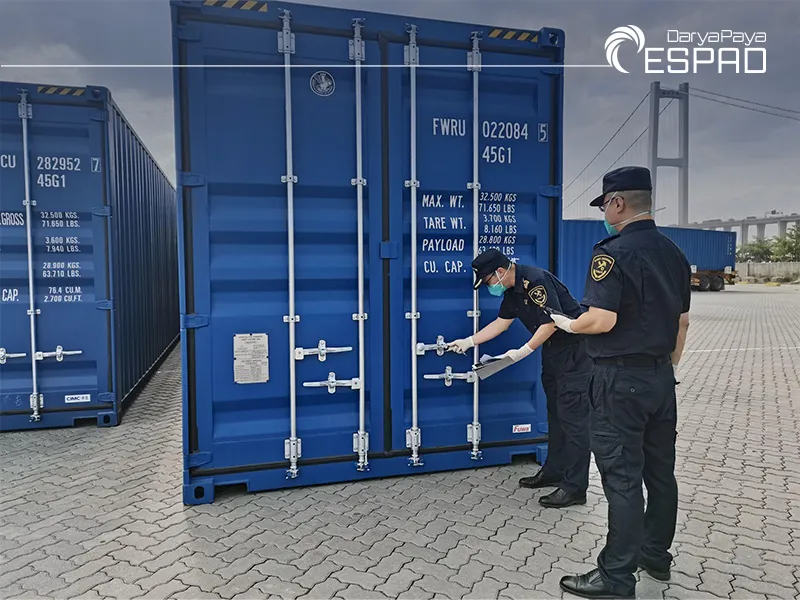
During customs examination, officers may count and inspect packages based on the packing list.
If the packing list states that the shipment contains 50 cartons, but only 48 cartons are physically present, the discrepancy must be investigated. It may be the result of:
- a counting error at origin
- a documentation mistake
- short-shipment
- cargo loss
- or, in more serious cases, fraud or non-compliance
The packing list also allows customs officers to identify specific packages for examination.
For example, if a sampling instead of opening cartons at random. This saves goods, the officer can select that specific package for sampling instead of opening cartons at random. This saves time, reduces handling costs, and lowers the risk of unnecessary cargo disturbance.
Supporting Tariff Classification and Valuation
Although customs valuation is primarily based on the commercial invoice, contract, and payment documents, customs authorities often use the packing list to verify whether the declared goods correspond to the physical cargo.
If the packing list includes details such as model numbers, serial numbers, product specifications, or intended use, customs may use that information to support the classification process and verify the declared HS Code.
How the Packing List Affects Cost, Time, and Trade Risk
A properly prepared packing list can create measurable benefits for both exporters and importers. A poor or inaccurate packing list, on the other hand, can create hidden costs and legal risk.
Reducing Storage, Detention, and Demurrage Costs
Every additional day that cargo remains at a port terminal, container yard, customs warehouse, or depot can generate extra costs. In containerized shipping, delays may also result in demurrage or detention charges.
One common reason for clearance delays is a mismatch between the packing list and the actual cargo.
If a customs officer cannot verify the shipment because the packing list is vague, incomplete, or inconsistent, customs may require:
- full physical inspection;
- re-weighing;
- additional supporting documents;
- amended documents;
- or further clarification from the importer or exporter.
All of these steps cost time and money.
A clear and accurate packing list enables customs officers, freight forwarders, and clearance agents to complete the process more efficiently.
Managing Disputes and Claims
When a dispute arises between seller and buyer over cargo quantity, packaging, or delivery, the packing list becomes one of the key evidentiary documents.
For example, if the seller claims that 100 cartons were shipped and the buyer claims that only 95 were received, the packing list can be reviewed together with:
- the bill of lading
- warehouse receipt
- delivery order
- discharge report
- tally sheet
- and customs examination record
If the packing list shows 100 cartons, and the port warehouse receipt also confirms receipt of 100 cartons, but the buyer later receives only 95 cartons, the shortage may have occurred after port discharge and before final delivery.
Without a detailed packing list, this level of tracing is extremely difficult.
Common Packing List Mistakes Made by Exporters and Importers
Many customs and documentation problems arise from preventable errors. Below are some of the most common mistakes.
Preparing the Packing List After Loading, Without Accurate Records
Some exporters prepare the packing list after packing and loading have been completed, relying on rough estimates rather than real-time records.
This can lead to inaccurate carton counts, incorrect weights, and incomplete package descriptions. Such errors are often discovered during customs inspection and may result in documentary discrepancies or cargo delays.
Inconsistency Between Packing List, Invoice, and Bill of Lading
Another common issue is inconsistency among the main shipping documents.
Examples include:
- the invoice lists five product lines, but the packing list includes only four;
- the packing list shows 80 cartons, while the bill of lading shows 75 packages;
- the gross weight on the packing list does not match the transport document;
- the description of goods differs across documents.
Although these differences may appear minor, customs authorities and banks may treat them as signs of poor documentation control—or, in some cases, possible misdeclaration.
Poor or Inaccurate Translation
In cross-border trade, documents may need to be translated for customs, banks, insurers, or local authorities. Inaccurate translation of a packing list can create serious problems, particularly where technical product descriptions, packaging terms, units of measurement, or customs terminology are involved.
The translated version must accurately reflect the original document. Any inconsistency may work against the cargo owner if a dispute arises.
Practical Example: A Simple Packing List for a Container Shipment
Below is a simplified example showing how packing list information can be organized for a containerized shipment. This sample is provided for educational purposes only. In actual transactions, additional details may be required depending on the type of goods, customs regulations, transport mode, banking requirements, and the terms of the sales contract.
| Package No. | Package Type | Units per Package | Goods Description | Net Weight per Package | Gross Weight per Package | Dimensions |
|---|---|---|---|---|---|---|
| 1–20 | Carton | 10 units | Product X, Model A | 15 kg | 17 kg | 60 × 40 × 40 cm |
| 21–40 | Carton | 8 units | Product X, Model B | 18 kg | 20 kg | 65 × 45 × 45 cm |
| 41–50 | Pallet | 100 boxes | Spare Parts | 500 kg | 520 kg | 120 × 100 × 150 cm |
At the end of the packing list, the exporter should normally include a summary of the shipment, such as:
- total number of packages
- total net weight
- total gross weight
- total volume
- container number, where applicable
- seal number, where applicable
These figures are used by customs authorities, carriers, warehouses, freight forwarders, and insurance companies to verify the shipment, manage handling operations, calculate charges, assess risk, and support any future claim or discrepancy review.
Packing List in Letters of Credit and Bank Documentation
In transactions involving a Letter of Credit (LC), the seller is paid only if the submitted documents strictly comply with the LC terms.
Many LCs require a packing list as one of the mandatory documents.
Banks typically check whether:
- the number of packages in the packing list matches the bill of lading
- the general goods description matches the commercial invoice
- the packing list is signed and/or stamped if required
- the date of the packing list is consistent with the other documents
- the document title and issuer meet the LC wording
Banks do not usually analyze the technical details of every carton’s dimensions and weight. However, any obvious inconsistency may create a documentary discrepancy, which can lead to rejection of documents or delayed payment.
For exporters operating in high-risk markets or under complex payment conditions, this makes accurate document preparation even more important.
Practical Recommendations for Exporters
Exporters can significantly reduce risk by following these practices:
-
Prepare the packing list during packing, not after loading.
Record package data in real time.
-
Use internal product codes or item identifiers.
This makes each customs declaration.
-
Ensure consistency with the invoice and bill of lading.
Package count, gross weight, goods description, and shipping marks should be aligned.
-
Include the container number and seal number where possible.
This is especially useful for containerized shipments.
-
Identify special cargo clearly.
If the shipment includes fragile goods, temperature-sensitive goods, hazardous materials, chemicals, or regulated products, this should be reflected accurately.
-
Use standardized templates.
A consistent format reduces errors and improves internal documentation control.
Practical Recommendations for Importers
Importers should not treat the packing list as a formality. Before shipment, they should review it carefully.
Recommended steps include:
-
Compare the packing list with the proforma invoice and commercial invoice.
Check product descriptions, quantities, packaging units, and weights.
-
Share the packing list with the customs broker before shipment arrives.
If something needs correction, it is far easier to fix before the cargo reaches the destination port.
-
Use the packing list during warehouse delivery and customs inspection.
Any discrepancy should be documented immediately.
-
Request package-level details for complex shipments.
This is especially important for mixed cargo, spare parts, machinery, chemicals, electronics, and high-value goods.
-
Use software tools for large shipments.
Excel, ERP systems, warehouse management systems, or trade documentation platforms can help manage and track packing data more accurately.
Why a Packing List Is More Than Just a Table
At first glance, a packing list may seem like a simple table of cartons, weights, and dimensions. In reality, it is a key document relied on by almost every party in the international supply chain:
- customs authorities use it for examination and control
- carriers and forwarders use it for operational planning
- warehouses use it for receiving and handling
- banks use it for document checking
- insurers use it for risk assessment and claims review
- importers and exporters use it for tracking and dispute management
For businesses engaged in international trade, investing time and discipline in preparing accurate packing lists is not an administrative luxury—it is a practical necessity.
In an environment where a single day of delay may result in storage charges, demurrage, detention, missed delivery windows, or customer dissatisfaction, a precise packing list can be the difference between a smooth transaction and a costly operational problem.
Final Takeaway
The packing list can be summarized in one sentence:
A packing list is the bridge between what is traded on paper and what is physically packed in cartons, pallets, crates, drums, bags, or containers.
Just as an engineer cannot execute a construction project without accurate drawings, a professional exporter or importer cannot properly control the movement of goods from the origin warehouse to the destination customs facility without a precise packing list.
Attention to detail in this document reduces disputes, protects commercial relationships, accelerates customs clearance, and improves efficiency across the supply chain.