The Difference Between a Ship and a Dhow in Maritime Transport: A Practical and Comprehensive Comparison
A wide range of conveyances has been developed for maritime transport, each designed for a specific operational purpose. Accordingly, the selection of the appropriate sea transport unit depends on factors such as the type of cargo, its physical characteristics and sensitivity, the volume and weight of the shipment, the mode of packing, the geographic origin and destination, and the applicable regulatory requirements of the countries involved. Among the most common means of sea transport are commercial ships and dhows, each serving distinct functions.
In Iran’s regional waters, such as the Persian Gulf and the Sea of Oman, dhows are widely used due to their ability to manoeuvre in shallow waters, the ease of loading at traditional jetties, and their lower operating costs. Nevertheless, cargo vessels continue to call at the southern ports of the country. Accordingly, in this article from the Espad blog, we examine these maritime transport units and analyse the difference between a ship and a dhow in maritime transport.
What Is a Dhow?
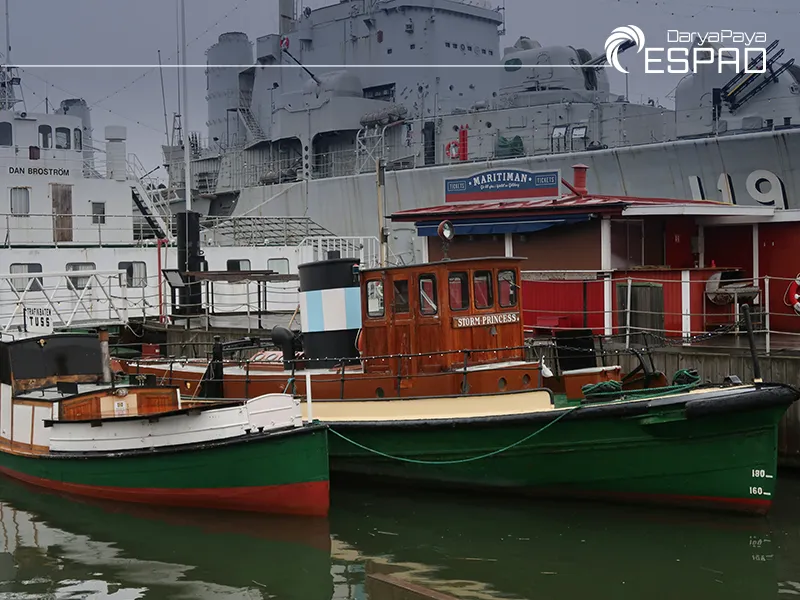
A dhow (sometimes also referred to in English as a wooden cargo boat) is a maritime transport craft whose size falls between that of a ship and a boat; it may therefore be regarded as either a small ship or a large boat. A dhow can simultaneously serve two operational functions: passenger carriage and cargo transport. This may, in fact, be considered one of the principal and most significant differences between a ship and a dhow.
Dhows are among the most common means of transporting cargo and passengers across the Persian Gulf, the Sea of Oman, and even parts of the Indian Ocean. These small vessels have a structure similar to the traditional sailing boats commonly seen in the Persian Gulf, yet their most important feature is the use of diesel or petrol engines.
Contemporary dhows are generally built in semi-open deck and open-deck configurations and exist in various types. In addition to passenger and cargo operations, dhows may also be used for fishing. Accordingly, depending on their design, a dhow may serve the following purposes:
- Passenger transport
- Cargo transport
- Fishing
What Are the Types of Dhow?
As noted in the previous section, dhows may perform multiple functions. The key point, however, is that each type has a different structure and, as a result, a distinct designation of its own, as outlined below.
Manji and Kochi (Koti) Dhow
These dhows operate without engines and rely exclusively on sails. Their primary function is the carriage of cargo and passengers. In some areas, however, they may also be used for fishing.
Houri Dhow
The Houri dhow is a small boat with a capacity of 10 persons, traditionally made from large tree trunks.
Jalboot Dhow
The Jalboot dhow has a carrying capacity ranging from 5 to 100 tonnes and is used to transport the following cargoes:
- Sugar
- Rice
- Pulses
- Wood and timber
- Livestock
Boom Dhow
This type of dhow has an approximate carrying capacity of 20 to 300 tonnes.
Baghaleh Dhow
This dhow is used for cargo transport in the range of 300 to 700 tonnes.
Samach Dhow
Historically, the Samach dhow was a fishing boat, but engines have since been installed on it. This dhow has an approximate carrying capacity of 5 tonnes.
Samah Dhow
One of the standard dhow types is the Samah dhow, which cannot be fitted with an engine and operates solely under sail.
Teshaleh Dhow
All the dhows discussed above have a deep draught, meaning they cannot approach the shoreline completely. Under such circumstances, the Teshaleh dhow is used to transfer cargo from the main dhow to the shore.
Now that you are familiar with the various types of dhow, the next section introduces the types of ship in order to make the distinction between a ship and a dhow easier to understand.
What Are the Types of Commercial Ship?
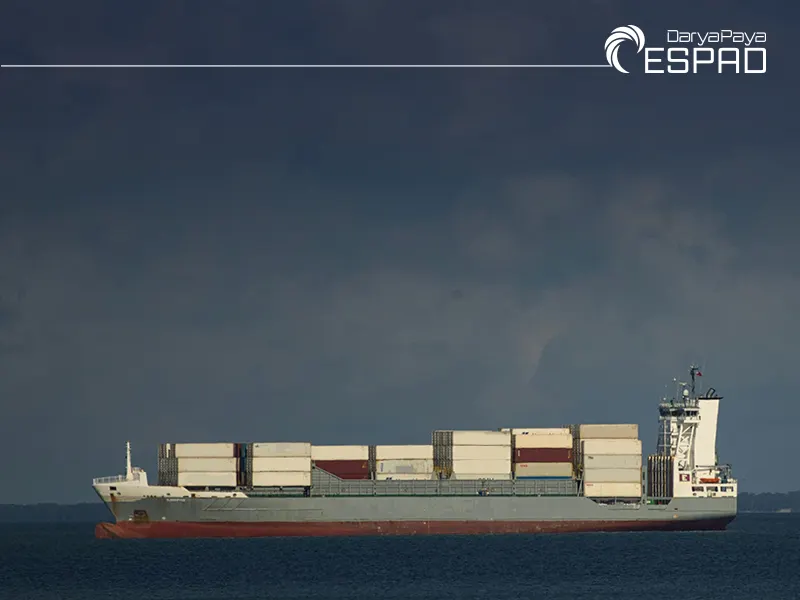
Commercial ships are classified according to factors such as the weight and dimensions of the cargo, the nature of the goods, the origin and destination of carriage, and other operational considerations. Therefore, in maritime freight transport—which accounts for approximately 80 to 90 percent of international transport—the following ship types are used.
Container Ship
A container ship is specifically designed for the carriage of standard ISO containers. These vessels are equipped with container securing systems, mechanised cargo-handling systems, and in some cases onboard cranes (geared vessels).
Oil Tanker or Tanker Vessel
Tanker vessels are used for transporting products in liquid or gaseous form. These vessels are optimised for the carriage of crude oil and petroleum derivatives and are fitted with specialised equipment to protect both the vessel and the marine environment against leakage or spillage. In addition to oil and other liquid petroleum products, tanker vessels are also used for transporting the following:
- Tankers for various chemical and industrial substances
- Tankers for fruit juice and other edible liquids
Bulk Carrier
Bulk carriers are used for the transport of goods that are usually shipped in large quantities in bulk form or without packaging. One of the principal items of equipment on this type of vessel is the grab crane, since commodities such as wheat and corn are loaded by such means.
General Cargo Ship
General cargo vessels are among the most suitable commercial ships for the transport of packaged goods, particularly where the cargo has non-standard dimensions or weight and cannot be loaded into containers.
Reefer Ship
Refrigerated vessels may themselves be regarded as one of the key distinctions between a ship and a dhow, as the use of refrigeration systems requires specialised equipment that has not historically been used on dhows.
Reefer ships are specifically optimised for temperature-controlled carriage and may be used for transporting perishable cargoes, such as:
- Vegetables
- Fruits
- Pharmaceuticals
- Vaccines
- All types of meat
- Semi-prepared food products
Heavy-Lift Cargo Vessel
These vessels are used for the carriage of ultra-heavy cargoes, such as the following; accordingly, their high lifting and carrying capacity constitutes one of the principal differences between a ship and a dhow:
- Smaller vessels
- Large industrial machinery
- Cranes
- Turbines
- Machinery components
As can be seen, none of the dhows discussed in the previous sections possess the equipment required for carrying such cargoes; therefore, carrying capacity may be regarded as one of the main distinctions between a ship and a dhow.
Livestock Carrier
A livestock carrier is another type of commercial ship optimised for the transport of live animals and fitted with facilities and equipment for supplying water, feed, and ventilation within the animal holding areas. The difference between a ship and a dhow here is that a dhow does not provide such facilities for the transport of livestock.
What Is the Difference Between a Ship and a Dhow?
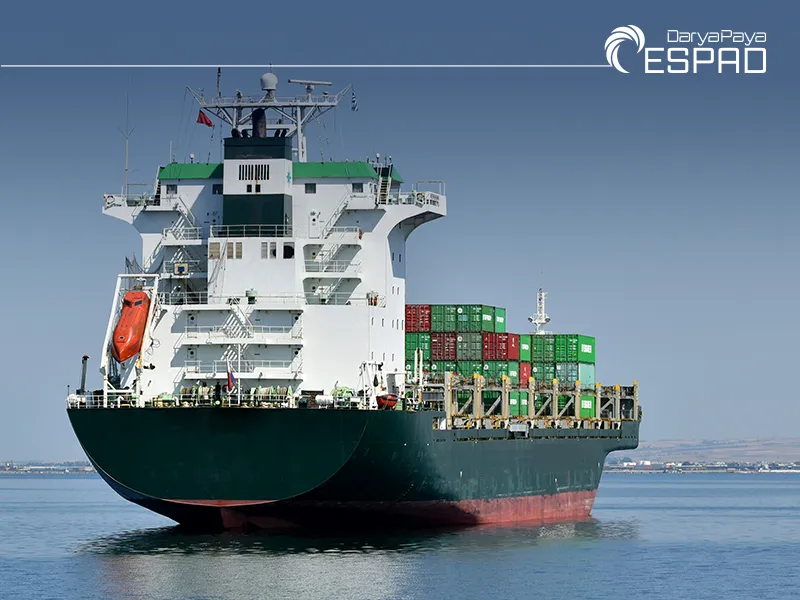
In the previous sections, you became familiar with ships, dhows, and their respective types. However, in order to make the right transport selection, you need to understand the difference between a ship and a dhow.
Difference in the Design and Structure of a Ship and a Dhow
Ships are highly complex structures incorporating a wide range of systems and equipment. The purpose of such equipment includes the following:
- Maintaining stability
- Ensuring safety
- Controlling vessel operations
By contrast, dhows require less equipment and machinery due to their smaller dimensions. Moreover, their balance is easier to maintain, and as a result, handling a dhow is generally simpler than operating a ship.
Difference in the Technology and Navigation of a Ship and a Dhow
One of the principal differences between a ship and a dhow lies in their technology and navigational systems. A dhow is much simpler than a ship in terms of both navigation and onboard technology and typically operates using a single petrol or diesel engine. A ship, however, requires a wide range of systems and equipment, only some of which are responsible for propulsion.
Propulsive Power Required for a Ship and a Dhow
The propulsive power required for dhows is supplied by petrol or diesel engines, whereas each commercial ship requires dedicated marine propulsion engines for operation.
Cargo Carrying Capacity of a Ship and a Dhow
The minimum and maximum cargo capacity is another point of difference between a ship and a dhow. A dhow generally has a minimum cargo capacity of 5 to 20 tonnes and a maximum capacity of up to 700 tonnes. By contrast, the minimum carrying capacity of commercial ships is typically 500 tonnes.
Type of Cargo Carried by a Ship and a Dhow
Commercial ships are optimised for the carriage of a wide range of solid, liquid, and gaseous cargoes, whether packaged or in bulk. A dhow, by contrast, is generally used only for the movement of solid cargoes.
Area of Operation, Operational Zone, or Sphere of Use of a Ship and a Dhow
The most significant difference between a ship and a dhow lies in their area of operation. Ships generally operate in the high seas and the oceans, whereas dhows operate in smaller seas, waterways, and gulfs.
Difference in the Size of a Ship and a Dhow
One of the main differences between a ship and a dhow is the size of these two transport units. Commercial ships are many times larger in dimension than the various types of dhow.
Difference in Crew Complement of a Ship and a Dhow
The crew complement of each commercial ship is determined according to its operational requirements and overall size. However, the number of crew on a ship is invariably greater than on a dhow. This is one of the most straightforward differences between a ship and a dhow.
The Difference Between a Ship and a Dhow in Maritime Transport
In this article, the principal differences between a ship and a dhow have been examined, including loading and carrying capacity, engine type and onboard equipment, range of application or operational area, and many other factors. Accordingly, once you are familiar with these distinctions and the application of each type of ship and dhow, selecting between them becomes considerably easier.
Given that commercial ships are equipped with more advanced facilities and systems, and that dhows cannot be deployed in the high seas and oceans, it is recommended that you use Espad Shipping Company’s services for the safe and rapid transport of your cargo. With access to diverse infrastructure and operational capabilities, this company can safeguard the physical integrity of your goods and deliver the shipment to its destination in the shortest possible time and at a competitive cost.